Tragedy, trials and turning points shaped 2025 as deadly accidents and defining moments tested M’sia’s resilience, resolve and conscience
PETALING JAYA: As the curtain falls on 2025, Malaysia looks back on a year that demanded endurance – shaped by tragedy, sharpened by judgment and punctuated by defining moments that tested the nation’s institutions and conscience.
From deadly accidents and environmental disasters to landmark court rulings and diplomatic manoeuvres, the past 12 months left a lasting imprint on the country – testing resilience, exposing vulnerabilities and redefining accountability.
Perak highways turn deadly
May and June brought grief to Perak’s roads.
On May 13, a truck carrying 18 Federal Reserve Unit (FRU) personnel collided with a lorry overloaded with gravel, killing nine officers and injuring nine others. Investigations cited overloading and poor vehicle maintenance as the primary causes.
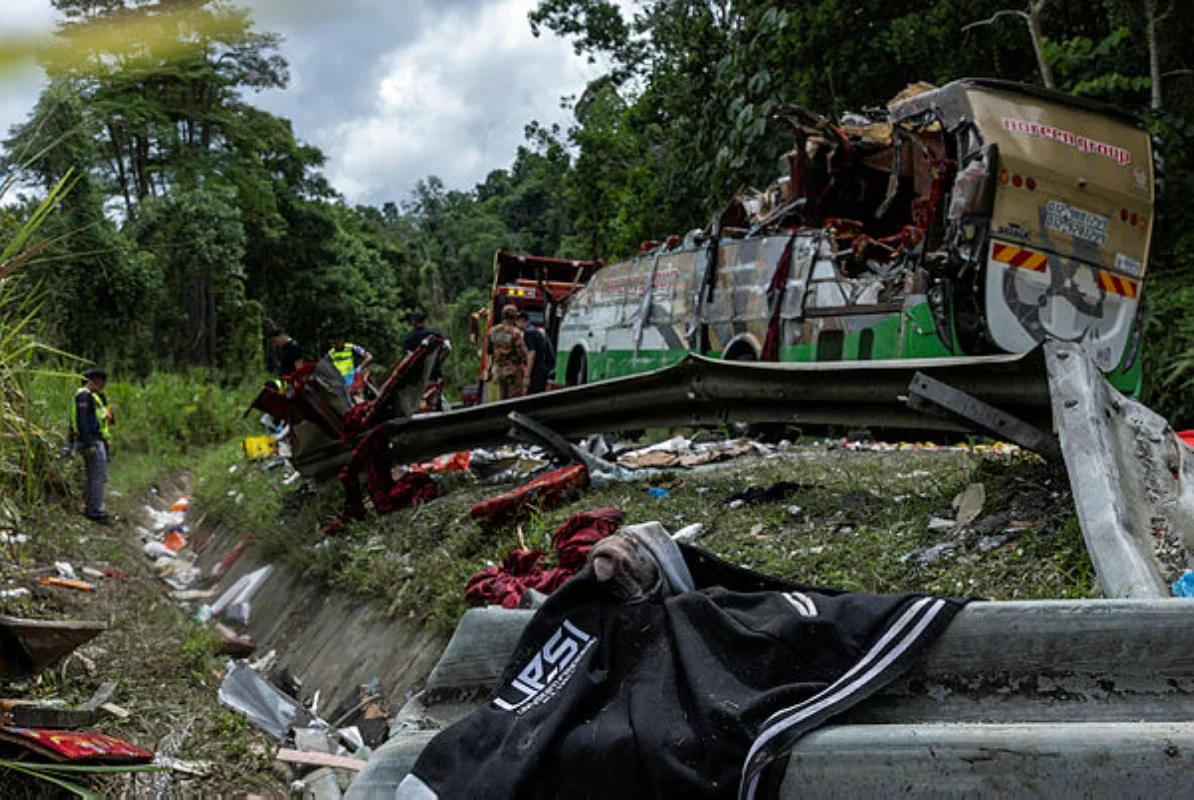
Barely a month later, tragedy struck again when a chartered bus ferrying Universiti Pendidikan Sultan Idris (Upsi) students from Terengganu back to campus overturned on the East-West Highway near Tasik Banding, Gerik, killing 15 and injuring 33.
Investigations cited excessive speed, inadequate guardrails and structural weaknesses in the bus as key contributing factors.
The twin disasters triggered nationwide debate over road safety standards, particularly the regulation and oversight of private buses and heavy vehicles.
Mother’s Day loss – Elephant calf killed in Gerik collision
On May 11, a lorry struck and killed a five-year-old elephant calf along the Gerik-Jeli highway. Heartbreaking footage of the calf’s mother lingering beside its body went viral, stirring nationwide anguish and drawing attention to the deadly risks roads pose to wildlife.
Authorities were forced to sedate the grieving elephant to recover the carcass, underscoring the urgent need for wildlife corridors and stronger protective infrastructure.
Festive morning marred by explosion in Putra Heights
Festive cheer gave way to devastation on April 1, the second day of Hari Raya Aidilfitri this year when a gas pipeline explosion ripped through Putra Heights in Subang Jaya.
At about 8am, the pipeline erupted in a towering fireball nearly 30m high, melting nearby vehicles and damaging surrounding structures. The blast carved a crater almost 10m deep.
Although no lives were lost, more than 150 people were injured and over 500 residents were displaced.
The damage was extensive – 237 homes were affected, including 81 completely destroyed, along with more than 225 vehicles. Authorities cited ground instability as the primary cause, while experts raised concerns over nearby construction activity.
Months on, residents continue to grapple with the emotional and material fallout of the disaster.
Football under fire
September plunged Malaysian football into crisis after the Football Association of Malaysia (FAM) was embroiled in a major integrity scandal. Investigations revealed that falsified documents – including forged birth certificates – had been used for seven heritage players.
FIFA imposed swift sanctions, suspending all seven players, fining FAM 350,000 Swiss francs (RM1.85 million) and awarding forfeit losses in international fixtures.
Malaysia’s FIFA ranking suffered a sharp decline, leaving fans and officials reeling.
Beyond the pitch, the scandal exposed weaknesses in governance and the safeguarding of national identity records, serving as a stark reminder that institutional integrity cannot be compromised.
Trump, trade and truces – Kuala Lumpur in the spotlight
In October, Malaysia took centre stage as host of the 47th Asean Summit, transforming Kuala Lumpur into a hub of high-stakes diplomacy.
United States President Donald Trump made his first visit to Malaysia – and his first to Southeast Asia since 2017 – injecting global attention and heightened pressure into the negotiations. A key outcome was the Agreement on Reciprocal Trade (ART), a strategic “truce” aimed at easing tariff tensions.
For Malaysia, the deal capped tariffs on key exports, secured zero tariffs for selected products and included verbal assurances to protect the semiconductor industry.
Critics, however, argued the agreement favoured US interests, lacked transparency and raised questions about long-term implications. The deal remains contentious.
The summit also produced the Kuala Lumpur Peace Accord, paving the way for a ceasefire between Thailand and Cambodia over long-running border disputes.
While groundwork had been laid earlier by Prime Minister Datuk Seri Anwar Ibrahim, Trump’s presence amplified international focus and linked economic incentives to regional stability.
The summit underscored Malaysia’s growing diplomatic clout, blending geopolitics, economics and spectacle in a defining moment of the year.
Malaysia loses two veteran leaders
2025 was also a year of profound loss with the passing of two towering political figures.
Tun Abdullah Ahmad Badawi, Malaysia’s fifth prime minister, died in April at the age of 85. Fondly known as “Pak Lah”, he championed Islam Hadhari, pursued civil service reforms and led the nation with a calm, consensus-driven approach.
In December, Sabah Umno chief and Kinabatangan MP Datuk Seri Bung Moktar Radin died at 66 from lung infection and kidney failure, just days after retaining the Lamag state seat in the 17th Sabah polls.
A fiery advocate for Sabah’s rights and rural development, his death left a significant void in the state’s political landscape.
Together, the two men reflected the breadth of Malaysia’s political character – one defined by measured diplomacy, the other by unapologetic activism.
Bullying and violence push Malaysia to act
Two tragic cases forced the nation to confront issues of youth safety and mental health.
In July, 13-year-old Zara Qairina Mahathir in Sabah died from injuries linked to prolonged bullying and harassment, triggering public outrage and criminal charges against five teenage girls.
Three months later, a stabbing at SMK Bandar Utama Damansara claimed the life of a 16-year-old girl, killed by a 14-year-old schoolmate. The suspect is undergoing psychiatric evaluation as authorities examine the role of social media influence and impulsive behaviour.
The tragedies reignited calls for stronger school safety measures, culminating in Parliament passing the Anti-Bullying Bill 2025 earlier this month. The law establishes a tribunal empowered to award compensation of up to RM250,000, mandates parental counselling and broadens the legal definition of bullying, extending accountability to parents and institutions.
Najib Razak sentenced in landmark 1MDB verdict
The year closed with one of Malaysia’s most consequential legal moments.
On Dec 26, the High Court convicted former prime minister Datuk Seri Najib Abdul Razak in the 1MDB trial, sentencing him to 15 years’ jail, imposing a fine of RM11.4 billion and ordering the recovery of RM2.08 billion in assets.
The ruling followed his earlier conviction in the SRC International case, where he was sentenced to 12 years in jail – later commuted to six – for abuse of power, criminal breach of trust and money laundering.
The 2025 judgment centred on the misappropriation of RM2.3 billion from 1MDB.
The court rejected Najib’s claim that the funds were a Saudi royal donation, describing the defence as “incapable of belief”.
Analysts hailed the verdict as a milestone for judicial independence and a powerful signal that no individual – not even a former prime minister – is above the law.
A year of reflection and hope
From tragedy and loss to accountability and reform, 2025 tested Malaysia on every front. Yet amid the hardship, the year also revealed resilience and a renewed commitment to justice and reform. Beyond high-profile prosecutions, the government expanded social welfare programmes, strengthened youth protections, rolled out employment initiatives and invested in infrastructure and safety improvements.
As Malaysia steps into 2026, there is room for cautious optimism. The trials of 2025 sparked debates and reforms that may help shape a safer, fairer and more compassionate nation.
With the curtain closing on a challenging year, the lessons learnt offer hope that 2026 can be one of healing, growth and renewed determination – a year in which the nation builds on experience, honours its citizens and strives for a stronger, more resilient future.