



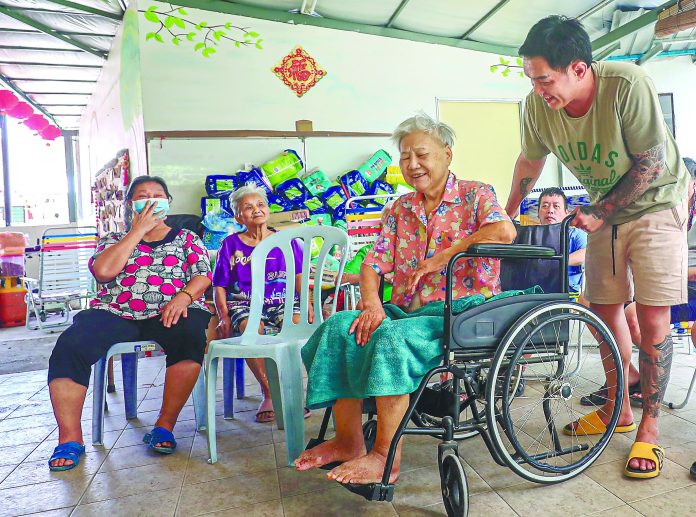
Experts warn Malaysia’s reliance on unpaid family caregivers, mostly women, could trigger a social crisis without formal recognition and support systems
PETALING JAYA: Experts have warned that Malaysia’s growing reliance on unpaid family caregivers risks tipping into a full-blown public health and social crisis unless urgent steps are taken to formally recognise and support individuals providing care at home.
Universiti Kebangsaan Malaysia public health specialist Prof Dr Sharifa Ezat Wan Puteh said unpaid caregivers, most of whom are women, form the backbone of long-term care for older persons, people with disabilities and individuals living with chronic illnesses.
However, she said their contributions remain largely invisible.
“Caregiving is often treated as a family obligation, particularly for women, and is taken for granted.
“In reality, it could be a 24-hour responsibility, often involving care for both ageing parents and young children at the same time. Without proper support, caregivers face severe stress, burnout and financial strain.”
She added that the public health system is ill-prepared to support families providing care at home.
She also said caregiver stress often goes unnoticed until it affects job performance, attendance or manifests as illness.
“Most housing environments are not elderly friendly.
“Caregivers often spend their own money on home modifications, medical equipment and specialised diets, many of which are costly and not easily available.”
Sharifa said while home care and ambulatory services exist, they are mostly offered by private operators, limiting access for low and middle income families.
“For many households, paid assistance is unaffordable, leaving families to cope on their own.”
Studies show that long-term caregiving increases the risk of mental health issues, physical illness and financial hardship.
She explained that caregivers often sacrifice personal time, savings and living space to meet care demands.
“For families with limited resources, caregiving pressure could escalate into conflict, emotional distress and even family breakdown.
“When caregivers themselves become unwell, care quality declines and hospital admissions rise, placing additional strain on the healthcare system.”
She added that gender inequality remains a major concern.
She said caregiving duties in Malaysia fall disproportionately on women due to cultural expectations and the perception that women have careers that are more flexible or expendable. “This leads to women working fewer hours, missing career opportunities or leaving the workforce altogether.”
“Over time, this affects their income, retirement security, health and ageing outcomes. (Female) caregivers are also at higher risk of chronic illness and mental health problems.”
Sharifa also highlighted the emergence of Caregiver Stress Syndrome – marked by emotional, mental and physical exhaustion – and cautioned that prolonged unsupported caregiving could mimic chronic stress or post-traumatic stress disorder.
She called for the formal registration of caregivers as a first step towards policy support.
“Caregivers need to be identified and recognised.
“This would enable targeted assistance such as stipends, respite care and access to healthcare services, while allowing caregivers time to rest and recover.”
She also urged employers to adopt caregiver-friendly workplace policies, including flexible hours and alternative work arrangements.
“Supporting caregivers is not just a welfare issue, it is a public health investment.
“If caregivers are neglected, the costs would ultimately be borne by families, employers and the healthcare system.”
Adding to the call for reform, Universiti Putra Malaysia Malaysian Research Institute on Ageing senior research officer Chai Sen Tyng highlighted the financial and structural gaps in Malaysia’s long-term care (LTC) system.
“At present, LTC costs are borne out-of-pocket by families.
“We do not have a public LTC financing system and public LTC services are limited,” he said, urging policymakers to review existing arrangements.
He also emphasised the need for workforce recognition and regulation.
“We are dealing with both paid carers and unpaid family caregivers.
“Provisions for regulating care quality and the workforce are still nascent, and support for informal caregiving is limited.
“Home and community-based care are under-regulated, and residential aged care remains fragmented.”
He added that inter-ministerial coordination and multi-sectoral partnerships are critical.
“Unless we recognise that aged care is a critical and essential industry, formal aged care would remain limited to those who could afford it.
“We also need pension systems and LTC systems that could meet the care demands of current and future generations.
“These changes would take time, but if we don’t start now, the problem would just snowball out of sight,” he said.



