




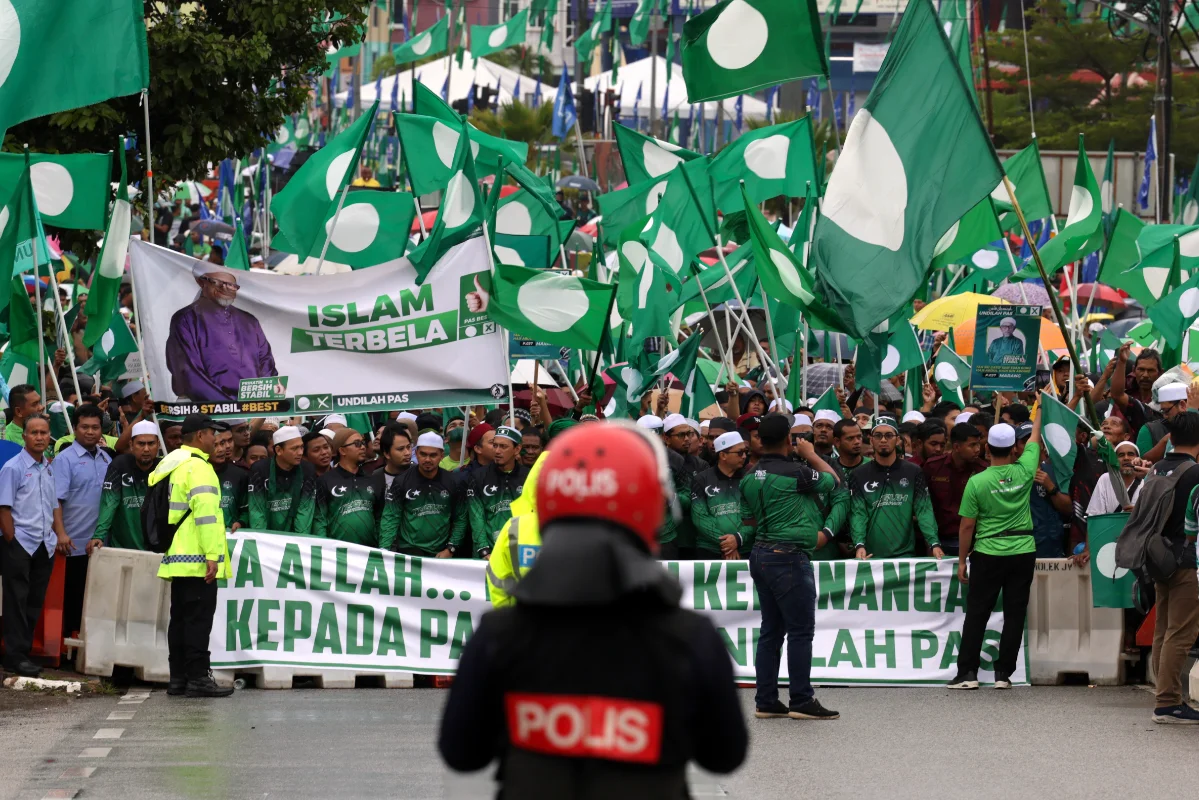
Analysts say coalition tensions stem from party safeguarding principles, power-sharing disputes and fragile trust
PETALING JAYA: Analysts have cautioned that portraying PAS as a party that “backstabs” its allies oversimplifies Malaysian coalition politics and overlooks the deeper dynamics shaping its decisions.
Universiti Malaya socio-political analyst Datuk Prof Dr Awang Azman Awang Pawi observed that perceptions of betrayal often arise from isolated political episodes rather than the party’s long-term trajectory.
“PAS is frequently accused of betraying its allies because certain decisions appear to prioritise its own interests over coalition consensus. However, PAS is fundamentally an ideologically driven party with strong internal discipline,” he told theSun.
He explained that tensions tend to surface when an ideologically rigid party operates within coalitions that require compromise.
“What outsiders describe as ‘backstabbing’ is often PAS safeguarding its principles. This ideological consistency, while admired by supporters, can create friction with partners who expect pragmatism,” he added.
Commenting on Bersatu, Awang Azman added that its “power-hungry” image reflects its relatively recent formation and post-election strategies.
“Bersatu is a young party that depends on political survival. Its focus on parliamentary numbers makes it appear opportunistic,” he said, adding that such behaviour is common in parliamentary systems that reward strategic manoeuvering.
Awang Azman stressed that Perikatan Nasional (PN) faces a deeper crisis rooted not in PAS or Bersatu individually, but in the coalition’s failure to cultivate long-term trust.
“PN was largely united by a common enemy and protest sentiment. It has yet to mature into a coalition with a shared vision, clear decision-making structures and collective leadership,” he said.
International Islamic University Malaysia associate professor Dr Syaza Shukri said PAS’s ideological strength partly explains its negative perception.
“PAS is ideologically consistent. When partners obstruct its long-term objectives, as seen with DAP during the Pakatan Rakyat (period), it does not hesitate to sever ties,” she said.
She added that PAS has also experienced betrayal, including by Umno in 1977 and arguably by Bersatu today, yet remained ideologically consistent.
According to Syaza, Bersatu’s image is shaped by its origins.
“Bersatu was formed by elites who broke away from Umno rather than through grassroots mobilisation.
“As a result, it is often seen as prioritising power and positions,” she explained.
Nusantara Academy for Strategic Research senior fellow Dr Azmi Hassan said PAS’s actions should be viewed within the context of shifting alliances rather than moral betrayal.
“PAS cooperated with Umno under Muafakat Nasional 1.0, but later clashed with DAP during Pakatan Rakyat and eventually parted ways.
“Each decision was driven by specific circumstances,” he said, adding that PAS consistently frames its moves through ideological and religious reasoning.
He acknowledged that PAS frequently turns former allies into rivals.
“The reality is that PAS often begins as a partner but later becomes an opponent,” he said.
Azmi described Bersatu as a relatively small and structurally weak party formed to rival Umno and attract dissatisfied supporters.
“Bersatu was never a large mass-based party,” he said, rejecting claims that PAS had betrayed it.
Instead, he pointed to unresolved PN disputes over power and leadership.
“The real friction centred on who should become prime minister if PN took power. Perlis became the breaking point that escalated the conflict,” he said, adding that this eventually led to Tan Sri Muhyiddin Yassin stepping down and PAS in Perlis disengaging from state-level cooperation.
He concluded that the PAS–Bersatu dispute reflects leadership rivalry and coalition instability rather than ideological betrayal.
“In Malaysian coalition politics, unclear power-sharing arrangements inevitably create fractures, regardless of ideology.”



