



A reflective take on Zootopia 2, exploring stereotypes, exclusion and mindfulness, and how the film’s message mirrors everyday behaviour in shared spaces.
SOME films entertain. Others quietly unsettle you, not because they are loud or dramatic, but because they hold up a mirror you were not expecting to look into.
Zootopia 2 belongs to the latter category. On the surface, it is an animated story set in a colourful, carefully ordered city of animals. Beneath that surface, it is a study of fear, historical erasure and the ease with which societies decide who belongs and who must remain suspect.
The film revisits a familiar question. How do stereotypes take root and why do they persist long after their origins have been forgotten?
In this imagined Zootopia, snakes – absent for years – are automatically framed as dangerous, untrustworthy and incompatible with civic life. Evidence is ignored, history is distorted and power protects its own version of the truth.
What unfolds is not simply a mystery but a reminder that exclusion is rarely accidental. It is often designed, inherited and defended in the name of order.
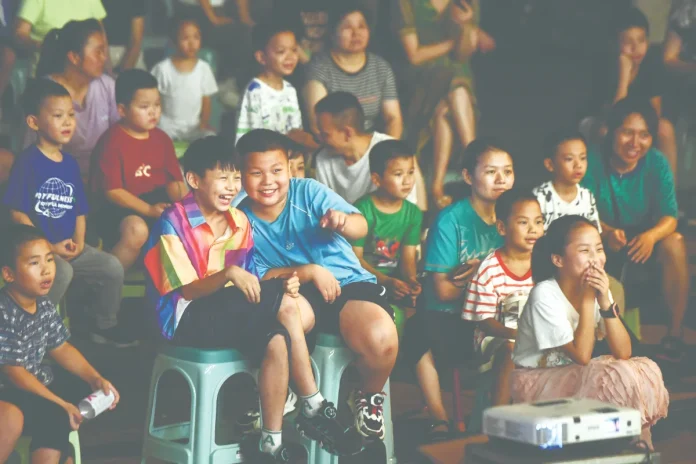
Yet, what made the experience linger for me had little to do with the plot alone. A few rows away sat a mother with her young children. Within minutes, it was clear they were restless and disengaged.
The story was rich with meaning, layered in its themes and emotionally demanding in ways that required patience and reflection. The children fidgeted, whispered and complained that they wanted to go home.
When they were told to stay put, frustration turned outwards. Seats were shaken, constant movement followed and sounds disrupted the shared silence of the cinema.
Eventually, those around them quietly moved to other seats, not out of hostility, but out of necessity. What stayed with me was not irritation but irony. Here was a film centred on the cost of forcing identities – silencing unease and ignoring readiness – being watched in a space where misalignment was overridden rather than attended to.
The children were not being malicious; they were overwhelmed. And yet, instead of adjustment, there was insistence. Instead of attunement, endurance was demanded from them and from everyone else.
This is where the film’s message gently but firmly steps off the screen and into real life. Zootopia asks us to examine how quickly we label entire groups based on fear, how easily we dismiss voices that do not fit our expectations and how dangerous it is to prioritise appearances over truth.
But these lessons cannot remain abstract. They must show up in everyday decisions, in how we choose experiences, how we read the emotional temperature of a space and how we recognise when something is simply not age-appropriate, even if it is well intentioned.
Mindfulness is not about forcing exposure; it is about discernment. Public spaces are shared ecosystems – just as social harmony depends on recognising differences without panic, shared environments depend on mutual consideration.
Teaching children about inclusion, empathy and coexistence does not happen by sitting them through narratives they cannot yet process. It happens through modelling awareness, knowing when to stay, when to leave and when adjusting is an act of respect rather than failure.
There is a deeper parallel here. In the film, an entire community is marginalised because history was rewritten by those in power. In the cinema, discomfort was minimised because the priority was staying rather than listening. In both cases, the cost is the same. Disconnection.
Perhaps the quiet invitation of Zootopia is this: to notice the gap between values and behaviour. To recognise that unity is not proclaimed; it is practised. And that the work of not shunning others begins not only with how we speak about race, religion or status but also with how thoughtfully we move through shared spaces with others in mind.
Sometimes, the most powerful lesson a film offers is not what it says but what it asks us to notice about ourselves once the lights come back on.
Mind the mind and the world we share will begin to soften, not through grand gestures, but through the quiet discipline of awareness in everyday life.
Dr Praveena Rajendra is the author of Mindprint: Engineering Inner Power for Growth, Purpose and Regeneration.
Comments: letters@thesundaily.com



