




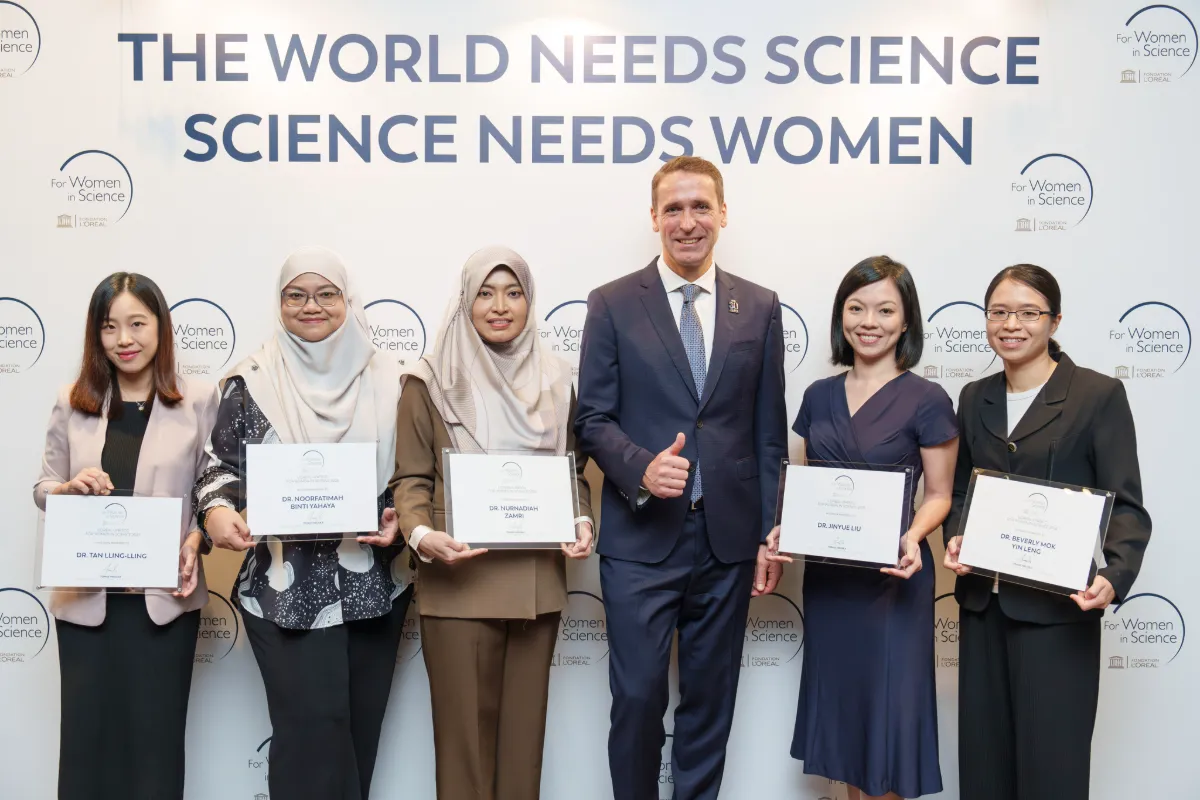
PETALING JAYA: Malaysia’s scientific talent received a boost last month as the L’Oreal-Unesco For Women in Science programme recognised three researchers whose work spans healthcare, clean energy and mental health.
Each awardee received RM30,000 in funding to scale their projects, along with support aimed at strengthening women’s participation in STEM (science, technology, engineering and mathematics).
Dr Noorfatimah Yahaya, an associate professor at Universiti Sains Malaysia, has spent 15 years researching antibiotics, focusing on creating a greener, AI-guided method to personalise dosing of ampicillin-sulbactam (Unasyn) for hospital patients.
Her approach combines eco-friendly microextraction techniques with machine-learning models to optimise treatment, reduce drug toxicity and curb antimicrobial resistance.
“For me, this award truly means a lot because it recognises my journey in antibiotic research,” said Noorfatimah. “Both of my parents are pharmacists and they inspired me to pursue work that can genuinely save lives. This is more than an achievement, it’s a platform to bring visibility to personalised antibiotic dosing and show that women scientists can lead impactful, cross-disciplinary innovations.”
Her research has potential commercial applications in hospital settings, where software based on her models could allow doctors and pharmacists to input patient data to determine precise antibiotic doses.
“We hope to start with hospitals around Penang and then expand to other states,” she said.
By integrating her analytical chemistry expertise with pharmacokinetic and pharmacodynamic models, Noorfatimah’s work could improve patient outcomes and reduce healthcare costs, particularly for intensive care unit patients.
Dr Tan Lling-Lling, senior lecturer at Monash University Malaysia, is advancing solar energy through her innovative “day-night” photocatalyst system, which stores sunlight and produces fuels such as hydrogen and methane even after sunset.
“Winning this award is a meaningful recognition of my research group’s work. It also amplifies the message that women can be at the forefront of energy research,” said Tan.
She highlighted that the funding will accelerate her work in fabricating and testing persistent photocatalysis, generating preliminary results crucial for securing larger-scale grants and training young researchers.
Industrially, Tan noted her technology could benefit sectors such as hydrogen production, carbon utilisation and wastewater filtration, complementing existing energy storage solutions such as batteries.
“Photocatalysis uses free sunlight and abundant materials, offering potential lower long-term costs compared to batteries, which rely on limited minerals and extensive manufacturing infrastructure,” she explained.
Tan said Malaysia, with its strong materials research capabilities and national net-zero goals, could emerge as a leader in solar energy innovation regionally and globally.
Dr Nurnadiah Zamri, senior lecturer at Universiti Sultan Zainal Abidin, applies mathematics and AI to mental health through a hybrid chatbot that offers early emotional screening, cognitive behavioural therapy-based self-help tools and culturally sensitive teletherapy matching.
“This award gives me motivation to do more research in science, especially as a woman,” said Nurnadiah, reflecting on balancing her career with raising two daughters.
She stressed that her project aims to provide Malaysians with accessible mental health support while collecting real-time, culturally relevant data to inform government policies.
Drawing on her mathematics background, Nurnadiah has applied fuzzy logic and machine learning to address mental health stigma and improve accessibility.
“Through this mental health chatbot, people don’t need to be shy about sharing their challenges. It can help reduce mental health issues to a manageable level,” she said, noting the broader societal benefits of scalable, AI-driven interventions.
All three scientists highlighted the importance of perseverance, mentorship and family support in navigating careers in male-dominated fields.
Noorfatimah emphasised, “We need to get up and continue after failure. I consider myself lucky to have a very supportive family, which allows me to keep moving.”
Tan recalled nearly giving up during her PhD but staying the course led to promising results that fuel her continued work.
Nurnadiah cited her mother and daughters as key motivators, saying, “As long as we can cater to challenges, we as women can be great scientists, contributing both nationally and globally.”
The awardees also addressed misconceptions about women in STEM, from perceived leadership limitations to balancing work and family.
They agreed that programmes such as L’Oréal-Unesco For Women in Science are critical for empowering women researchers with visibility and support.
Their collective message to aspiring female scientists is clear – pursue your passion, persevere through setbacks and believe in the impact of your work.
The L’Oréal-Unesco initiative, which has supported 60 Malaysian women scientists since 2006 with over RM1.5 million in funding, continues to play a pivotal role in fostering gender equality in scientific leadership and advancing sustainable, real-world solutions in Malaysia.



