the sun malaysia ipaper logo 150x150
Wednesday, December 3, 2025
25.9 C
Malaysia
the sun malaysia ipaper logo 150x150
Blog

Malaysia’s exports rise, outpace decade average despite ringgit strength

Malaysia's exports rise, outpace decade average despite ringgit strength
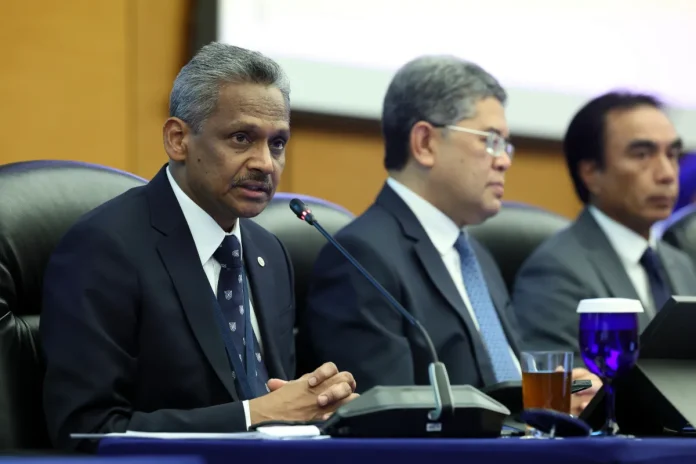
Abdul Rasheed (left) speaking at a press conference on Malaysia’s third quarter 2025 gross domestic product performance today. - Bernamapic

KUALA LUMPUR: Malaysia’s stronger ringgit has not dampened export performance, with gross exports rising 6.7% in the third quarter, outpacing the decade-long average.


Bank Negara Malaysia governor Datuk Seri Abdul Rasheed Ghaffour said Malaysia has “never used the ringgit to gain export competitiveness”.


“Despite the strong ringgit that we saw in the third quarter, we still registered higher gross-export growth of about 6.7% in 3Q this year,“ he said at the release of Malaysia’s third quarter 2025 gross domestic product statistics today.


The governor noted that from 2011 to 2019, Malaysia’s gross export growth averaged 5.2%, making the latest export figure stronger than the long-term trend.


Abdul Rasheed noted that gross exports had grown by 3.3% in the second quarter despite the stronger ringgit.


“Our gross export growth is very strong, and this reflects the minimal impact of the ringgit on export performance,” he said.


According to the central bank, the ringgit strengthened against most major trading partners’ currencies in the third quarter of 2025, supported by improving external conditions and stronger domestic fundamentals.


Year-to-date, as of Nov 12, the ringgit has appreciated by 5.3% on a nominal effective exchange rate basis, reflecting broad gains against a basket of currencies of Malaysia’s major trading partners.


It rose 8.2% against the US dollar, in line with the dollar’s global weakening, as the US Dollar Index fell by 8.3% over the same period.


The central bank noted that the ringgit recorded particularly strong appreciation against regional currencies, rising 12.1% against both the Indian rupee and the Indonesian rupiah, 10.5% against the Philippine peso, 7.8% against the South Korean won, 6.8% against the Japanese yen, and 5.6% against the Chinese yuan.


Gains were also seen against the Singapore dollar (3.6%), the Thai baht (2.7%) and the Taiwanese dollar (2.5%) over the same period.


Abdul Rasheed said both external and domestic factors drove the ringgit’s movement.


On the external front, the US Federal Reserve’s monetary policy easing in September, coupled with expectations of further rate cuts amid growing concerns about the US economy’s outlook, has supported the ringgit during the quarter.


“In addition, the announcement of trade agreements between the US and several of its trading partners, including Malaysia, has helped ease tariff-related uncertainties and improve sentiment, further supporting the ringgit’s performance,“ the central bank governor said.


Looking forward, BNM sees Malaysia’s positive economic growth prospects, supported by the government’s commitment to domestic structural reforms and fiscal sustainability, will continue to support the ringgit.


“BNM remains committed to ensuring the orderly functioning of the domestic foreign exchange market,“ Abdul Rasheed said.

Advertisment

Farmiera upbeat on poultry sector’s 2026 outlook

Farmiera upbeat on poultry sector’s 2026 outlook
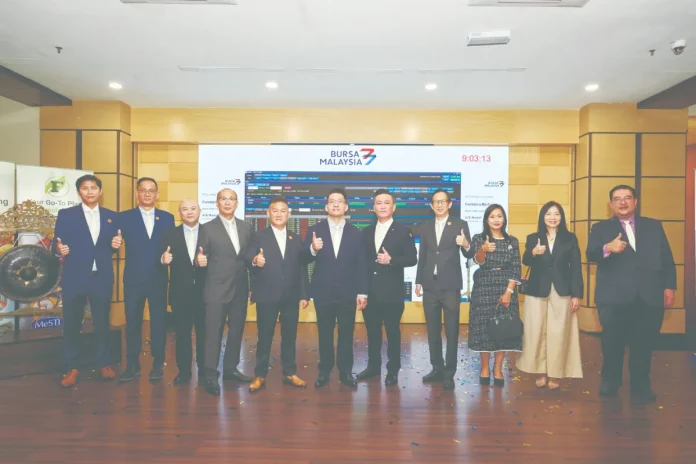
(From left): Farmiera’s Chin; purchasing & project development general manager Lim Kim Leng; sales & business development general manager Ong Chin Loong; farm operations senior general manager Tan Chin Heng; Lim; managing diector/CEO Hong How Seng; executive director/deputy CEO Tan Kok Cheong; independent non-executive chairman Tang Yuen Kin; independent non-executive directors Nor Syahirah Abu, Koo Woon Kan and Adrian Chair Yong Huang.

KUALA LUMPUR: Poultry producer Farmiera Bhd is upbeat of the sector’s outlook in 2026 on the back of steady demand for chicken which remains Malaysia’s most affordable source of protein and consumption expected to rise with Visit Malaysia Year 2026.
Chief financial officer Chin Chien Hwi said poultry will continue to be the most affordable protein option for consumers, while higher tourist arrivals are expected to lift demand.
“So, as long as the population is there, 2026 is the tourism year with more tourists coming to Malaysia, we expect consumption to be higher,” he said during a press conference in conjunction with its listing ceremony yesterday.
The company, which debuted on the ACE Market of Bursa Malaysia yesterday, said efficiency-focused operations will drive its next phase of growth.
Chin said Farmiera’s upstream integration plan, including new parent stock farms and a hatchery, will strengthen supply stability and cost efficiency.
“Moving forward, we are continuously expanding our broiler farms to improve efficiency and strengthen our bottom line. We remain focused on our core poultry business and pursuing upstream integration to enhance profitability,” he said.
The parent stock farm is scheduled for completion in the second quarter of 2026, with the supporting hatchery expected to be operational by the first half of 2027. At present, Farmiera sources all its day-old chicks from third-party suppliers.
Chin also expressed support for a liberalised market environment following the end of the chicken price subsidy on Nov 1, 2023.
“We are welcoming the open market because, after all, the open market means our results are based on our operational efficiency. So we welcome an open-market kind of supply and demand,” he said.
Chin explained that chicken prices are subject to market forces such as supply and demand, and the company manages this by focusing on operational efficiency.
“Pricing is still determined by supply and demand.
“For us, we can only focus on operating efficiency because that’s how we cut costs and improve profit,” he said.
The subsidy, introduced in February 2022, was aimed at stabilising chicken prices during the Covid-19 period, when labour shortages and feed costs disrupted supply.
Its removal was intended to boost domestic production, reallocate fiscal savings to targeted welfare programmes, and prevent leakages to unintended beneficiaries.
The company’s shares opened flat at 25 sen with an opening volume of 12.14 million shares, giving a market capitalisation of RM112.50 million.
Through the IPO, Farmiera has raised RM29.25 million through the issuance of 117.00 million new shares.
The proceeds will be utilised primarily to support the company’s upstream vertical integration expansion, with RM12.55 million and RM9.60 million allocated for the construction of two new parent stock farms and a hatchery, respectively.
In addition, RM2.80 million will be used as working capital for day-to-day operations, while the remaining RM4.30 million is earmarked for listing-related expenses.
The company operates 15 self-owned farms and 44 contract farms across Peninsular Malaysia, supported by processing facilities in Lukut and Ipoh with a combined daily capacity of 45,000 broilers.
Its operations are halal- and MeSTI-certified, and the counter is Syariah-compliant.
For FY2024, Farmiera recorded RM561.1 million in revenue and RM7 million in net profit, up from RM535.8 million and RM6.4 million, respectively, in FY2023.

Advertisment

Malaysia rises as regional base for right-hand-drive markets as China’s GWM starts production here

Malaysia rises as regional centre for right-hand-drive markets as China's GWM starts production here
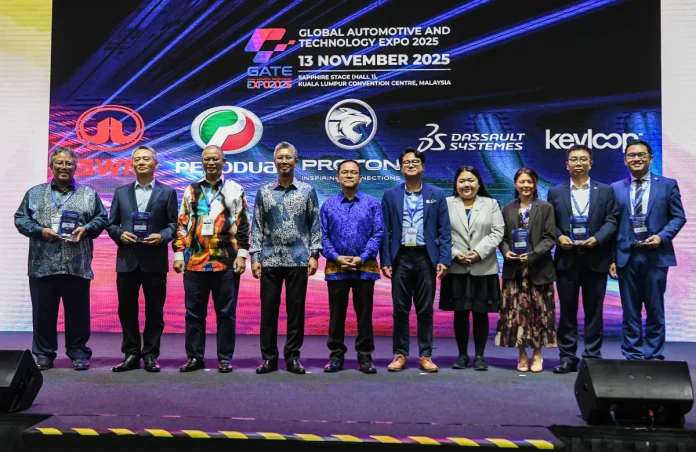
Tengku Zafrul (four, left) with sponsors at the opening ceremony of Global Automotive and Technology Expo 2025 at the Kuala Lumpur Convention Centre, - Bernamapic

KUALA LUMPUR: Malaysia is rising as a regional base for right-hand-drive (RHD) markets as China’s Great Wall Motor (GWM) begins production here.


Investment, Trade and Industry Minister Tengku Datuk Seri Zafrul Abdul Aziz said GWM’s decision to assemble the WEY G9 in Malaysia is positioning the country as a regional hub for RHD markets.


“GWM Malaysia, though operating via contract assembly, is regarded as a strategic entity by its principal in China. The local assembly of the WEY G9 MPV in Malaysia marks the first production of this model outside its home country, establishing Malaysia as the regional hub for right-hand drive markets,” he said at Global Automotive and Technology Expo 2025 (GATE 2025) today.


China is a left-hand drive country.


Tengku Zafrul said Malaysia is not just building vehicles, the country is fast becoming a hub for the future of mobility.


“Malaysia is ready to capture this opportunity. With a strong semiconductor base, abundant rare earth resources and a mature manufacturing ecosystem, we are well-positioned to lead.”


He said that under the New Industrial Master Plan 2030, the go

vernment is charting Malaysia’s transition towards high-value, sustainable and tech-driven industries. “Complementing this, the National Automotive Policy 2020 provides a roadmap to position Malaysia as a regional hub for next-gen vehicles, energy efficient transport and component innovation.”


Malaysia is also advancing digital infrastructure through the RM2 billion Sovereign AI Cloud – strengthening data sovereignty and enabling large scale AI adoption across mobility, semiconductor design and advanced manufacturing. Tengku Zafrul said.


“Additionally, RM180 million has been allocated under the NIMP Industrial Development Fund to support high-impact industry development, alongside enhanced incentives and tax reforms to drive deeper industrial participation, localisation, and productivity.”


With all these, Tengku Zafrul said, Malaysia aspires to evolve from a producer of goods to a creator of technology, innovation, and intellectual property.


He also said the automotive sector is one of Malaysia’s most important industrial pillars. “In fact, Malaysia held the number one vehicle market position in Southeast Asia during the first half of 2025.”


To support the growth of the EV manufacturing ecosystem, he said, the current CBU EV tax exemption framework scheduled to run until Dec 31, 2025 is being aligned with the broader push for local assembly, CKD operations, and parts localisation.


“This strategic shift aims to strengthen industrial participation and enhance Malaysia’s competitiveness within the regional supply chain.”


To support local vendors, Malaysia will introduce essential list and localisation incentives to strengthen domestic supply chains and expand export opportunities.


“Our national champions are making strong progress, Perodua’s EV programme is on track, and Proton’s launch of the e.MAS 5 signals our industry’s capability and ambition. In short, Malaysia’s automotive policies under the Madani government are not just credible, they are competitive,” Tengku Zafrul said.


GATE 2025 is organised by the Malaysia Automotive, Robotics and IoT Institute and Derrisen Sdn Bhd, bringing together global original equipment manufacturers, suppliers and technology innovators. The event is supported by Proton and Perodua as Platinum Partners while GWM participates as a Gold Partner.

Advertisment

Public trust central to Malaysia’s nuclear energy ambitions: Fadillah

Public trust central to Malaysia's nuclear energy ambitions: Fadillah
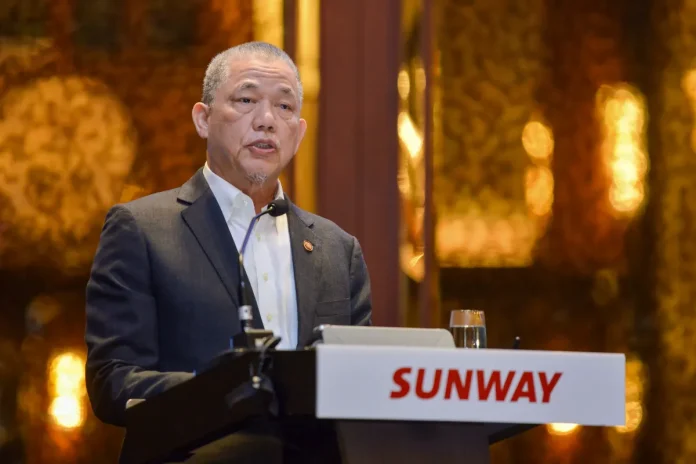
Fadillah delivering his keynote speech at the at the International Conference on Nuclear Energy 2025. - Bernamapic

PETALING JAYA: Public trust is central to Malaysia’s nuclear ambitions, said Deputy Prime Minister Datuk Fadillah Yusof amid the government’s move in building institutional readiness for nuclear development.


Fadillah, who is also the Energy Transition and Water Transformation Minister, said any decision on adopting nuclear power will be made “with utmost care, grounded in evidence, public engagement, and international best practices”.


“When citizens understand the science, safeguards and benefits, they become active partners in Malaysia’s energy transition,” he said at the International Conference on Nuclear Energy 2025 (ICNE 2025) today.


He said Malaysia’s exploration of nuclear energy is guided by three key principles – safety, transparency and sustainability.


Fadillah highlighted that the government has taken a key step towards strengthening nuclear readiness by appointing MyPower Corporation as the Nuclear Energy Programme Implementing Organisation.


“MyPower will coordinate national efforts across ministries, regulators and industry players on nuclear planning and infrastructure development.”


He said the agency will also strengthen institutional, legal and regulatory frameworks consistent with the International Atomic Energy Agency Milestone Approach.


It will conduct feasibility studies to assess nuclear energy’s role in achieving long-term energy security and emission reduction goals, and engage the public and key stakeholders to build understanding and confidence in Malaysia’s nuclear direction.


Going forward, Fadillah said, key initiatives under way include strengthening the Atomic Energy Licensing Board’s capacity for regulation and safety.


He said the effort includes human capital development, by building technical expertise among engineers, scientists, and regulators through training and international cooperation.


Malaysia will also deepen research and technology collaboration through partnerships with international institutions and nuclear technology providers to facilitate knowledge and innovation transfer.


Public communication and trust-building will likewise be prioritised, with efforts to engage citizens transparently and foster informed dialogue on the peaceful use of nuclear energy, Fadillah said.


He added that Malaysia is in a transformative era where energy security, climate resilience and technological innovation define the national priorities.


“As global demand for sustainable energy intensifies, many countries are adopting ambitious pathways towards net-zero emissions by 2050.”


For Malaysia and Asean, Fadillah said, this transition represents a strategic opportunity to drive a low-carbon, inclusive, and competitive energy future. “While renewable energy remains a cornerstone of our strategy, its intermittency highlights the need for dependable, low-carbon baseload options.”


Globally, he added, nuclear energy has re-emerged as a viable solution, offering reliability, scalability and near zero emissions.


“Malaysia continues to evaluate nuclear energy as part of its long-term national energy transition plan. This exploration is not a sudden shift, but a carefully phased, science-based process to diversify our energy mix and strengthen energy security and affordability,” Fadillah said.


Themed “Paving the Way for a Sustainable Energy Source in Asean”, ICNE 2025 gathered leaders, policymakers, scientists and industry representatives from Malaysia, China, Canada, South Korea and Asean.


The event highlighted nuclear energy’s potential role in meeting the global “energy trilemma” of security, affordability and sustainability, as Malaysia targets net-zero emissions by 2050. It brought together leading experts from the Department of Atomic Energy Malaysia, Asean Centre for Energy, China National Nuclear Corporation, AtkinsRéalis Canada, and the Korea Nuclear Association for International Cooperation.

Advertisment

Women could make up 50% of board members as talent readily available: SC chairman

Women could make up 50% of board members as talent readily available: SC chairman
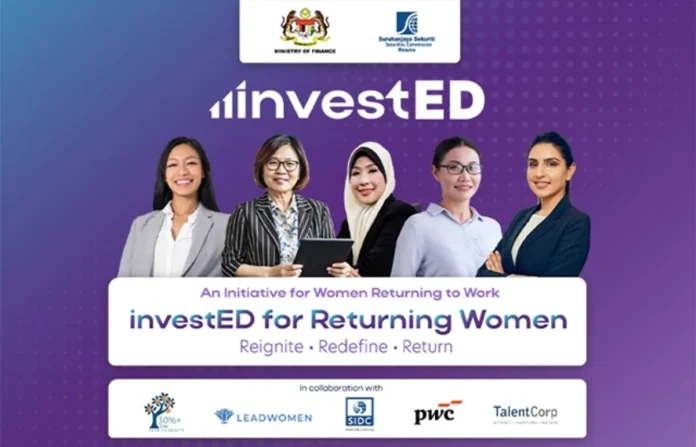
As at Oct 1, over 34% of board positions among the top 100 listed companies on Bursa Malaysia are held by women. - SC/invesTED website pic

KUALA LUMPUR: Women could make up 50% of board members in the capital market within five years, up from the current 34%, as there is a steady, qualified talent pool ready to move up into leadership, said Securities Commission Malaysia (SC) chairman Datuk Mohammad Faiz Azmi.


He explained that women already form the majority of university graduates and middle management in Malaysia.


“It’s actually possible (to reach 50% in five years). Because if we look at the universities, the graduates and even in middle management, most of them are already women,” he told reporters at the launch of investED for Returning Women today.


As at Oct 1, 2025, Faiz said, over 34% of board positions are held by women among the top 100 listed companies on Bursa Malaysia.


What is important now is to encourage and train them for higher management positions. “I think most companies already have mentoring programmes and such. That’s what’s crucial, to prepare them for high-level roles.”


Faiz said across many fields now, it is becoming more common to see women occupying top management and boardroom positions. “For example, if we look at PricewaterhouseCoopers, its chairman is a woman,” he pointed out.


Looking forward, Faiz said the SC is finalising a five-year plan to strengthen the market. “In January next year, we will announce this plan to further strengthen the capital market. But for now, things are alright.”


The SC chairman highlighted that Malaysia’s capital market remains stable, which he said is a key factor for maintaining investor confidence and sustaining investment activity.


InvestED for Returning Women, a training and re-entry programme, is designed to support women seeking to rejoin the capital market after a career break. The programme will provide returning women with the essential knowledge, skills and opportunities to thrive in the capital market.


First announced in October this year, investED for Returning Women has received over 600 applications, which the SC said reflects strong interest and demand among women seeking structured pathways back into professional employment.


Applicants’ ages range from mid 30s to late 40s, with many coming from the oil and gas, banking, finance and insurance sectors.


Deputy Finance Minister Lim Hui Ying, who launched the event, said, “By supporting women with upskilling, mentorship and professional re-entry opportunities, the programme ensures that talent is not only retained, but fully valued.”


She said that among the Madani government’s seven medium-term targets set, one key performance indicator is to increase the female labour force participation rate to 60%. “Increasing women’s participation in the workforce is not only a matter of equity, it is also economically significant.”


Lim noted studies have shown that higher female labour participation could raise Malaysia’s gross domestic product by up to 7% to 12%.


At the same time, she said, the government recognises that when women step away from the workforce to fulfil family or societal responsibilities, their skills and professional identities do not disappear.


“What truly matters is how we create meaningful pathways for them to reconnect, rebuild, and resume their careers with confidence and dignity.”


Lim cited the government’s steps to encourage women to return to work and to create an environment where they can thrive.


“Among them, individual income tax exemption of up to 12 months for eligible women returnees, which has been extended until Dec 31, 2027. Additionally, under Budget 2024, the government increased the income tax exemption limit for childcare allowances from RM2,400 to RM3,000.”

Advertisment

Ban Lee Hin postpones initial public offering to 2027-28

Ban Lee Hin postpones initial public offering to 2027-28
Looi says Ban Lee Hin is studying opportunities in Cambodia and Thailand.

PETALING JAYA: Ban Lee Hin Engineering and Construction Sdn Bhd is eyeing a 2027-2028 initial public offering in anticipation of a stronger market then.


Chairman Datuk Tony Looi said it is pushing its listing timeline from 2026 to 2027-2028 because of the challenging operating environment and the need for greater market stability before going public.


“We were supposed to list in 2026. But we postponed this plan. The last two years, we needed time to observe the economy. Then we looked at the whole market, the global market. It’s not good timing for construction. So, we have postponed it to 2027 or 2028,” he told SunBiz in an interview.


Looi said the domestic construction sector is under pressure with weaker investor sentiment and rising costs. “Currently in Malaysia, the construction sector is facing a lot of challenges … because now the global economy is slowing down, so building material cost is increasing a lot.”


Ban Lee Hin’s order book has shrunk compared with previous years, when projects could reach RM160 million each year and annual turnover stood at around RM200 million. Now, the pace of new work has slowed.


“So orders have slowed down a bit. Because our clients were mostly foreign investors and developers such as Japanese, Koreans and Europeans. Now, the construction boom in Kuala Lumpur is led mainly by the Chinese, and this has not translated into more work for us.” Looi explained.
Even with the slowdown, he is hopeful that recovery will take shape. “So Malaysia has slowed down. But even Japan is facing economic problems. Hopefully, end of this year, we’ll be slowly moving up.”


Looi stressed that survival in the current market depends on financial discipline and working with reliable partners.
“So hopefully, we look for good paymasters. That’s the m

ost important thing. How to survive during tough times. So we need good paymasters,” he said, referring to clients with strong financial standing who can ensure timely payments.


At present, Ban Lee Hin is focusing on selected projects, with ongoing jobs in Selangor, Kuala Lumpur and Shah Alam, while recently completing developments in Johor and Malacca.


“Currently, we’re just surviving on our current projects. It’s still okay,“ Looi said.


Beyond construction, the group is diversifying into new ventures, including online food and beverage and green energy projects. It has acquired land in Johor and Malacca worth over RM10 million for future developments.


Looi disclosed that the firm is studying opportunities in Cambodia and Thailand, which offer more favourable conditions compared with Malaysia. In Cambodia, for example, property ownership rules and tax exemptions for new businesses provide incentives for expansion.


“Maybe we will invest in some overseas projects in the coming future. So, we will form a new office in Cambodia or Thailand,” he said.

Advertisment

Insights Analytics bidding for four active tenders worth RM27.8m

Insights Analystics bidding for four active tenders worth RM27.8m
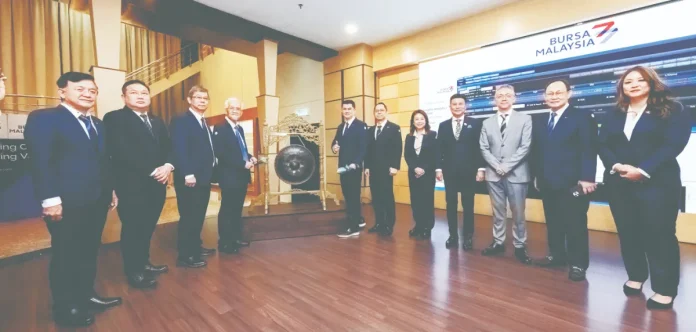
Datuk Abdul Wahab Aziz, chairman and Wee officiating the company's listing with the board of directors and advisers.


KUALA LUMPUR: Sarawak-based technology solutions provider Insights Analytics Bhd is bidding for four active tenders worth RM27.8 million, mainly for water sector projects.


Insights Analytics managing director Frank Wee said it is working on small-scale pilot implementations of its proprietary technologies before full deployment.


“Beyond conventional bidding, we are focusing on implementing proof-of-concept and proof-of-value projects. If those prove successful, we could potentially qualify for a waiver of tender and proceed via direct negotiation with the government. That’s an opportunity we’re actively eyeing, especially for technologies that are uniquely ours,” he told a press conference after the company’s debut on the ACE Market of Bursa Malaysia Securities today.


Wee explained, “These figures fluctuate, tenders come and go, depending on what’s available and whether the margins make sense for us.”


Wee is optimistic of its growth prospects, supported by rising demand for smart water management systems and Malaysia’s accelerating digital transformation agenda.


The company believes it is well-positioned to capitalise on national and state-led initiatives that aim to modernise the country’s water infrastructure, strengthen digital resilience, and promote sustainable urban development.


Wee said the company’s solutions are directly aligned with government programmes such as the National Non-Revenue Water Programme (2025-2030), the Sarawak Alternative Water Supply Initiative, the Water Sector Transformation 2040 and Sarawak’s RM20 billion Smart Water Infrastructure Blueprint.


“These long-term initiatives are creating a strong pipeline of projects for the water industry.


With our proven technology and track record, Insights Analytics is well positioned to play a meaningful role in supporting Malaysia’s water transformation and digitalisation goals,” said Wee.


In line with its expansion strategy, Insights Analytics will acquire a new corporate office in Kuching, featuring a mini data centre to strengthen its digital infrastructure and service capacity.


The mini data centre will provide clients, especially small and medium enterprises, with a hybrid or cloud-based platform to host and manage their software and applications.


“Our goal is to empower more organisations to adopt digital solutions without the burden of managing hardware or in-house IT infrastructure,” he said, adding that the mini data centre will help them deliver greater flexibility, reliability, and value to their customers.


Beyond Sarawak, Insights Analytics is expanding its presence in Peninsular Malaysia to capture new opportunities in water and digital infrastructure projects nationwide.
Insights Analytics raised RM43.56 million from its public issue of 121 million new shares at an issue price of 36 sen per share.

The company’s shares opened at 62 sen compared to the initial public offering (IPO) price of 36 sen per share, a premium of 72%. The counter closed at 65.5 sen, 29.5 sen or 81.94% above the IPO price.


The IPO included an offer for sale of 27.5 million existing shares to Bumiputera investors approved by the Investment, Trade and Industry Ministry via private placement.


Of the total proceeds, RM22.2 million (50.9%) will be utilised as working capital for ongoing and upcoming projects, RM9 million (20.7%) for strategic investments and acquisitions, RM4.4 million (10.1%) to develop a new corporate office and data centre in Sarawak, RM1.86 million (4.3%) to expand IT operations, and RM1.21 million (2.8%) for its West Malaysia branch office. The remaining RM4.9 million (11.2%) has been earmarked to defray listing expenses.


At an IPO price of 36 sen per share, Insights Analytics’ market capitalisation stood at RM198 million upon listing, based on its enlarged share capital of 550 million shares.
M& ASecurities Sdn Bhd is the adviser, sponsor, underwriter and placement agent for the IPO exercise.

Advertisment