




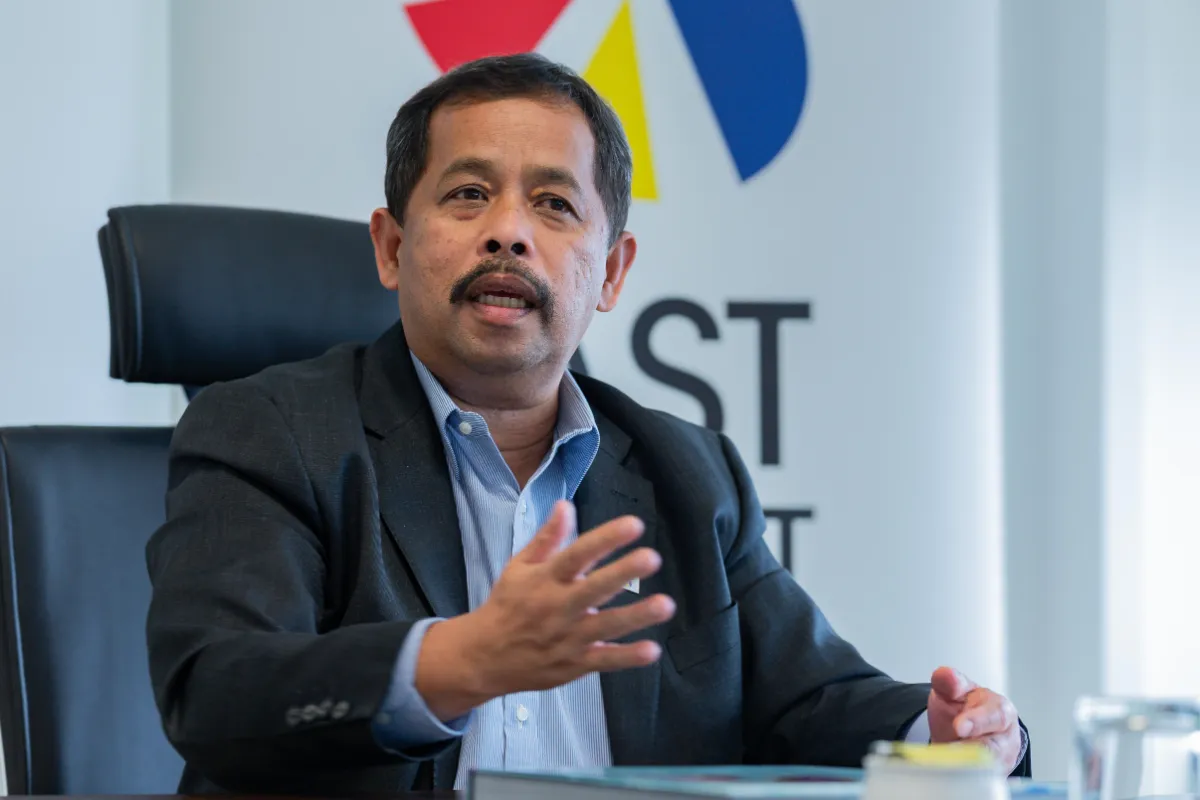
PUTRAJAYA: As the East Coast Economic Region (ECER) enters a new phase of growth under the ECER Development Plan 2026-2030, the focus centres on building a resilient, competitive and inclusive economic corridor.
Anchored by the 13th Malaysia Plan (13MP) framework, the ECER’s blueprint aims to sustain a long-term vision that creates value for investors, businesses and communities alike.
East Coast Economic Region Development Council (ECERDC) CEO Datuk Baidzawi Che Mat said that from the First Master Plan to the Second Master Plan, and now under 13MP, ECERDC’s approach has remained consistent.
“There are three key things to understand, and the first is investment. Investment is where jobs are created. It is also where entrepreneurial opportunities begin.
“When a factory is established, there is demand for food, printing, logistics and supporting services. This creates a spillover effect that drives SME and entrepreneurial growth.
“So it is not just about job creation. Investment activities broaden economic activity and encourage entrepreneurship within the region,“ he told SunBiz.
Baidzawi said since its inception in 2008 up until October 2025, ECERDC has recognised RM107 billion in realised investments and RM185 billion in committed investments.
As of October 2025, ECERDC recorded over RM11 billion in committed investments, surpassing the annual target of RM10 billion. The agency also achieved RM9 billion in realised investments, inching towards its 2025 target of RM10 billion.
Baidzawi said these are verified figures that reflect sustained investors’ confidence in the region.
The ECERDC covers four states – Kelantan, Terengganu, Pahang and a small portion of Johor, specifically two districts, Mersing and Segamat (added in 2023).
Elaborating, Baidzawi said investors ask practical questions: where will their plants be located, what logistics support is available, where are the ports and how will they export their products.
“That is why bringing investment must go hand in hand with facilitating it.
“Facilitating investment means preparing the right ecosystem. This includes infrastructure that supports industrial activity. We have developed industrial parks in Pahang, Kelantan, and Terengganu to provide ready industrial land for investors.”
“At the same time, we prepare our people. We build infrastructure, but we also develop human capital so that communities along the East Coast can directly benefit from the investments coming into the region,“ Baidzawi said.
When referring to the ecosystem and infrastructure facilitation, it includes key projects, such as the East Coast Rail Link (ECRL), which were identified as critical infrastructure for the East Coast as early as the first ECER Master Plan, he added.
Baidzawi said one of the most critical infrastructure needs for the East Coast is rail connectivity.
“From the outset, our master plan identified the expansion of Kuantan Port and the development of the Central Spine Road, connecting Bentong to Kuala Kerai, Gua Musang and onwards to Kota Bharu.
“At the time, the East Coast Expressway extended only as far as Karak, so we planned to expand it to Terengganu progressively and ultimately to Kelantan.
“We also recognised early on that investment is the engine of growth for the East Coast, driven primarily by key industrial corridors – from Kerteh, Paka and Kemaman through Gebeng and Gambang, and extending to Pekan as an automotive hub.”
Baidzawi said 70% to 80% of the region’s economic growth is concentrated within this area, which ECERDC designated as the East Coast Special Economic Zone.
“While development cannot be concentrated everywhere at once, this special economic zone – spanning Kerteh, Paka, Kemaman, Gebeng, Gambang and Pekan – is where the majority of investments are anchored.
“Infrastructure is fundamental to this strategy, because without it, economic activity cannot be generated.
“Our role has always been to ensure that these critical infrastructure elements, particularly rail, were clearly embedded in the master plan from the beginning.”
At that time, Baidzawi said, efforts were focused on securing project approval and finalising funding, and it was through engagements in China that the ECRL project was ultimately realised; when completed by the end of next year, the rail link will represent the culmination of studies, ideas and master planning that originated under ECER.
He also said progress within the ECER is reviewed at the highest federal level through regular meetings with the prime minister, held every three to six months.
At the state level, once projects are funded and approved, implementation is closely monitored through quarterly coordination meetings with the states’ respective menteri besar and relevant federal and state representatives to track progress and address issues across all four states.
Looking ahead to the next five years, Baidzawi said ECERDC’s development strategy is anchored on four core priorities that are designed to deliver long-term economic resilience and inclusive growth.
“Our focus is clear – food security, tourism, advanced manufacturing and the marine industry.
“Food security is addressed through large-scale, high-technology agriculture to reduce import dependency and strengthen domestic supply, while tourism leverages the East Coast’s natural strengths to attract higher-value visitor spending into the region.
“Manufacturing remains a key growth engine, but with a decisive shift towards sustainability. Our traditional strengths in petrochemicals and oil and gas are now evolving into renewable energy, green manufacturing and carbon capture, utilisation and storage.
“With significant reserves of rare earth elements and silica concentrated in the East Coast – accounting for more than half of the country’s estimated deposits – the strategy prioritises downstream processing to retain value locally.
“The marine sector represents another major opportunity. Oil and gas, fisheries and marine activities are all centred on the East Coast, yet much of the value creation has historically taken place elsewhere,“ Baidzawi said.
Hundreds of vessels supporting offshore operations continue to undergo repair and maintenance in neighbouring countries due to gaps in local expertise and facilities.
The strategy, therefore, focuses on rebuilding marine capabilities, including shipbuilding, repair and maintenance, through targeted incentives, skills development and public-private partnerships.
“We did not have oil and gas expertise when we started, but by bringing the industry here, capability followed. The same can be done for marine.”
Baidzawi said across all sectors, facilitation is the underlying principle.
“Infrastructure, incentivesand talent must move together. Over the past two decades, public investment of approximately RM7-8 billion has catalysed close to RM200 billion in private investment – a multiplier effect that underscores the effectiveness of targeted intervention.
“Incentives, affordable land, competitive labour costs and enabling infrastructure continue to position the East Coast as an attractive destination for investors.”
Baidzawi said, ultimately, ECERDC’s objective remains consistent.
“Investment, infrastructure, and people must be capitalised together. By aligning policy, facilitation, and execution, the East Coast is being positioned not only as a growth corridor but as a future-ready economic region where value creation is retained, communities benefit directly, and sustainable development becomes the norm.”



