




PETALING JAYA: As Malaysia enters 2026 amid shifting global capital flows, technological disruption and intensifying regional competition, industry leaders are calling for deeper, more candid engagement between the private sector and policymakers to ensure the country’s economic momentum is matched by talent readiness and structural resilience.
Rehda Institute’s CEO Series 2026 is shaping up as a key early-year platform for that dialogue, bringing together senior government leaders, industry captains and regional experts to examine Malaysia’s economic outlook and its implications for investment, labour markets and long-term competitiveness.
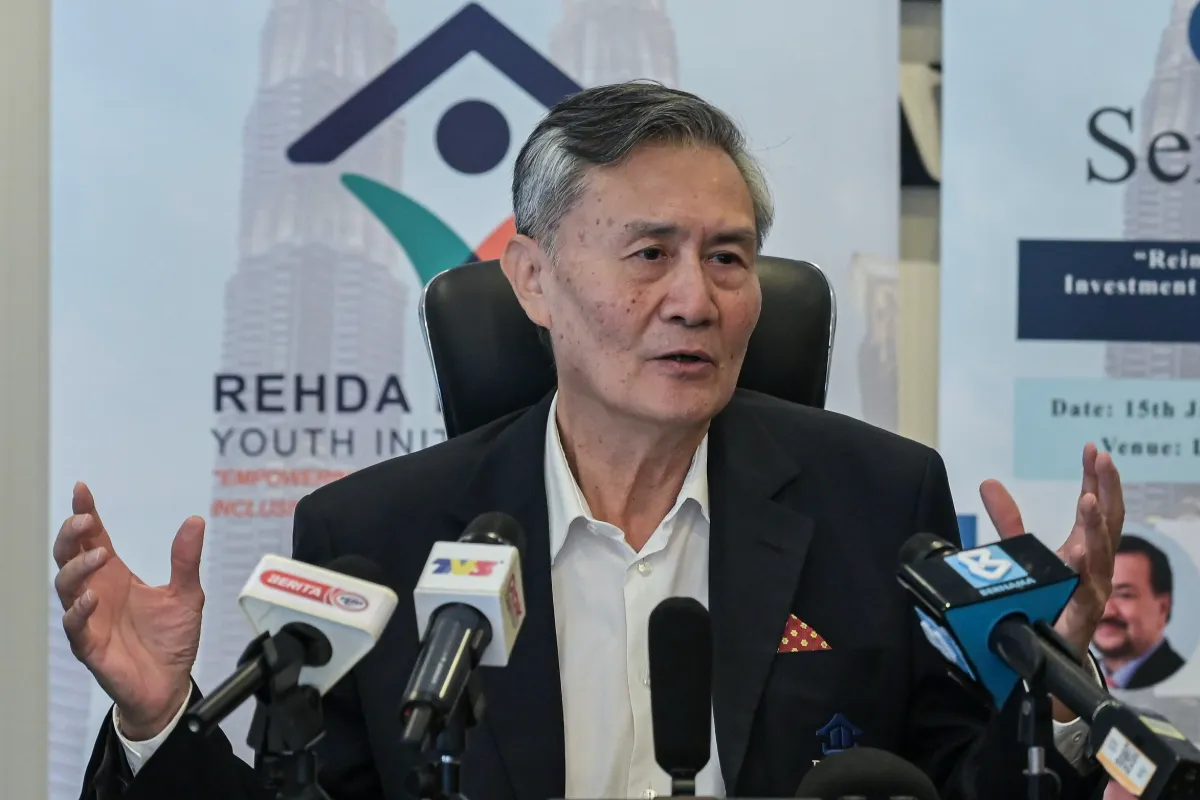
Rehda Institute chairman Datuk Jeffrey Ng Tiong Lip said the CEO Series has consistently played a critical role in surfacing private sector concerns directly to policymakers, particularly on issues that require more holistic and coordinated solutions.
“The CEO Series has always been about meaningful interaction between the private sector and senior government officials. From the private sector’s viewpoint, many issues need to be addressed in a more efficient and integrated way, and this platform allows those issues to be raised constructively,” he told reporters today.
Ng said the 2026 edition carries particular significance, as it comes at a time when global and regional economic headwinds are increasingly influencing investment decisions, business confidence and workforce dynamics across Asean.
He noted that the presence of both Finance Minister II Amir Hamzah Azizan and Transport Minister Anthony Loke Siew Fook reflects the importance of aligning fiscal, infrastructure and economic policies with private sector realities.
“What both ministers can share with us, and what we can feed back to them, is especially important as industries navigate 2026 and beyond,” he said.
Now in its 10th edition, which will be held on Jan 15, the CEO Series has evolved beyond a property-focused forum into a multi-industry conference supported by nearly 20 partner organisations, with speakers from across the region, including Australia, Singapore, Hong Kong and Vietnam.
“The whole idea is not to look inward, but outward, to understand global headwinds, regional opportunities and how Malaysia positions itself in that landscape,” Ng said.
A key highlight of this year’s conference is the launch of the Rehda Institute Youth Initiative (Riyi), a structured mentorship programme aimed at addressing persistent skills mismatches in the Malaysian workforce.
Ng said data from the Department of Statistics Malaysia shows that while unemployment remains low, underemployment among tertiary-educated graduates has become a growing concern, with many graduates ending up in semi-skilled or low-skilled roles unrelated to their qualifications.
“This is no longer an unemployment issue. It’s an underemployment issue, and it reflects a mismatch between education and industry needs,” he said.
The Riyi programme is designed to bridge that gap by pairing selected university students and young professionals with senior industry practitioners, providing early exposure to real-world decision-making and evolving career pathways across the built environment and related sectors.
For the first time, the mentorship programme will extend beyond real estate to include other industries, reflecting the increasingly interconnected nature of Malaysia’s economic ecosystem.
“Talent development is not just about hardware or investment dollars. It’s about the software, the skills, adaptability and capabilities of our workforce,” Ng said.
He warned that failure to uplift workforce skills in tandem with economic growth could eventually undermine Malaysia’s attractiveness to investors.
“If talent development runs behind economic growth, investment momentum could slow in four or five years’ time. This initiative is about closing that gap early,” he added.
The CEO Series 2026 will also feature dedicated discussions on institutional capital allocation, alternative asset classes and emerging sectors such as data centres, which have attracted significant foreign investment into Malaysia.
In addition, the programme will place a strong spotlight on tourism and hospitality-led developments in conjunction with Visit Malaysia Year 2026, reflecting changing consumer preferences towards experiential and long-stay accommodation models.
Another major focus will be the Johor-Singapore Special Economic Zone and broader transport connectivity, including transit-oriented development and cross-border economic spillovers. Ng said these discussions go beyond Johor alone, with implications for real estate, infrastructure and growth corridors across multiple states.



