




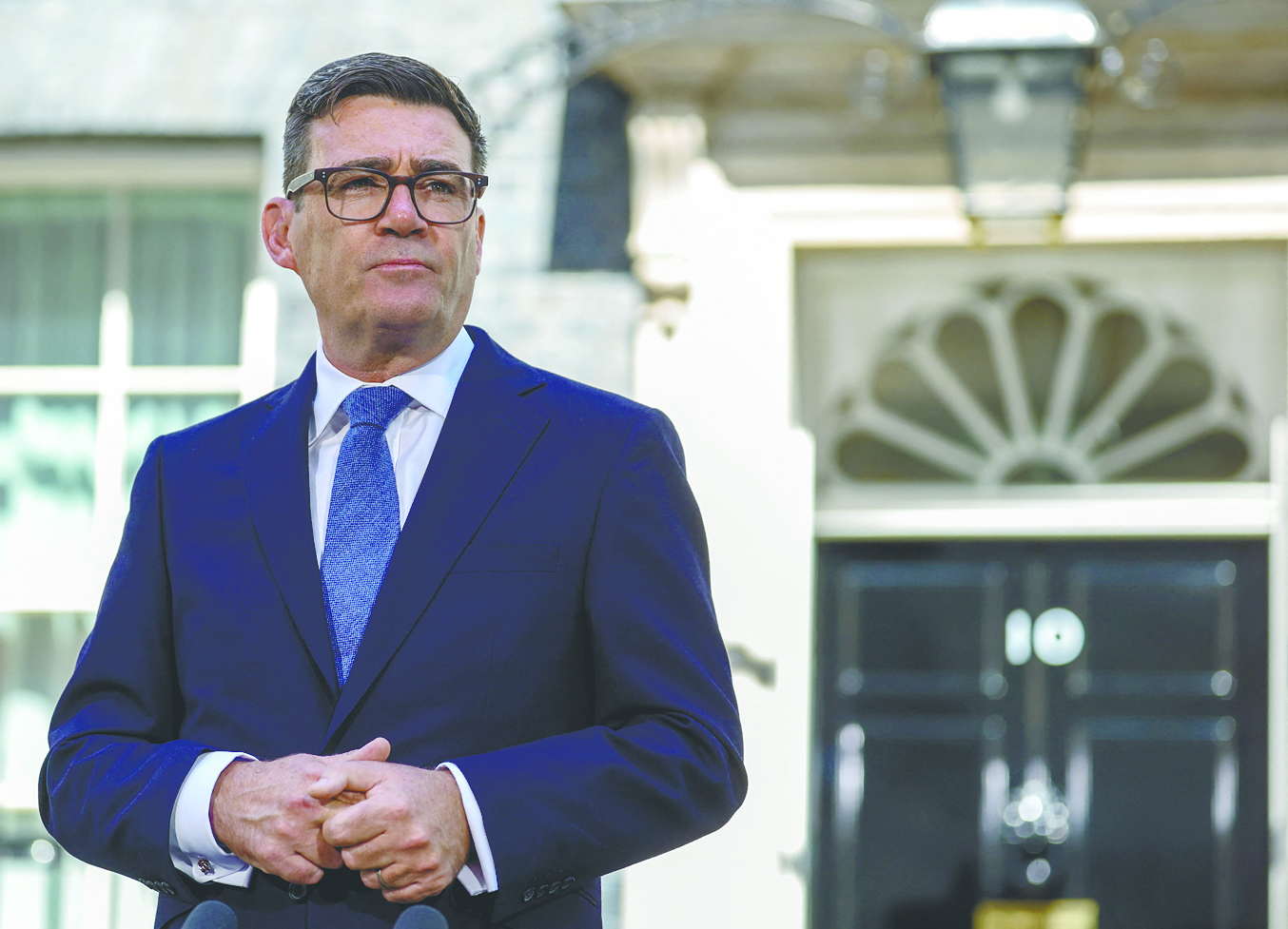
LONDON: British inflation cooled by more than expected last month as a brief de-escalation in the Iran war reduced fuel prices, but the slowdown is likely to offer only temporary relief to new Prime Minister Andy Burnham as he seeks to ease living costs.
Consumer prices rose by 2.6% in annual terms in June — the weakest increase since March 2025 and down from 2.8% in May.
Economists polled by Reuters had mostly expected a smaller drop to 2.7%. However, the conflict in the Gulf has reignited this month, pushing up energy costs, and analysts said the June inflation reading was likely to prove a low point for the year.
Motor fuel prices fell in month-on-month terms for the first time since the war’s late February start. Manufacturers’ input costs fell by 2% from May, the Office for National Statistics said on yesterday.
Britain’s headline inflation rate — which has been the highest in the Group of Seven for much of the past few years — was lower in June than in the US and the euro zone where it stood at 3.5% and 2.8% respectively.
The Bank of England (BoE), which has a 2% inflation target, has said inflation is likely to rise to 3% in the third quarter.
Prices for food — which the BoE sees as key for shaping the public’s inflation expectations — were 1.6% higher last month compared with a year earlier, down from a 2.1% rise in May.
Since Burnham took over as prime minister on Monday, his government has announced a cut in tax on energy bills and a lower cap for bus fares.
Matt Swannell, chief economic adviser to the ITEM Club, a forecasting organisation, said a recent increase in wholesale energy prices would more than offset the domestic power bill tax cut, and inflation could climb towards 3.5% by the end of 2026.
John Healey, Britain’s new finance minister, welcomed yesterday’s data but said the government needed to do more to help households.
Suren Thiru, chief economist at ICAEW, said the expected climb in inflation in the coming months would squeeze Healey’s fiscal headroom, raise borrowing costs and increase financial market volatility.
Inflation for services, closely watched by the BoE as a guide to underlying price pressures, slowed to 3.6% in June from 3.7% in May but was slightly stronger than economists’ forecasts of 3.5%.
Core inflation, which strips out food, energy, alcohol and tobacco prices, held at 2.6%.
Investors expect the BoE to keep its benchmark interest rate at 3.75% next week as it continues to assess the impact of the Middle East conflict.
“Today’s data strengthens the case for the Bank of England’s cautious approach, with underlying inflationary pressures remaining relatively muted in an environment of weak domestic demand,“ said Yael Selfin, chief economist at KPMG.
Some BoE policymakers who voted to increase borrowing costs in June are worried about the risks of inflation persistently overshooting the 2% target.
Financial markets were pricing in one or possibly two quarter-point interest rate increases by the end of 2026, little changed from Tuesday. – Reuters



