




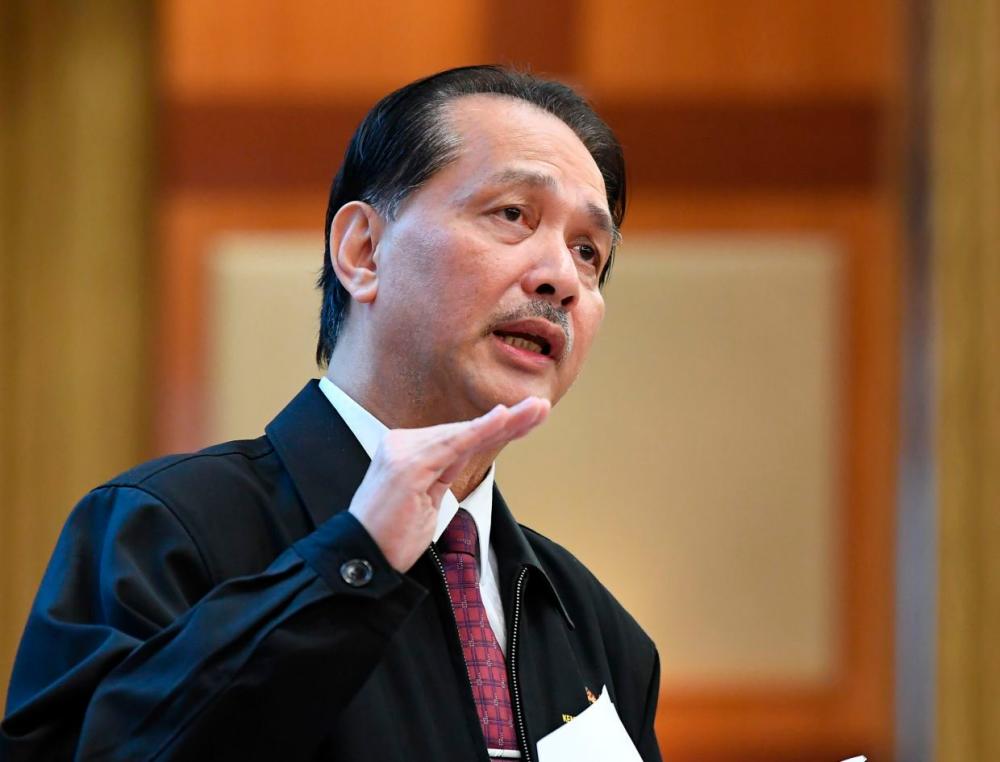
KUALA LUMPUR: The digital economy, the Fourth Industrial Revolution (4IR), and the adoption of sustainable development are âdomains with untapped economic potentialsâ in the bilateral trade between Malaysia and China, said Prime Minister Datuk Seri Ismail Sabri Yaakob (pix).
He said these three areas have untapped potential although investments and bilateral trade between the two nations have been growing steadily since 2009, whereby China has continued to be Malaysiaâs largest trading partner, accounting for 18.6 per cent of total trade in 2020.
The Prime Minister said this in delivering his opening address virtually at the 130th China Import and Export Fair (Canton Fair) opening ceremony here today.
Touching on the digital economy, Ismail Sabri said Malaysia had launched the MyDIGITAL initiative early this year to further accelerate the countryâs digital transformation.
Targeting to attract US$17.32 billion (US$1= RM4.15) in both international and domestic digital investments, the MyDIGITAL initiative would be implemented through the Malaysia Digital Economy Blueprint that plans to escalate the countryâs progress as a technologically advanced economy by 2030, he added.
On 4IR, Ismail Sabri said as Malaysia has embarked on its journey towards greater digitalisation, more efforts would be implemented, such as leveraging on the synergy of both the physical and digital worlds to elevate Malaysiaâs competitiveness.
âFor this reason, we have launched the 4IR, which was built upon a whole-of-nation approach through people-private-public partnerships,â the premier said. âThis includes developing 4IR-enabling infrastructures for wider application of technological use while adopting an agile regulatory approach, all of those are aimed at meeting the needs of the businesses in the digital economy, as well as accelerating innovation and adaptation in technology.â
On the adoption of sustainable development, Ismail Sabri said under the recently tabled 12th Malaysia Plan (12MP), the âsustainability of energy resources has been identified as one of the key factors in the economic empowerment dimension.â
âAmong others, this dimension includes the people-centric economy, green technology, renewable energy, and the mitigation of climate change,â he added.
Ismail Sabri noted that âsuch areas had already been the cornerstone of Chinaâs trade and economic policies for many years, and they had been embodied in the Belt and Road Initiative (BRI) and Chinaâs 14th Five-Year Plan.â
âMalaysia, being one of the first countries to support the BRI, wishes to reaffirm our confidence that this strategic and forward-looking initiative will open up more frontiers of connectivity.
âWe have a firm belief that this mutual understanding will create new possibilities for growth and development across the Asia Pacific, Africa, as well as Central and Eastern Europe,â he said.
Last year, Malaysiaâs exports to China expanded 11.1 percent to US$37.77 billion, and China was also Malaysiaâs biggest import source, accounting for 21.5 per cent of total imports.
âSimilarly in the investment sphere, China has become Malaysiaâs top investor, with investments amounting to US$4.41 billion last year, and this ranking has been maintained for the past five years since 2016,â the premier noted.
He also revealed that that 71 manufacturing projects from China were approved in 2020, with an expected generation of more than 10,000 jobs in Malaysia. â Bernama



