




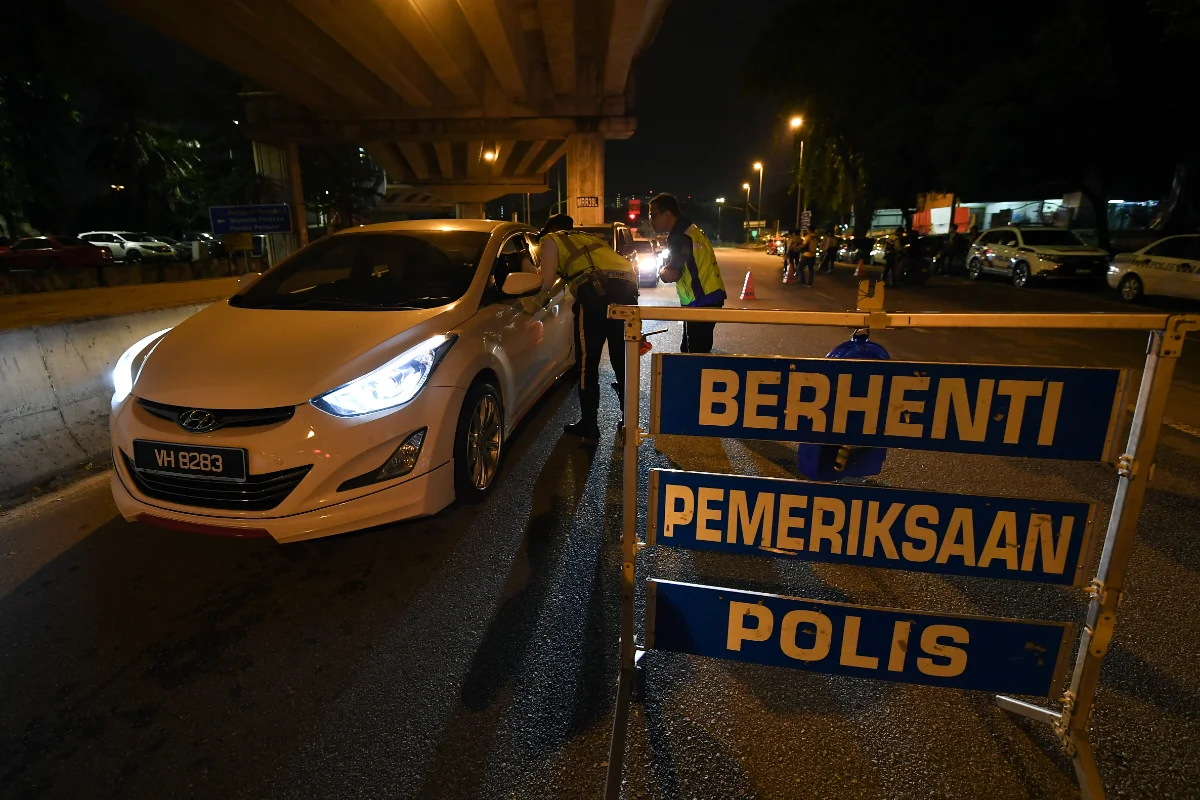
Current procedure based on periodic manual operations not effective and unable to deliver 24-hour, all-year-round monitoring for violations, says road safety expert.
PETALING JAYA: Malaysia needs a 24-hour, all-year-round AI-backed traffic enforcement system to deter reckless and dangerous driving, instead of relying on periodic operations that lose impact once they end, said Road Safety Council of Malaysia executive council member Datuk Suret Singh.
Suret, who previously chaired the Malaysian Institute of Road Safety Research from 2019 to 2022, said enforcement must be strategic, continuous and backed by technology if authorities want to deter dangerous behaviour before lives are lost.
“The current approach of enforcement based on operations is ineffective as it is not consistent for 365 days a year.“
To be effective, enforcement should be heavily reliant on artificial intelligience (AI) so it can monitor and (detect) reckless drivers 365 days, 24 hours, seven days a week.
“Effective year-round enforcement is key to deter reckless and dangerous behaviour on our roads,” he told theSun via WhatsApp. His remarks come as transport authorities have been expanding technology-based enforcement.
On Jan 6 last year, Transport Minister Anthony Loke said the Automated Awareness Safety System cameras would be improved through point-to-point monitoring, which measures a vehicle’s average speed between two checkpoints instead of relying only on static cameras.
The upgraded system has been reported to support wider automated detection, including mobile phone use and seatbelt violations, while use of drones and body-worn cameras by the Road Transport Deparment (RTD) has expanded real-time monitoring during operations.
As of March 20 during Op Hari Raya Aidilfitri, RTD recorded 2,384 offences using the upgraded drones.
Enforcement senior director Datuk Muhammad Kifli Ma Hassan said the dronedetected offences mainly involved dangerous overtaking, emergency lane misuse and traffic light violations, with each category recording more than 500 cases.
Suret added that the wider weakness was not the absence of action, but the lack of consistent and unified enforcement across agencies.
“Enforcement effectiveness is very weak. A total overhaul is required. “It is time for a single traffic law enforcement agency.
The current system is fragmented, so where does accountability sit… with RTD, police or local authorities?”
On drink-driving, Suret said preventive measures should be strenghtened, including reducing the legal alcohol limit to zero, encouraging pubs to provide free nonalcoholic drinks to designated drivers and intensifying community education against driving under the influence (DUI).
He also supported targeted enforcement measures such as checks near entertainment outlets, parking exits, highway entry points and other high-risk locations as proactive strategies to stop intoxicated motorists before entering major roads.
However, he said while drink-driving is a serious offence, it should not dominate the road safety agenda at the expense of the larger pattern of deaths involving motorcyclists.
“Bear in mind that DUI is not a major cause of deaths on our roads. (It represents) less than 1% of road deaths.
“Of average daily deaths of 18 per day on our roads, 12 are deaths of young individuals, aged 25 and below, who rode small-cc vehicles in mixed traffic roads, and were knocked down by bigger vehicles.
“This is our big road safety issue, the elephant in the room,” he said.
Suret said the media and authorities should avoid focusing only on high-profile fatal cases before public attention fades.
“The media play needs to move away from reactive to proactive awareness,” he said, adding that injured motorcyclists and daily road trauma should also be highlighted to improve rider and road user safety.
“It is time to prevent reckless behaviour rather than reacting after fatal crashes, which is a loser’s game,” he said.
Suret’s comments follow the fatal April 23 MEX Highway crash involving an e-hailing vehicle carrying Bangladeshi tourists and a car driven by a 31-year-old military officer.
Kuala Lumpur Traffic Investigation and Enforcement Department chief ACP Mohd Zamzuri Mohd Isa said the remand for the car driver has been extended until today.
He added that statements have been recorded from 12 witnesses, with the investigation paper to be completed and submitted to prosecutors.



