



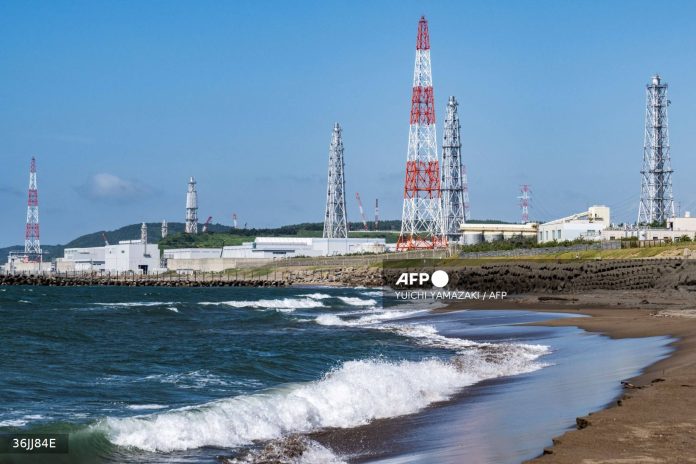
Niigata governor set to approve partial restart of Kashiwazaki-Kariwa nuclear plant, world’s largest, more than a decade after Fukushima disaster.
TOKYO: The governor of the Japanese prefecture that is home to the world’s largest nuclear power plant is set to give approval as early as this week for its restart, local media reported on Wednesday.
The approval will clear the final hurdle in Tokyo Electric Power Company Holdings’ quest to bring the Kashiwazaki-Kariwa plant back online, more than a decade after the Fukushima nuclear disaster led to its shutdown.
Niigata Prefecture Governor Hideyo Hanazumi is set to announce his approval as early as Friday to partially resume Kashiwazaki-Kariwa, Kyodo news agency said, citing multiple unnamed sources in the prefecture government.
Hanazumi will consult the prefectural assembly on his decision during its regular session beginning on December 2. If the assembly endorses his decision, he is expected to respond to the national government’s request to approve the restart, the Nikkei business daily said.
TEPCO is planning to bring online the two biggest units of the plant, No. 6 and No. 7, which can together produce 2,710 megawatts of electricity, and possibly decommission some of the remaining five units. Kashiwazaki-Kariwa’s total capacity is 8,212 MW.
In October, TEPCO finished checks at No. 6 reactor after fuel loading, saying at the time it had confirmed that the main systems required for reactor startup were operating properly.
The company has also earlier pledged 100 billion yen ($644 million) to support local communities to gain support for the restart, which TEPCO has sought for many years despite some local opposition.
If approved, the restart would be in line with new Prime Minister Sanae Takaichi’s plans to support more nuclear restarts to strengthen energy security.
Partial restoration of the Kashiwazaki-Kariwa plant would also help to cut liquefied natural gas import costs for Japan, the world’s second-biggest LNG buyer after China, as Takaichi’s government is prioritising bringing down the cost of living.
Japan has restarted 14 reactors since rolling out stricter safety rules after the Fukushima disaster. As of the end of October, 11 reactors are operating nationwide, with a total capacity of 10,647 MW. Before the disaster, Japan’s utilities operated 54 reactors.
If Unit No. 6 is restarted early next year, it may displace around 1 million tonnes of LNG demand from Japan next year, according to Kpler analyst Go Katayama.
“We had already lowered Japan’s 2026 demand forecast from 66 million tonnes in 2025 to 63 million tonnes on the back of higher nuclear availability and structurally lower power demand,” he said. “KK6’s earlier restart would further reduce that to around 62 million tonnes.”
TEPCO has paid out large amounts of compensation following the reactor meltdown in 2011. Restarting one reactor at Kashiwazaki-Kariwa would boost its annual net profit by 100 billion yen, TEPCO has said.
($1 = 155.2700 yen) – Reuters



