





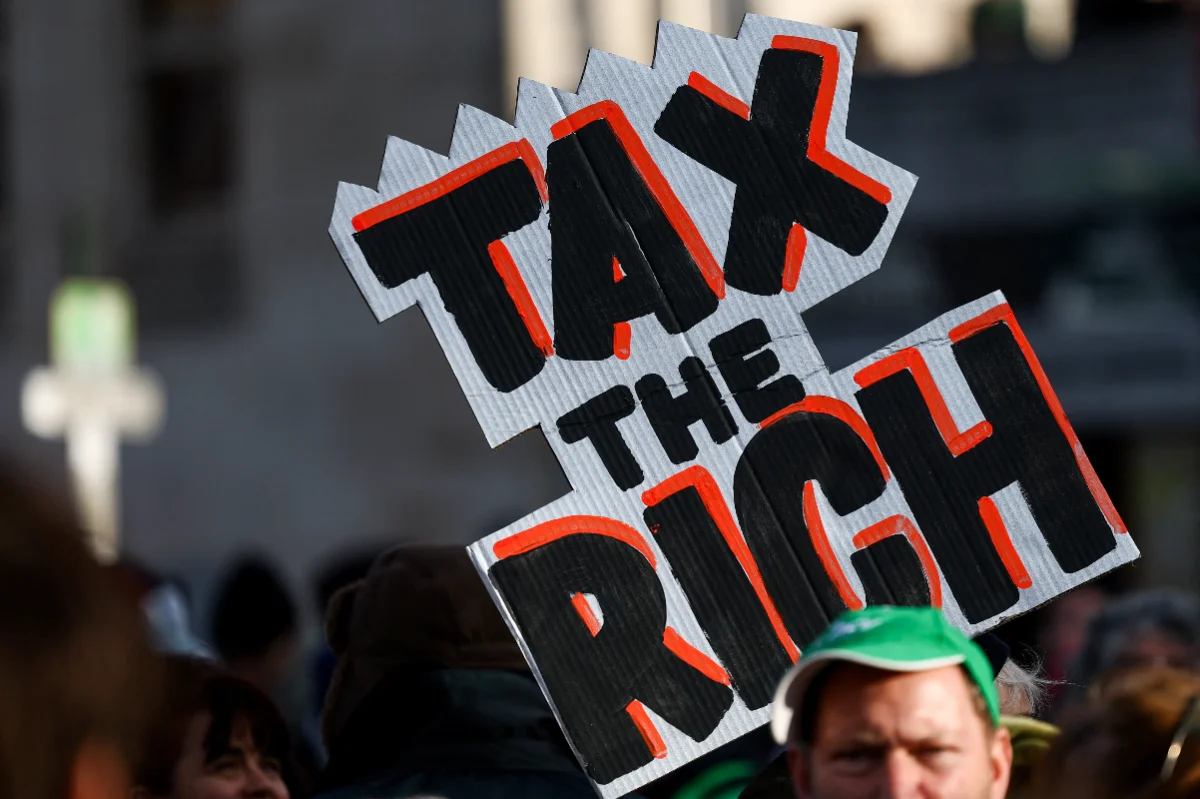
Economists divided over feasibility, effectiveness, revenue potential and investor implications
PETALING JAYA: A proposal to impose a 2% wealth tax on Malaysia’s richest individuals has triggered a fresh debate among economists and policy analysts with questions raised over its feasibility, effectiveness and potential impact on investor sentiment.
The call, made by former Klang MP Charles Santiago recently, comes as the government seeks to rein in spending amid fiscal pressures including proposed cuts across several ministries.
While the idea has gained traction on grounds of equity, experts caution that translating it into a workable policy is far from straightforward.
Centre for Market Education chief executive officer and economist Carmelo Ferlito is blunt in his assessment, questioning why such proposals continue to gain traction.
“I am surprised such ideas are still seriously circulating.
A wealth tax may sound attractive politically but economically it is one of the least efficient ways to address fiscal pressure,” he said.
Ferlito argued that taxing accumulated wealth raises deeper structural and moral questions about the role of the state. “Wealth, when created through entrepreneurship, investment, risk taking and innovation, is not a social problem to be punished.
“The deep moral issue with wealth tax is precisely this: how can the state punish someone simply for owning something? Taxing income or consumption is one thing; taxing the mere existence of accumulated assets is much more problematic,” he said.
He added that a 2% annual levy would amount to a recurring drag on capital formation.
“A 2% annual tax on wealth is not small. It is a recurring penalty on capital formation and it would likely encourage capital flight, tax planning, asset relocation and weaker long term investment sentiment.”
Ferlito also pointed to international experience, noting that several European countries had abandoned wealth taxes due to weak revenue yields and administrative difficulties.
“Malaysia would face the same problems, probably in a more acute form because of its openness and regional competition for investment.”
While acknowledging that some wealth accumulation in Malaysia may be linked to state-backed systems, he argued that the solution lies in structural reform rather than new taxes.
“If wealth was accumulated through government contracts, subsidies, monopolies or protected concessions, then the solution is not to introduce another tax.
“The solution is to dismantle the unhealthy apparatus that allowed such privilege to emerge,” he said.
On subsidy rationalisation, Ferlito said a more sustainable approach would be to reduce broad-based subsidies and replace them with targeted assistance.
“General subsidies distort prices, weaken fiscal discipline and encourage inefficient consumption.
A wealth tax would add a new distortion on top of existing distortions,” he said, adding that Malaysia should instead prioritise institutional reform and greater market competition.
However, economist Prof Dr Geoffrey Williams offered a more measured view, saying the proposal is not without merit at least in principle, although difficult in practice.
Still, he cautioned that turning such estimates into actual revenue would be far from simple.
“It is a tax on total wealth which includes property and businesses, not just financial or cash assets.
So, it is not so easy to tax those assets quickly,” he said. Williams suggested that broader tax reform may offer more practical alternatives, pointing to Malaysia’s expanding digital economy.
“An electronic payments tax of just 1% would raise RM28 billion, as electronic payments now represent more than 80% of transactions,” he said, adding that traditional tax mechanisms may be reaching their limits.
He also highlighted missed opportunities in subsidy reform.
“Subsidy rationalisation was on course to save more than RM20 billion but unfortunately this has stalled.
“This could have been used to cut taxes for middle-income groups or even to give more support,” he said.
Williams added that the debate reflects a broader weakness in Malaysia’s fiscal policy discourse.
“Unfortunately there is no grown up discussion of tax reform in Malaysia because of the groundhog day debate on SST versus GST,” he said.
While the wealth tax proposal may continue to draw attention amid concerns over inequality and fiscal strain, analysts said significant economic, administrative and political hurdles remain before such a policy could be realistically implemented.



