



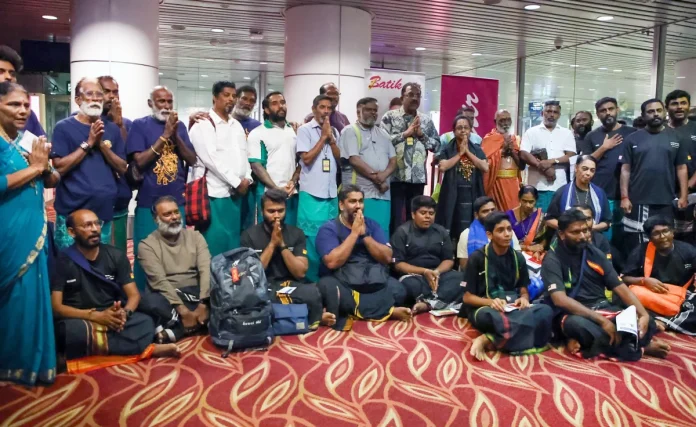
Travel logistics and send-off at KLIA organised by Batik Air
KUALA LUMPUR: A total of 140 Ayyappan Swamy devotees from Malaysia departed for Tiruchirappalli, India on Saturday to begin their annual sacred pilgrimage, a key religious observance that draws tens of thousands of worshippers each year.
The departure from KL International Airport (KLIA) Terminal One was marked by a send-off ceremony attended by Sentosa assemblyman Gunarajah R. George, underscoring the pilgrimage’s significance within the local Hindu community.
Observed by more than 50,000 devotees annually, the Ayyappan Swamy pilgrimage holds deep spiritual meaning and involves strict religious practices and preparations.
For many devotees, the journey represents a culmination of weeks of prayer, discipline and devotion.
In response to the growing number of Malaysian devotees travelling to India for the pilgrimage, Batik Air facilitated special arrangements this year to support the journey.
These included coordinating travel logistics and organising a dedicated send-off at KLIA to ensure a smooth and respectful departure.
In a statement, Batik Air CEO Datuk Chandran Rama Muthy said the airline recognised the spiritual importance of the pilgrimage and the responsibility involved in supporting such journeys.
“The pilgrimage carries deep spiritual meaning for the devotees, and we want their journey to begin in a manner that reflects dignity, care and respect.
“Beyond transporting passengers, it is about understanding the significance of their purpose and ensuring their experience is handled with sensitivity and attention,” he added.
He said Batik Air aimed to make the beginning of the pilgrimage a meaningful and memorable experience for the devotees, setting the tone for the journey ahead.
As part of the send-off, the airline also presented a small gift of ghee to the devotees, courtesy of Enrico, in support of essential religious requirements associated with the pilgrimage.
Batik Air said it would continue working with relevant authorities and partners to support community and religious travel, while maintaining service standards and operational efficiency.



