



Putrajaya relies on global norms, law to protect national interests: Experts
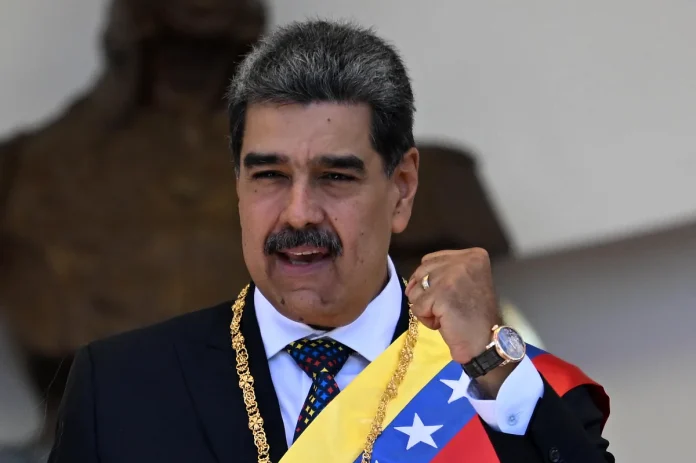
PETALING JAYA: The seizure of Venezuelan President Nicolás Maduro by United States forces has been criticised by Malaysian experts as a blatant breach of international law that threatens the rules-based order on which smaller and middle powers depend.
Universiti Teknologi Mara international relations specialist Dr Farhatul Mustamirrah Mahamad Aziz said the operation amounted to a direct violation of state sovereignty and territorial integrity, core principles underpinning international law.
“Sovereignty signifies the equal standing of every nation state, and no one nation has the right to intervene in the internal affairs of another,” she told theSun yesterday.
She added that such actions reflect a selective application of international law in which compliance is influenced more by geopolitical clout than legal obligation.
“From Malaysia’s perspective, these actions undermine trust in global governance mechanisms that smaller and middle powers rely on to safeguard their interests.”
She emphasised that adherence to international law is vital for countries such as Malaysia, which cannot rely on military power for security.
“The normalisation of coercive force to protect national interests creates vulnerability for smaller states, whose security and sovereignty depend on predictable legal frameworks rather than military or economic coercion.”
Universiti Kebangsaan Malaysia foreign policy expert Dr Aizat Khair said the risks for countries such as Malaysia are both practical and strategic, particularly if breaches of sovereignty became standard practice.
“If operations of this nature are accepted as routine, smaller states become more exposed to extraterritorial actions justified on security, criminal or political grounds.”
He said Malaysia relies heavily on the stability of international norms, from the law of the sea to international trade rules and multilateral institutions, to protect its national interests.
“When these norms are weakened, the bargaining power of major states becomes more dominant,” he said, adding that such incidents could trigger retaliatory measures and wider regional instability, including economic sanctions, energy disruptions and supply-chain shocks.
Aizat said Prime Minister Datuk Seri Anwar Ibrahim’s remarks were consistent with Malaysia’s foreign-policy principles, which are grounded in sovereignty, international law and multilateralism.
“Malaysia has consistently rejected leadership change through external intervention, and maintains that a country’s future must be determined by its people.
“By describing the action as a violation of international law, the prime minister is reaffirming Malaysia’s position that restraints on the use of force between states must be preserved.”
He emphasised that issues of such magnitude should be addressed through legitimate international mechanisms rather than unilateral action by dominant powers.
theSun also contacted Malaysia’s former ambassador to the US Datuk Seri Mohamed Nazri Abdul Aziz. He declined to comment, saying his view “will not change the situation”.
The seizure took place on Jan 3, when USforces carried out a military operation in Caracas, taking Maduro and his wife Cilia Flores into custody over criminal charges of narco-terrorism, drug-trafficking conspiracies and related corruption, claims that Venezuela has strongly denied.
The operation has sparked widespread international condemnation and reignited debate at the United Nations over the legality of unilateral enforcement actions against a sitting head of state.
Anwar described the seizure as a violation of international law and a dangerous precedent, underscoring that Venezuela’s political future should be determined by its citizens.



