




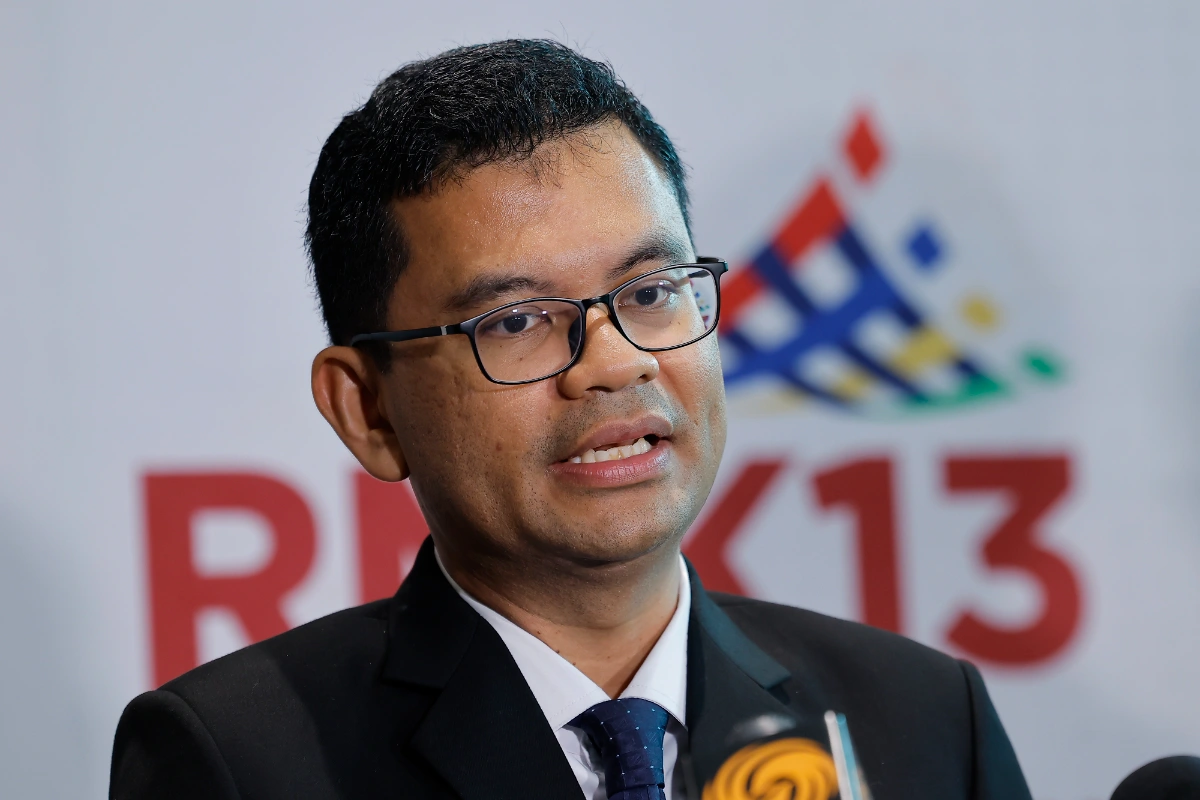
Malaysia is 7.1% below World Bank high-income threshold, Minister Akmal Nasrullah says growth must deliver better wages.
PUTRAJAYA: Malaysia is now just 7.1% below the World Bank’s high-income threshold, thanks to the 5.8% economic expansion in the second quarter of this year, said Economy Minister Akmal Nasrullah Mohd Nasir.
He said the government will ensure that this momentum translates into higher productivity, quality jobs and rising incomes for Malaysians.
“The economy grew by 5.8%, inflation remained contained at 1.9%, and unemployment stood at 3.0%. Malaysia is now just 7.1% below the high-income threshold,” he said in his speech at the launch of the OECD Economic Surveys: Malaysia 2026.
“These are encouraging numbers, but crossing that threshold is not an end in itself. What matters is whether growth delivers better wages, more quality jobs and stronger purchasing power for Malaysians.”
Akmal Nasrullah said the independent, evidence-based report would serve as an important reference for strengthening the implementation of the 13th Malaysia Plan (13MP) from 2026 to 2030, and accelerating the country’s structural economic reforms.
In 2025, Malaysia’s gross national income (GNI) per capita rose to RM57,200, or about US$13,351, against the World Bank’s high-income threshold of US$14,375.
The government is maintaining its full-year growth target of between 4% and 5% for 2026, supported by domestic demand, private investment, exports and technology-intensive sectors, including semiconductors and data centres.
The OECD report also identified that 35.6% of tertiary-educated workers remain in skill-related underemployment, highlighting a key structural challenge.
“When 35.6% of tertiary-educated workers remain in jobs below their skill level, we cannot measure success by graduate numbers alone. Education and training must lead to high-value jobs, stronger productivity and wages that reflect workers’ skills,” Akmal Nasrullah said.
Under the 13MP, the government will strengthen the alignment of curricula with industry needs and expand technical and vocational education and training (TVET), Academy in Industry (AiI), and upskilling programmes in semiconductors, artificial intelligence and the digital economy.
Meanwhile, the federal fiscal deficit narrowed from 5.5% of GDP in 2022 to 3.7% in 2025. The government remains committed to reducing the deficit to 3% or lower by 2030 through better-targeted assistance and reduced leakages while safeguarding vulnerable groups.
“We have reduced the deficit from 5.5% to 3.7% and are targeting 3% or lower by 2030. Fiscal consolidation is not about withdrawing support from the people; it is about ensuring that every ringgit is used more effectively for education, healthcare and infrastructure,” the minister said.
To strengthen productivity, the Government Service Efficiency Commitment Act 2025 (the Iltizam Act) sets a target of reducing unnecessary regulatory burdens by 25% over three years. Through the Special Task Force to Facilitate Business (Pemudah), the Economy Ministry will identify high-impact business approvals for end-to-end review, with clearer service standards, more predictable decisions and stronger accountability for delays.
The OECD Economic Surveys: Malaysia 2026, the fifth OECD Economic Survey of Malaysia since 2016, features a thematic chapter on improving skills, education and training.



