



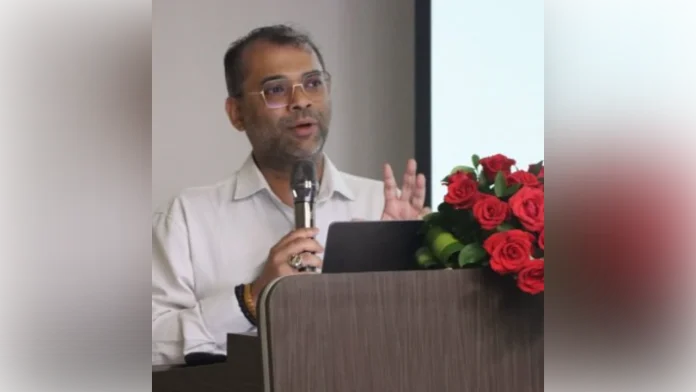
Labour rights activist says debates over union names should not overshadow the core issue of how effectively unions organise and represent workers.
PETALING JAYA: A labour rights group has urged that debates over the registration of similarly named trade unions should not lose sight of how effectively unions organise and represent workers.
Labour rights activist Adrian Pereira of the North–South Initiative said while the registration of unions with identical or similar names could cause confusion, the issue should also prompt scrutiny of how well unions serve their members.
“This includes organising efforts, information services and the ability to secure meaningful collective agreements.
“If a union is providing the best service, the best response, the best organising and the best collective agreement, then the confusion will not arise,” he said, describing the issue as having “two sides of the coin”.
Pereira said the use of identical or similar names could point to an intention to confuse workers but added that competition between unions could also be viewed as part of a democratic system that allows workers to choose their representation freely in line with freedom of association.
He said freedom of association should remain central to trade unionism and rejected the idea that the emergence of new unions would automatically weaken the labour movement.
Instead, Pereira said competition could push unions to organise more effectively and offer stronger solutions for workers.
“I don’t think it’s going to cause fragmentation,” he said.
At the same time, he questioned the labour regulator’s decision to approve the registration of unions with overlapping names.
“We need to understand what the rationale and the logic are, and then check whether it is against the law or not.”
Pereira added that there may be a gap between existing rules and how registrations are being approved, warranting closer scrutiny.
He said the debate had also highlighted long-standing questions about union effectiveness in labour-intensive industries that have faced repeated labour issues.
As an example, Pereira pointed to the rubber glove sector, which he said has experienced problems before, during and after the Covid-19 pandemic.
He noted that Malaysia has one of the world’s largest rubber glove industries, employing tens of thousands of workers, yet unionisation in the sector remains weak.
“The question that needs to be asked is why no one has successfully organised the rubber glove industry all these years. Where is the union in all this?”
Pereira also referred to an incident in the tyre industry, where long-established unions existed but workers were still found to be experiencing indicators of forced labour.
He said the workers took the matter to court in 2019 and won, but the manufacturer later shut down its operations, causing migrant workers to lose their jobs.
Such cases raise questions about the gap between the presence of unions and actual worker protection.
“These instances show the need for unions to examine their own role and effectiveness. The situation could have been avoided if both workers and unions had acted together. Failures in representation can carry serious consequences for workers and companies alike,” he said.
Pereira was responding to the approval by the Department of Trade Unions of a newly registered union bearing a name identical to that of an existing union.
Separately, he said trade unions play a critical role in safeguarding workers’ rights, particularly those of foreign workers, through union monitoring and membership that enable access to collective agreements and additional social protections.
“Hopefully, one day, foreign workers may also form their own trade unions and play an active role in the workplace.”
Official data show that unionisation among foreign workers remains extremely limited.



