



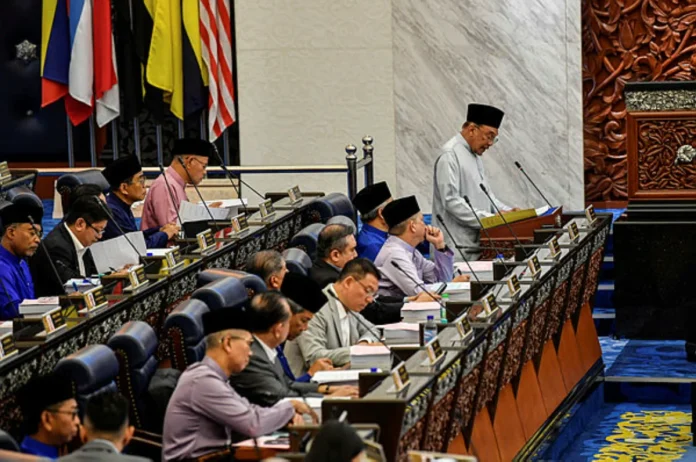
PETALING JAYA: An economist said the move to cap the prime minister’s tenure at two terms is largely institutional in nature and should be pursued without losing sight of more immediate bread-and-butter economic concerns.
Dr Geoffrey Williams said while the proposal is framed as part of broader institutional reforms, it is not without consequences and could distort political behaviour and encourage political manoeuvring well before a leader’s term ends.
He said although the government is expected to consult coalition partners and Cabinet members as a matter of political courtesy, such consultation is not a legal requirement.
Williams added that any attempt to impose term limits on the prime minister would require strong parliamentary backing as it involves constitutional amendments and the need for a two-thirds majority in Parliament.
“On one hand, they can prevent incumbents from holding on too long, but on the other they can cause speculation and jockeying for positions as the term nears an end.”
He said such dynamics could undermine governance by shifting attention away from policy execution towards succession politics, particularly in the later stages of a prime minister’s term.
Williams also pointed to Malaysia’s recent political history, noting that leadership turnover has occurred frequently even in the absence of formal term limits.
“We can see that prime ministers come and go frequently through democratic means and political manoeuvres.”
He added that a statutory cap would do little to prevent political instability unless it restricted the removal of a sitting prime minister during a fixed term.
“A term limit would not end that unless the removal of the prime minister was prohibited during their fixed term. That would be undemocratic.”
Williams said the debate over term limits is unlikely to resonate strongly with the wider public, despite enthusiasm among political commentators, adding that public attention remains firmly focused on stagnant wages and the rising cost of living.
He also argued that reform efforts should prioritise stronger oversight and accountability in areas of government where power is exercised with less scrutiny.
“It is more important to have stronger oversight on the civil service and those running government agencies, statutory bodies and government-linked companies. These are unelected people who wield greater power than the politicians.”



