



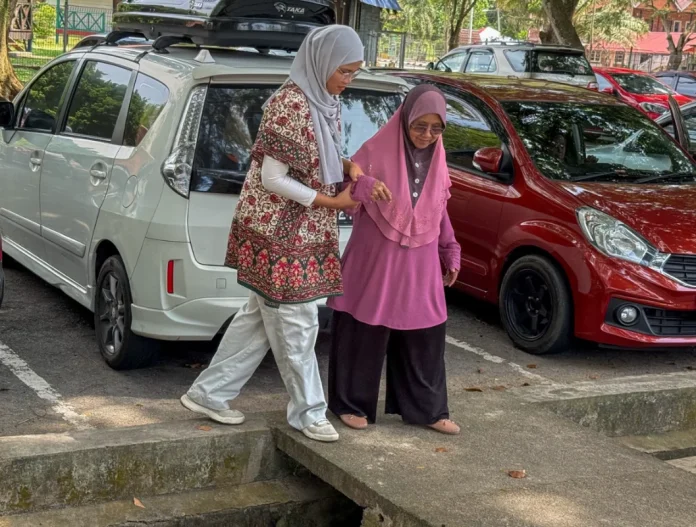
Many cases could be prevented by addressing environmental hazards: Specialist
PETALING JAYA: Poor building design, inadequate facilities and hazardous surroundings are fuelling a silent but deadly epidemic of falls among older Malaysians, a preventable public health crisis that experts warn is often overlooked.
Universiti Teknologi Malaysia occupational safety, health and environment hygiene team member Dr Hadafi Fitri Mohd Latip said environmental hazards contribute to between 30% and 50% of falls among older adults.
“Medical factors such as weak muscles, poor eyesight and certain medications do increase fall risk, but many falls could be prevented simply by addressing environmental hazards.”
He explained that common dangers including slippery floors, poor lighting, uneven steps, cluttered walkways and unsafe bathrooms.
“Good design alone could eliminate between 70% and 80% of fall-hazard conditions.”
He added that many Malaysian homes and public spaces are not age-friendly, with most built before ageing-related safety became a design priority.
“We see homes without handrails, slippery tiles, high steps, poor lighting and narrow walkways that make it difficult for seniors to move safely, especially those using mobility aids,” he said.
While newer developments increasingly adopt universal design principles, older buildings continue to pose risks unless modified.
One of the biggest misconceptions is that falls are “normal” or unavoidable in old age, he said.
“With safer home layouts, proper footwear, and regular strength and balance exercises, many falls could be prevented.”
Universiti Kebangsaan Malaysia public health specialist Prof Dr Sharifa Ezat Wan Puteh said falls seriously affect older adults’ quality of life and often lead to life-threatening complications.
“Falls among the elderly could result in loss of mobility, pneumonia, head and body injuries, fractures that may heal poorly, increased hospitalisation, osteoporosis and, in some cases, a higher risk of death.”
She said falls often occur due to a combination of personal and environmental factors.
She said hip and neck-of-femur fractures are among the most serious injuries resulting from falls, particularly for older patients.
“These fractures could lead to long recovery periods, complications and loss of independence. In elderly patients, treatment decisions are more complex due to existing health conditions.”
She added that simple home modifications could significantly reduce risks, including improving lighting, removing clutter, ensuring non-slip bathroom floors, reducing or modifying stairs, and supporting seniors with nutritious diets to address muscle loss and osteoporosis.
Physiotherapy and balance-training programmes are also effective in preventing repeat falls, provided patients remain motivated and compliant.
She warned that depression following a fall could further impair balance and increase the risk of subsequent incidents.
Families should watch for warning signs, such as declining mobility, muscle weakness, vision problems, cognitive changes, reliance on walking aids and living environments with multiple hazards.
Sharifa Ezat stressed the role of communities and policymakers at a broader level.
“We need stronger public awareness, safer public walking areas, better lighting, family and community involvement, and national guidelines for age-friendly housing.”
Her advice to seniors is to remain active but also cautious.
“Stay socially engaged, join community groups, keep moving at your own pace, continue reading to preserve cognitive function and eat nutritious food. Ageing safely is possible with the right support.”
The issue has drawn renewed attention following confirmation that former prime minister Tun Dr Mahathir Mohamad sustained a hip fracture after a fall on Jan 6.
As reported, doctors have advised against surgery due to his advanced age, according to his son Datuk Seri Mukhriz Mahathir.
In a video posted on social media on Jan 7, Mukhriz said Mahathir fell and fractured his hip during morning exercise on his balcony.
He added that his father is expected to be hospitalised for between two and three weeks.
“Due to his age, an operation is not a wise option,” he said.



