



Malaysian Bar president calls for mandatory mediation and collaborative practice in family law as divorce rates rise and reconciliation cases decline
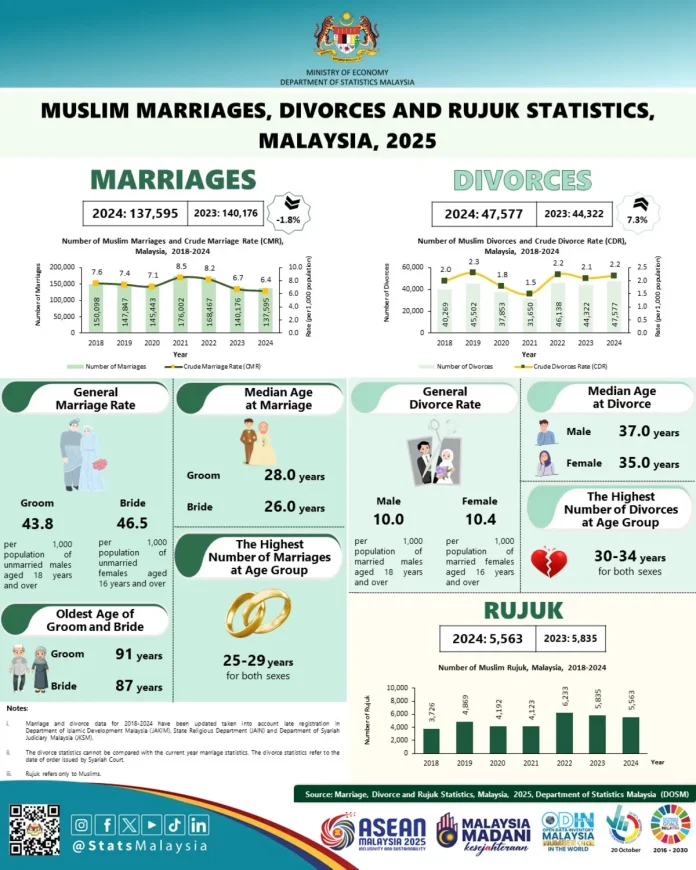
KUALA LUMPUR: Lawyers have been urged to adopt a more constructive and therapeutic approach when assisting families in crisis, following the release of the latest marriage, divorce and reconciliation statistics by the Statistics Department.
Malaysian Bar president Mohamad Ezri Abdul Wahab noted that while marriages recorded only a slight increase of 0.9% in 2024, divorces rose by 4.1% and reconciliation cases continued to decline.
“These patterns point to mounting pressures within Malaysian families, which require thoughtful attention and sustained policy intervention,” he said in a statement.
Mohamad Ezri added that a rising divorce rate represents more than marital breakdown, with far-reaching consequences for children caught in domestic upheaval, including schooling outcomes, mental health, community stability and the wider social fabric.
“When the family structure disintegrates, the long-term cost is borne by society and most often, it is the children who carry the deepest hurt,” he said.
He added that the justice system is also affected, as courts are required to manage increasing caseloads at a time when judicial resources are already stretched.
“The legal profession does not view the growth of family disputes as an increase in commercial opportunity,” he said, stressing that lawyers have a responsibility to minimise conflict, uphold fairness and guide clients towards outcomes that protect children and preserve dignity.
“Our duty is to play a constructive role in restoring balance within the family unit and supporting families during difficult transitions,” he said, adding that the time has come to strengthen structures that support marriage, guide couples through breakdowns and protect children from the fallout of conflict.
Mohamad Ezri said the Malaysian Bar proposes making mediation a mandatory first pathway in family disputes.
“Family mediation should be the default process before litigation begins, except when safety or abuse issues are present. Early resolution reduces emotional and financial strain and promotes more stable arrangements for children,” he said.
He also proposed introducing a collaborative family practice framework.
“Malaysia should adopt a structured, non-adversarial model similar to those in other Commonwealth jurisdictions, such as Australia, Canada, Hong Kong and the United Kingdom, where parties commit to resolving matters without court battles. This reduces hostility, promotes transparency and improves long-term family outcomes,” he said.
In addition, Mohamad Ezri called for the establishment of family support units within the courts.
“Family courts should be equipped with counsellors, psychologists, social workers and mediators who can assist parties before and during proceedings. Early intervention can stabilise relationships, support reconciliation where possible and strengthen co-parenting when separation is inevitable.
“Our responsibility is clear, to help families navigate hardship with fairness, sensitivity and respect for the consequences that continue long after a case file is closed.”
Mohamad Ezri said the latest statistics highlight the need for a more resilient and supportive family justice ecosystem.
“The Malaysian Bar remains committed to working with the judiciary, government, religious authorities and civil society to strengthen institutional frameworks that protect families. Reforms that prioritise stability, fairness and the wellbeing of children are essential if Malaysia is to develop a more cohesive society.”



