



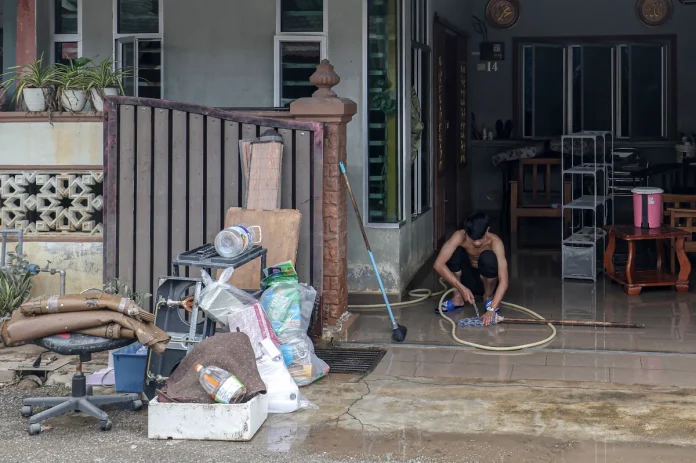
Experts warn poor flood coverage deepens debt, inequality and fiscal strain as families rely on savings, aid and costly credit after disasters
PETALING JAYA: Many households are sitting ducks for floods, with low insurance uptake leaving families exposed to hefty, unexpected losses, economists warn.
Universiti Teknologi Mara economist Dr Mohamad Idham Md Razak said households without insurance payouts are often forced to rely on savings, informal borrowing or high-interest credit, eroding their financial buffers and pushing vulnerable families into long-term debt.
“Over time, this reduces their ability to accumulate assets, invest in education or small businesses, and fully recover after each disaster, creating a cycle of financial fragility.”
He added that repeated reliance on emergency government aid also increases fiscal pressure, shifting a large share of disaster costs onto public finances.
“This could crowd out spending on development priorities such as healthcare, education and infrastructure, and may complicate fiscal consolidation efforts.”
He also said heavy dependence on ad hoc assistance could weaken disaster recovery capacity as funds are diverted to short-term relief rather than proactive risk reduction, resilience building and insurance-based risk-sharing mechanisms.
“Low insurance coverage could exacerbate inequality, as higher-income households are more likely to have savings or private insurance, while lower-income families bear losses directly.
“When disasters strike, poorer households may lose a larger proportion of their wealth, face longer recovery periods and experience setbacks in employment or education.
“This deepens existing socioeconomic gaps, hampers upward mobility and reinforces intergenerational vulnerability.”
Mohamad Idham said perceptions of high premiums relative to income, or unclear and complex coverage terms could discourage participation, particularly among lower and middle-income households.
“From an economic efficiency perspective, this highlights the need for better risk pooling, targeted premium subsidies for vulnerable groups or public-private partnerships to lower costs and improve affordability.
“A more accessible and transparent pricing framework would help raise participation, spread risk more broadly and reduce the long-term burden on both households and the government.”



