



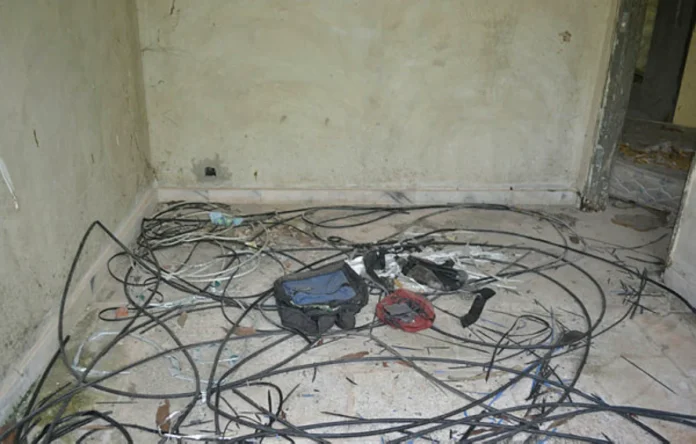
PETALING JAYA: Criminologists and housing policy experts have warned that long-abandoned housing areas can become hotspots for illegal activities and public safety risks if left unfenced, poorly lit and without proper enforcement.
Criminologist Datuk Shahul Hamid Abdul Rahim said quiet residential areas with abandoned buildings often attract criminal activity because they provide both space and opportunity for offences to occur.
“From a criminology standpoint, quiet residential areas with abandoned buildings often become preferred locations for illegal activities. The main factors are the lack of proper surveillance, poor lighting conditions, easy access in and out, and the absence of people,” he told theSun.
Abandoned homes, he said, can become “ports” for drug abuse, vandalism and organised criminal activity if left unmanaged.
“Small illegal activities can grow and multiply. Dirty, abandoned and unmonitored areas attract criminals, theft, vandalism and possibly organised crime.”
Shahul Hamid added that the regular presence of people could deter crime, but abandoned sites are typically only entered by those with criminal intent.
“If there were regular human presence, crimes could be prevented. But when no one uses these spaces, only those with criminal intent tend to enter. Such places often become storage points for illegal items, including drugs, stolen goods or other illicit materials.”
He stressed that responsibility should not fall solely on the police, but also on local authorities and relevant agencies.
“Local councils, district offices and community groups all have a role to play. There are laws under local government and housing regulations that allow authorities to take action against developers who abandon their responsibilities.”
Addressing housing law and enforcement, Universiti Teknologi Malaysia property policy expert Assoc Prof Dr Muhammad Najib Razali said legal and structural barriers often prevent abandoned projects from being properly secured or revived.
“The Housing Development (Control and Licensing) Act 1966 was never designed as a rescue mechanism. Once a developer collapses financially, the law provides limited tools to transfer ownership or compel completion,” Najib told theSun.
He said many abandoned sites remain tied to banks, liquidators and unresolved buyer claims, making enforcement complicated.
“Abandoned projects are often still charged to banks and tied up in disputes among creditors, liquidators and purchasers.
“Until these matters are resolved, the project cannot legally move forward.”
Najib added that old structures usually fail to meet modern safety standards under current planning and building laws, often forcing authorities to consider demolition rather than repair.
He said redevelopment costs for large townships like Lembah Beringin could potentially exceed RM1 billion.
Najib said local authorities already have the legal power to secure dangerous sites, but enforcement is often weak.
“Under the Street, Drainage and Building Act 1974 and the Local Government Act 1976, councils can order fencing, repairs or even demolition. The problem is not the absence of legal authority, but inconsistent enforcement and political will.”
He said authorities should prioritise site safety and legal audits before considering any form of redevelopment. – By Faiz Ruzman



