



She said platforms such as YouTube, Google and email services already offer parental-control settings, but public awareness remains low.
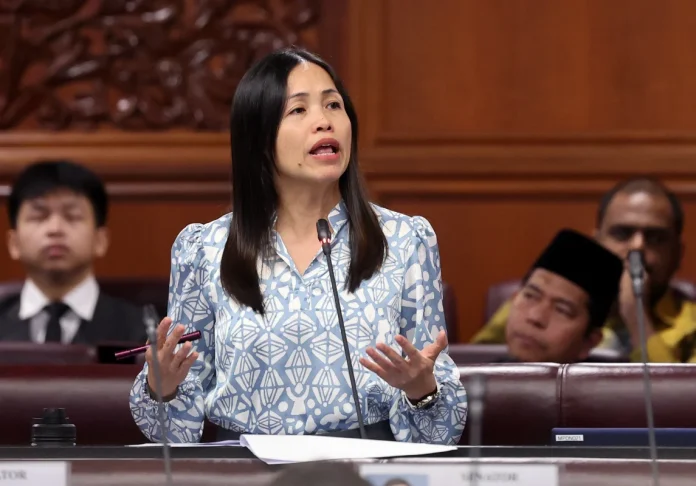
PETALING JAYA: Weak supervision at home remains one of the biggest risks exposing children to harmful online content, Deputy Communications Minister Teo Nie Ching told the Dewan Negara today, warning that “devices are not babysitters” as she urged parents to play a stronger role in monitoring their children’s internet use.
“Parents must monitor their children’s internet use to prevent exposure to violence, crime, gambling and virtual reward systems that encourage aggressive behaviour. Devices are not babysitters; devices are not substitutes for parents,” she said.
She added that the Cabinet has directed the Malaysian Communications and Multimedia Commission (MCMC) to study age- and identity-verification methods to restrict minors below 16 from accessing harmful online content, but warned that the most effective safeguard still lies at home.
“The role of parents is extremely important. Next year, one of MCMC’s initiatives is to expand the Internet Safe Campaign to parents so we can educate them on what types of parental-control tools they can use. Unfortunately, not many parents realise these tools exist.”
She said platforms such as YouTube, Google and email services already offer parental-control settings, but public awareness remains low.
Teo was responding to Senator Norhasmimi Abdul Ghani, who asked about government measures to monitor pedophilia activity on social media and online-gaming platforms.
She said enforcement against child exploitation is carried out by the police under the Sexual Offences Against Children Act 2017, the Penal Code and Section 233 of the Communications and Multimedia Act 1998, while MCMC monitors harmful online material and engages platforms on transparency through operations such as Ops Pedo 1.0 and Ops Pedo 2.0.
The issue gained urgency when Senator Datuk Hj Abdul Halim Hj Suleiman raised concerns about children accessing adult games and making purchases on YouTube and Google without their parents’ knowledge.
Teo also noted that online gaming platforms are not yet a licensed service category but said enforcement remains possible when content breaches the law.
“Although online-gaming content is not currently part of a licensed service category, enforcement action can still be taken if the content is found to contravene the law, including Section 233 of Act 588.
“Such action includes takedown requests, further investigation or applications to block related websites, subject to the legal provisions in force.”
“We are finalising regulations and self-regulatory codes under the Online Safety Act 2025 with specific focus on protecting children online and setting content according to general suitability,” she said.
Teo said MCMC continues to strengthen reporting channels through its website, WhatsApp, email and hotline, while the current Internet Safe Campaign has reached 8,585 schools and higher-education institutions involving more than 680,000 participants.
“We hope that through this campaign, by entering schools and engaging with pupils and students, they will better understand how to protect themselves and what kind of assistance they can seek when they face issues online.”



