





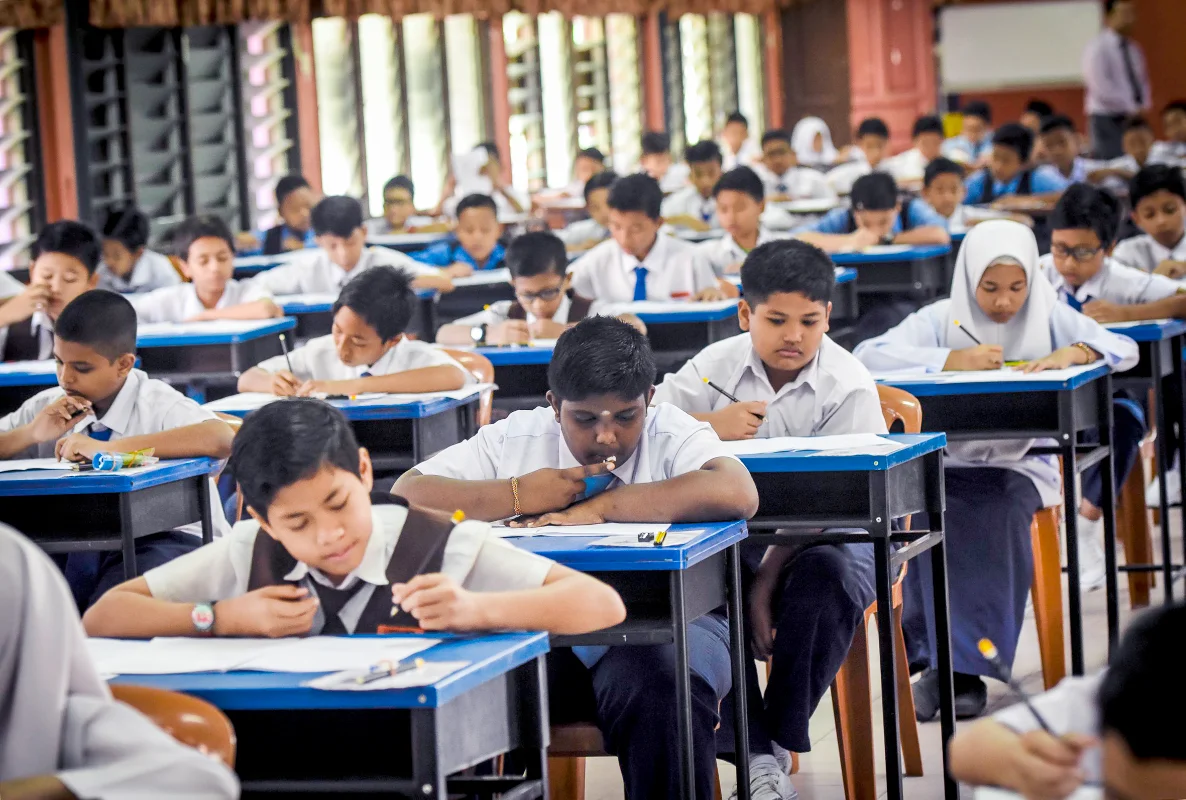
The Education Ministry is reviewing the possible reintroduction of UPSR and PT3 exams, with experts citing issues with school-based assessments.
PETALING JAYA: There is a strong possibility that the Primary School Achievement Test (UPSR) and the Form Three Assessment (PT3) could be reintroduced, said Universiti Kebangsaan Malaysia Institute for Inclusive Development and Advancement of Malaysia deputy director Dr Anuar Ahmad.
He said this in the wake of the Education Ministry’s decision to reactivate the National Education Advisory Council to review the need for the examinations.
Anuar said the move signals a policy shift as the council has been tasked to conduct a study and submit recommendations to the minister.
ALSO READ: Academics support study on reviving UPSR and PT3 exams with changes
“I believe this is a necessary step and the reintroduction is possible. Many parents felt that school-based assessments following the abolition of UPSR and PT3 lacked objectivity.”
He said the implementation of school-based assessment was unclear, adding that UPSR and PT3 were abolished due to Covid-19 safety concerns rather than educational considerations.
“When the school-based assessment was formally introduced in 2021, we could see that many aspects were not well mastered. Preparation was insufficient and classrooms were overcrowded.
“How can effective classroom assessment be carried out when there are between 45 and 55 pupils in a class? It is simply not feasible.”
He added that in developed countries, classroom-based assessment works because classes are smaller, with about 20 to 25 students.
“This key difference was overlooked when UPSR was abolished without adequate preparation. This is why many parents still see UPSR and PT3 as necessary to ensure that their children are learning effectively.”
Anuar suggested that UPSR should not be brought back in its previous high-stakes form, which caused stress and competition among schools and students, as it was originally meant only to assess basic reading, writing and numeracy skills in Bahasa Melayu, English and Mathematics.
He said without standardised exams, readiness for secondary school had declined.
“UPSR results allowed early identification of pupils struggling with basic literacy and numeracy, whereas under classroom-based assessment, pupils could progress year by year without mastering these skills, sometimes up to Year Six or Form One.
“(Those) entering secondary school without basic literacy and numeracy struggle with lessons and are at higher risk of dropping out.”
As for implementation timing, Anuar said reinstatement should start with earlier cohorts to allow preparation as it would be unfair to impose UPSR or PT3 on students who have already gone through classroom-based assessment.
Meanwhile, Parent Action Group for Education Malaysia chairman Datin Noor Azimah Abdul Rahim welcomed the decision to reactivate the council to review the possible reinstatement of UPSR and PT3.
She said any decision must be evidence-based and child-centred, ensuring assessments support learning, skills development and progression rather than merely ranking students.
She added that if UPSR and PT3 return, they should focus on understanding and critical thinking, be lower-stakes and combined with school-based assessments, with clear teacher guidance and transparent reporting to parents.
She also urged the ministry to prioritise children’s learning and wellbeing over rankings, emphasising that decisions must be equitable and communicated clearly to build trust.



