




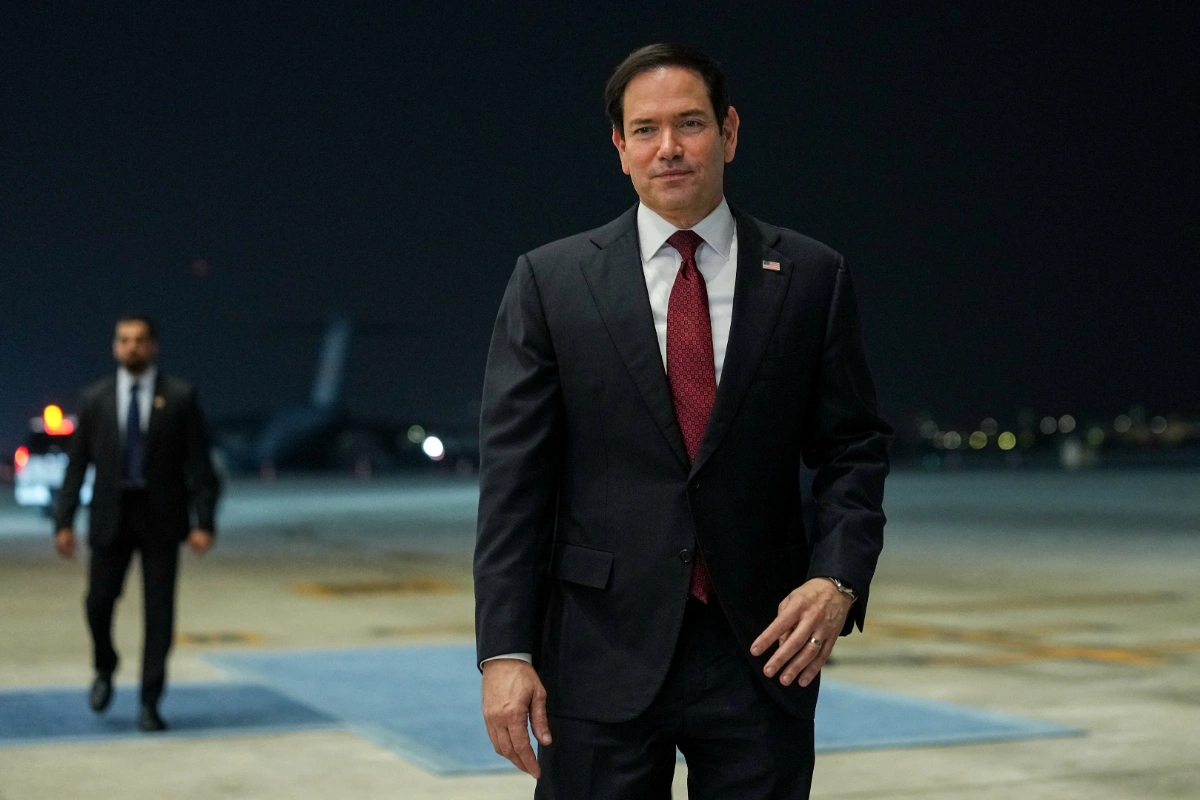
US Secretary of State Marco Rubio meets UAE president on a Gulf tour aimed at reassuring allies hit by Iranian attacks during the war.
ABU DHABI: US Secretary of State Marco Rubio met UAE President Mohamed bin Zayed Wednesday as he kicked off a tour of the Gulf countries hit hardest by Iran during the Middle East war.
Rubio arrived in Abu Dhabi late Tuesday and was scheduled to hold closed-door talks with Sheikh Mohamed before flying to Kuwait and then Bahrain, where he will attend a Gulf Cooperation Council meeting on Thursday.
The trip is seen as a gesture of solidarity with the three countries, targeted by thousands of Iranian drones and missiles during the war.
Speaking on Tuesday, Rubio said he intended to discuss the US-Iran memorandum of understanding with Gulf leaders, which does not address Iran’s missile programme and proxies — two long-standing Gulf concerns.
Rubio insisted that no country is allowed to impose tolls on the Strait of Hormuz after Oman and Iran, which border the waterway, said they were considering charging “costs” for navigating the key exit route for Gulf oil and gas.
“It’s an international waterway. No country is allowed to charge tolls or fees on an international waterway. That’s existing international law,” he said as he arrived in the United Arab Emirates capital.
This marks the first visit by a senior US official to the Middle East since the agreement was signed last week.
The United States has sought to reassure its wealthy Gulf allies about the deal, which experts say fell short of their expectations.
The energy-rich Gulf, home to several American military bases, bore the brunt of Iran’s attacks in retaliation for US-Israeli strikes that sparked the war on February 28.
The UAE was targeted by more than 2,800 missiles and drones — more than any other country in the region — while Kuwait and Bahrain were also badly hit relative to their small size.
During the war, the UAE doubled down on its alliance with the US and repeatedly said Iran’s missile programme and proxies should be dealt with.
Regional leaders have long maintained close ties with President Donald Trump and have pledged to invest billions of dollars in the US economy.
But experts say that they have grown wary of an unreliable US partner that left them badly exposed during Iran’s attacks.



