



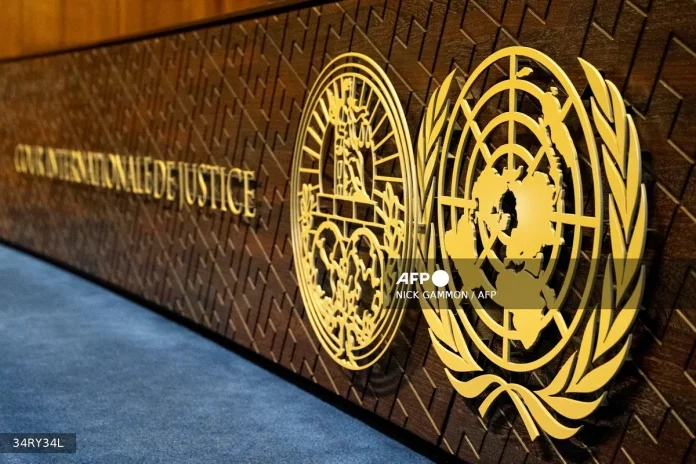
The International Court of Justice starts three weeks of hearings on whether Myanmar committed genocide against its Rohingya Muslim minority in 2017.
THE HAGUE: Judges at the International Court of Justice (ICJ) will weigh whether Myanmar committed genocide against its Rohingya Muslim minority during three weeks of hearings starting Monday.
The Gambia brought the case accusing Myanmar of breaching the 1948 Genocide Convention during a military crackdown in 2017.
Hundreds of thousands of Rohingya Muslims fled violence by the Myanmar army and Buddhist militias, escaping to neighbouring Bangladesh.
Today, 1.17 million Rohingya live crammed into dilapidated camps spread over 8,000 acres in Cox’s Bazar in Bangladesh.
From there, mother-of-two Janifa Begum told AFP she wanted to see if the suffering endured by her people is reflected during the hearing.
“We want justice and peace,” said the 37-year-old.
The Gambia, a Muslim-majority country in West Africa, brought the case to the ICJ in 2019.
In December 2019, lawyers for the African nation presented evidence of what they said were “senseless killings… acts of barbarity that continue to shock our collective conscience”.
In a landmark moment, Nobel Peace laureate Aung San Suu Kyi appeared herself at the Peace Palace courthouse to defend her country.
She dismissed Banjul’s argument as a “misleading and incomplete factual picture” of what she said was an “internal armed conflict”.
Myanmar has always maintained the crackdown by its armed forces, known as the Tatmadaw, was justified to root out Rohingya insurgents.
The ICJ initially sided with The Gambia, which had asked judges for provisional measures to halt the violence while the case was considered.
The court in 2020 said Myanmar must take “all measures within its power” to halt any acts prohibited in the 1948 UN Genocide Convention.
These acts included “killing members of the group” and “deliberately inflicting on the group conditions of life calculated to bring about its physical destruction in whole or in part”.
The United States officially declared that the violence amounted to genocide in 2022.
The hearings, which wrap up on January 30, represent the heart of the case.
A final decision could take months or even years and while the ICJ has no means of enforcing its decisions, a ruling in favour of The Gambia would heap more political pressure on Myanmar.
Suu Kyi will not be revisiting the Peace Palace as she has been detained since a 2021 coup.
The ICJ is not the only court looking into possible genocide against the Rohingya.
The International Criminal Court, also based in The Hague, is investigating military chief Min Aung Hlaing for suspected crimes against humanity.
Another case is being heard in Argentina under the principle of universal jurisdiction.



