



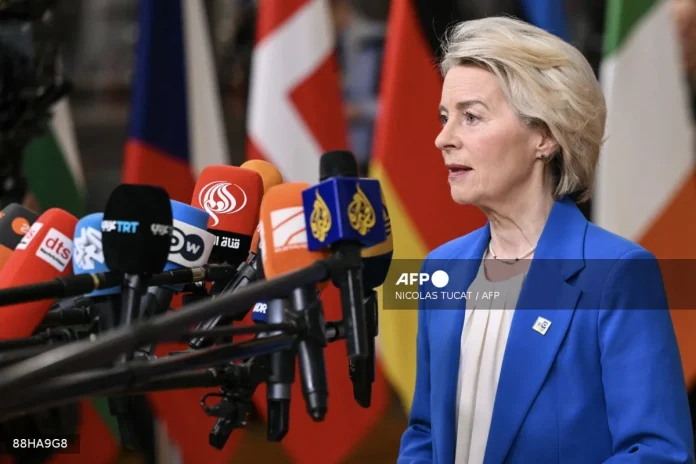
EU leaders hold crunch summit on using frozen Russian assets to fund Ukraine, with Belgium’s opposition a key hurdle to a deal.
BRUSSELS: EU leaders began a critical summit on Thursday to decide on using frozen Russian assets to fund Ukraine’s war effort.
The bloc is under pressure to support Kyiv as US President Donald Trump pushes for a peace deal with Russia’s Vladimir Putin.
Officials said the talks would last as long as necessary to reach an agreement, with both Ukraine’s survival and Europe’s credibility on the line.
“We will not leave the European summit without a solution for the funding of Ukraine,” European Commission President Ursula von der Leyen stated.
The Commission’s primary plan involves using frozen Russian central bank assets to fund a loan for Ukraine.
Ukrainian President Volodymyr Zelensky joined the summit to advocate for the use of Russia’s assets.
German Chancellor Friedrich Merz was among leaders insisting there was “no better option” than the asset plan.
Belgian Prime Minister Bart De Wever, however, said he remained unconvinced and had not seen a persuasive proposal.
“I have not seen a text that could persuade me to give Belgium’s agreement,” De Wever told lawmakers.
Belgium’s concern stems from the fact that the bulk of the frozen funds are held by Euroclear in its jurisdiction.
The government fears potential financial and legal retaliation from Moscow if the assets are used.
EU officials argue they have provided multiple layers of protection to minimise any risks to Belgium.
“At this stage, the guarantees offered by the Commission remain insufficient,” De Wever maintained.
Ukraine faces an estimated funding shortfall of EUR 135 billion over the next two years.
The cash crunch is expected to begin in April, increasing the urgency for a decision.
The Commission’s proposal aims to tap EUR 210 billion in frozen assets to provide Kyiv with EUR 90 billion.
This unprecedented scheme would involve loaning the funds to the EU, which would then forward them to Ukraine.
Kyiv would only repay the loan once it receives compensation from Russia for war damages.
While other EU countries could theoretically override Belgium with a majority vote, this is seen as an unlikely last resort.
A backup plan for the EU to raise the money itself requires unanimous approval, which Hungary has ruled out.
De Wever is expected to push for a revival of this alternative funding idea during the summit.
Discussions are also influenced by ongoing US efforts to broker an end to the war.
Zelensky announced that Ukrainian and US delegations would hold new talks in the United States on Friday and Saturday.
Ukraine has claimed Washington is pressuring the EU not to use the frozen assets as a bargaining chip.
EU officials deny this, suggesting the push for peace has instead accelerated efforts to access the Russian funds.
With Ukraine’s financial needs pressing, diplomats expect leaders to find a way to secure funding.
A loose agreement with details finalised later remains a possible outcome from the summit.
“I hope that we get this over the finishing line,” EU foreign policy chief Kaja Kallas said.
“Putin is banking on us to fail, so we shouldn’t give him that.”



