





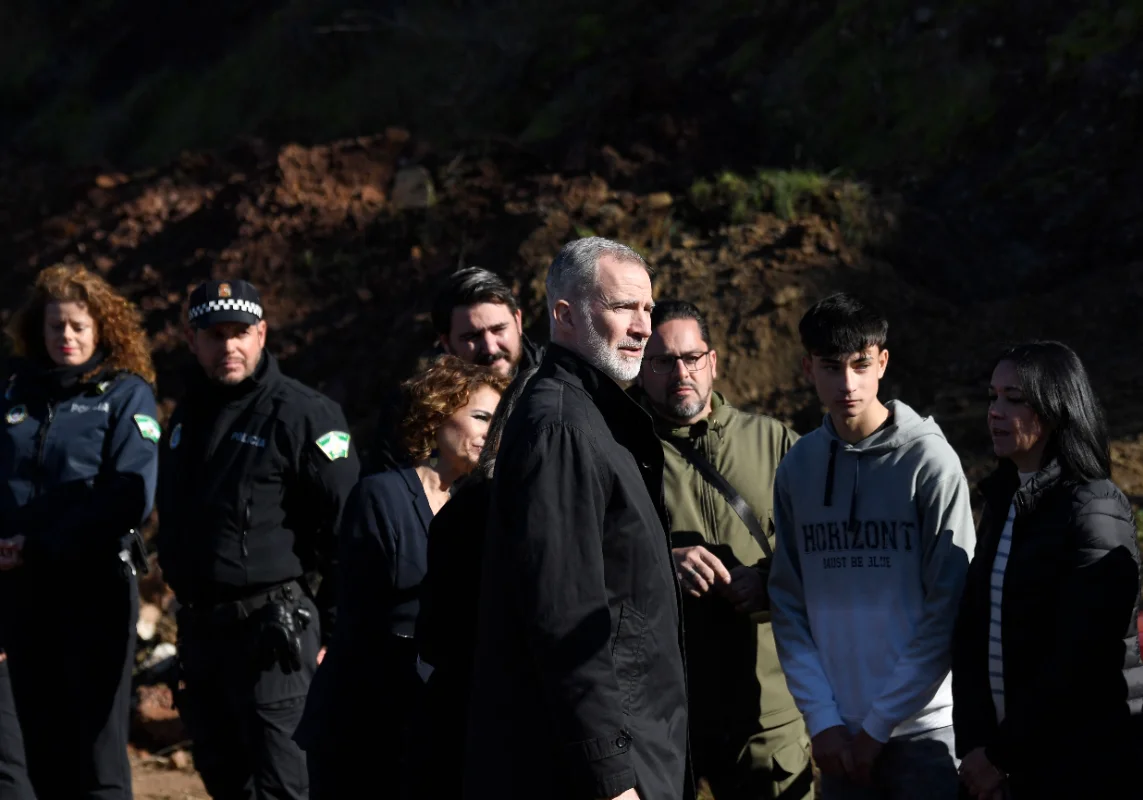
King Felipe VI and Queen Letizia visit the scene of Spain’s deadliest train accident in over a decade, which killed 41 people near Adamuz.
ADAMUZ: Spain’s King Felipe VI and Queen Letizia visited the site of a catastrophic train collision on Tuesday as the country began three days of national mourning.
The royal couple shook hands with emergency workers near the mangled wreckage of two high-speed trains near Adamuz in southern Andalusia.
They later visited a hospital in Cordoba where some of the more than 120 injured are being treated.
The death toll rose to 41 after a passenger’s body was recovered on Monday evening from one of the carriages.
King Felipe said he wanted to “convey the affection of the entire country” to the victims after leaving the hospital.
The accident occurred late Sunday when an Iryo train from Malaga to Madrid derailed and crossed onto the opposite track.
It then collided with an oncoming train heading to Huelva, which also derailed.
Portuguese passenger Santiago Salvador, who broke a leg, said he felt lucky to be alive.
“I was thrown through the carriage, it felt like being on a carousel,” Salvador told Portuguese television.
“It was a very tragic accident; it looked like hell.”
Flags flew at half-mast on public buildings as Spain observed the first day of mourning for its deadliest rail disaster since 2013.
Prime Minister Pedro Sanchez vowed a full and transparent investigation during a visit to Adamuz on Monday.
Officials confirmed the derailment happened on a straight section of track with trains travelling within the speed limit.
Spanish media report the probe is focusing on a crack more than 30 centimetres long in the rail at the accident site.
Transport Minister Oscar Puente said investigators are determining if the broken rail was “the cause or the result” of the derailment.
He described the accident as “extremely strange,” noting the Iryo train was new and the track had been recently renovated.
Interior Minister Fernando Grande-Marlaska said the possibility of sabotage has been ruled out.
Human error and speeding have also been “practically ruled out,” according to the president of state rail operator Renfe.
The two trains were carrying more than 500 passengers in total, with 39 people still hospitalised including four children.



