



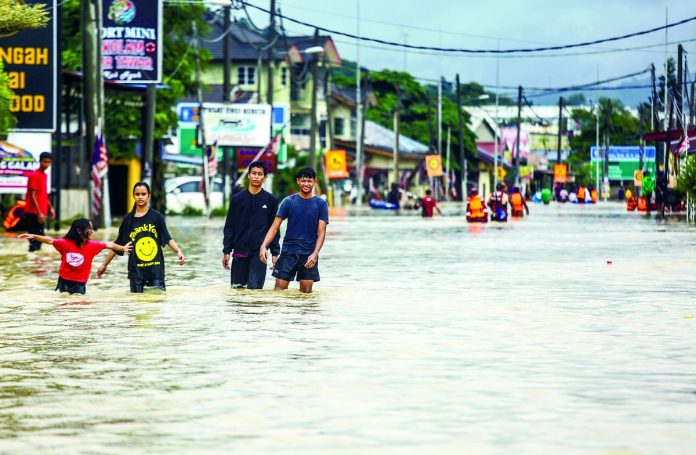
Recent flood deaths in Malaysia reveal a pattern of people being swept away, underscoring urgent need for public education and systemic safety measures
IN November 2025, Malaysia experienced several tragic flood-related deaths, underscoring how quickly moving water can turn deadly.
Across all three incidents, a clear pattern emerged: victims were swept away by fast-flowing water from rivers, drains or flooded roads. In each case, strong currents rapidly overpowered individuals or vehicles, leaving little chance of escape.
Klang River, Kuala Lumpur–Selangor (Nov 20)
A 37-year-old construction supervisor was swept away while working near Pintasan Saloma along the Klang River. Following a massive five-day search involving 200 personnel, drones, boats and K9 units, his body was discovered 65km downstream in Shah Alam, trapped in a river garbage barrier before it could drift further.
Tanah Merah, Kelantan (Nov 26)
A 70-year-old woman died after her car was swept away while crossing a flooded road at night with her daughter. Strong currents separated her from the vehicle. Rescue teams recovered her body just hours later near the incident site.
Sepang, Selangor (Nov 29)
A 23-year-old police constable was swept away while driving through flooded roads in Kampung Giching. His car was carried into a drainage channel. After a two-day search involving around 60 personnel, his body was found approximately 50m from where he disappeared.
Lessons learned
These incidents show that flood-related deaths rarely result from a single mistake. Instead, they arise from a combination of human decisions, dangerous weather conditions and weaknesses in safety systems.
First, many people underestimate the dangers of floodwaters, especially at night. Even those familiar with an area may not realise how strong and fast-moving floodwater can be.
This highlights the urgent need for flood safety education, particularly the message that people should never walk or drive through floodwaters.
In Malaysia, fire safety and first aid training are well-established components of safety education.
These programmes are widely implemented in workplaces to meet legal requirements and in schools to build awareness from a young age. They have proven effective in saving lives and reducing injuries.
However, one major risk has not received the same level of attention: floods.
Introducing flood safety education in schools and workplaces will help bridge this gap. For students, lessons should cover flood causes, early warning signs, safe evacuation routes and basic survival principles, such as avoiding swift-moving water and electrical hazards.
For employees, training can include evacuation plans, emergency communication procedures and basic first-response measures to assist family members, colleagues or the wider community. Interactive drills and simulations, similar to fire drills, will reinforce these lessons and prepare people for real-life emergencies.
Government agencies and non-governmental organisations should also collaborate with schools and companies to provide educational materials, emergency kits and real-time alerts.
Beyond schools and workplaces, vulnerable groups such as senior citizens, pregnant women, persons with disabilities and individuals with chronic illnesses require tailored education and support.
Senior citizens may have reduced mobility, slower reaction times and existing health conditions that make escaping floodwaters more difficult. Community workshops can help them recognise flood risks, prepare emergency kits and plan evacuation routes while local authorities can provide door-to-door guidance in flood-prone areas.
Pregnant women face additional challenges, including limited mobility and medical needs.
Education should focus on evacuation planning, access to prenatal care during disasters and avoiding contaminated floodwaters. Hospitals and clinics should maintain flood preparedness plans that prioritise their safe relocation.
People with mobility, visual or hearing impairments require specially designed flood safety measures, including accessible evacuation routes, clear visual and auditory warnings, mobility aids and assistance from trained caregivers or community volunteers. Inclusive drills can help them practise safe responses.
Individuals with chronic illnesses are also at higher risk if access to medication or medical devices is disrupted. Education should include maintaining emergency medication supplies, ensuring backup power for medical equipment and incorporating health needs into evacuation plans.
Second, training alone is not enough. Even when people understand the risks, strong systemic support is essential.
This includes early flood warnings, timely road closures, clear signage, physical barriers and water-depth markers at flood-prone locations. Flood safety is most effective when public awareness is combined with physical safety measures.
Third, employees often face higher risks during floods as some feel obligated to report for duty despite dangerous conditions. Organisations should clearly state that personal safety comes first and allow employees to delay travel during floods without fear of penalty.
Finally, road and drainage design can play a critical role in flood danger. Roads near rivers, drains or canals without proper lighting, barriers or warning signs can quickly become deadly during heavy rain. These high-risk locations should be identified early and upgraded to reduce the risk of future tragedies.
Sharika Tasnim is a committee member of the Royal Institute of British Architects, London. Comments: letters@thesundaily.com



