




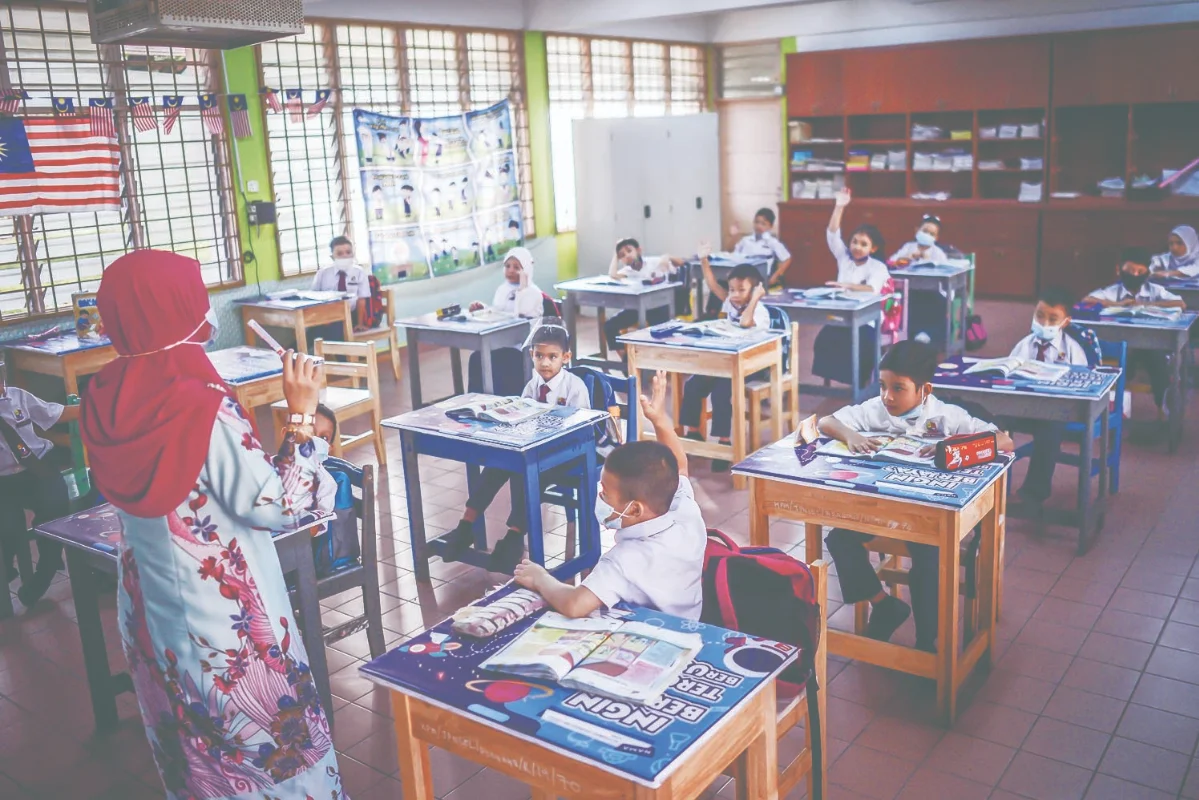
As another school year begins, preparation should mean more than labelled uniforms and sharpened pencils.
ON the Sunday before school starts, Malaysian parents do not sleep easily. There is a particular kind of restlessness that sets in – the kind that comes with checklists and quiet anxiety.
Uniforms are ironed, shoes are inspected and water bottles are lined up like soldiers. WhatsApp groups spring back to life after weeks of silence, buzzing with reminders, rules and last-minute updates.
Schools in Kedah, Kelantan and Terengganu begin tomorrow. Preparation, Malaysian-style, has always been thorough – but not necessarily academic. We prepare for traffic congestion near school gates, for early mornings and packed schedules, for events that will demand costumes, contributions and commitment. What we don’t prepare for, because we have learnt to accept it as normal, is how little time is actually left for learning.
By the second or third week of school, the pattern emerges: Teachers’ Day planning begins, Sports Day training follows, Children’s Day preparations take over afternoons, farewell events, appreciation ceremonies, cross-country runs and motivational programmes are organised – all well-intentioned, all exhausting.
School is busy. Very busy. Yet, somewhere between rehearsals and decorations, the syllabus quietly slips to the side.
Ask most children what they did in school and you will hear about marching practice, song rehearsals, team formations and class performances. Ask them what they learned, and the answer is often vague. “A bit,” they’ll say. “Teacher explained quickly.”
It is only when exams loom that academics return with urgency. Chapters are rushed through. Topics are “covered” at speed. Notes are dictated. Exercises are assigned en masse. Teachers, under pressure to complete the syllabus, push forward not because students are ready but because the calendar demands it.
Learning becomes compressed. Understanding becomes optional.
This is not an attack on teachers. Malaysian teachers are among the hardest-working people in the system. They juggle teaching, paperwork, administrative demands, event planning, reporting, meetings and expectations that often contradict each other. When schools are evaluated on how vibrant and active they appear, activities naturally take centre stage.
Activities photograph well. Understanding does not. What we have created is an education culture obsessed with busyness. A system where packed schedules are mistaken for progress, where constant activity is seen as effectiveness. In the process, academic depth becomes negotiable – something that can be rushed, skimmed or postponed.
Children feel this contradiction acutely. They are told school is about learning, yet most of their energy goes into preparation for events. They are told not to stress, yet are expected to absorb months of lessons in weeks before exams. They are told to enjoy school, even as it becomes a place of constant pressure and performance.
Parents, meanwhile, are caught in the middle. We are advised not to push our children too hard, yet we see them struggle when lessons are rushed. We are told school time is sufficient, yet tuition centres thrive because it clearly isn’t. We are reassured that our children are “coping”, even as learning gaps quietly widen.
Perhaps the most damaging lesson children absorb is not from textbooks at all. They learn that what matters is not mastery but completion. Not curiosity but compliance. Not steady learning but last-minute survival. Education becomes about finishing, not understanding; and about getting through, not getting better.
Activities, of course, are not the enemy. Sports, celebrations and co-curricular programmes play an important role in building confidence, teamwork and resilience. But when they dominate the school year, when they crowd out lesson time and exhaust both teachers and students, something is deeply out of balance.
Education should not feel like a constant rehearsal for everything except the lesson itself. As another school year begins, preparation should mean more than labelled uniforms and sharpened pencils. Perhaps it is time to ask whether our education system has confused movement with meaning.
Children deserve classrooms where lessons are not rushed, where questions are welcomed and where learning is allowed to unfold at a human pace. They deserve teachers who are given time to teach, not just organise. They deserve a system that values understanding as much as visibility.
On Monday morning, school gates will open and familiar routines will resume. Banners will go up. Calendars will fill. Events will be planned.
But long after the Sports Day tents are packed away and the farewell photos fade, what will remain is what children truly learned – or didn’t.
That, more than any celebration or ceremony, is what education should truly be about.
Hashini Kavishtri Kannan is the assistant news editor at theSun.Comments: [email protected]



