




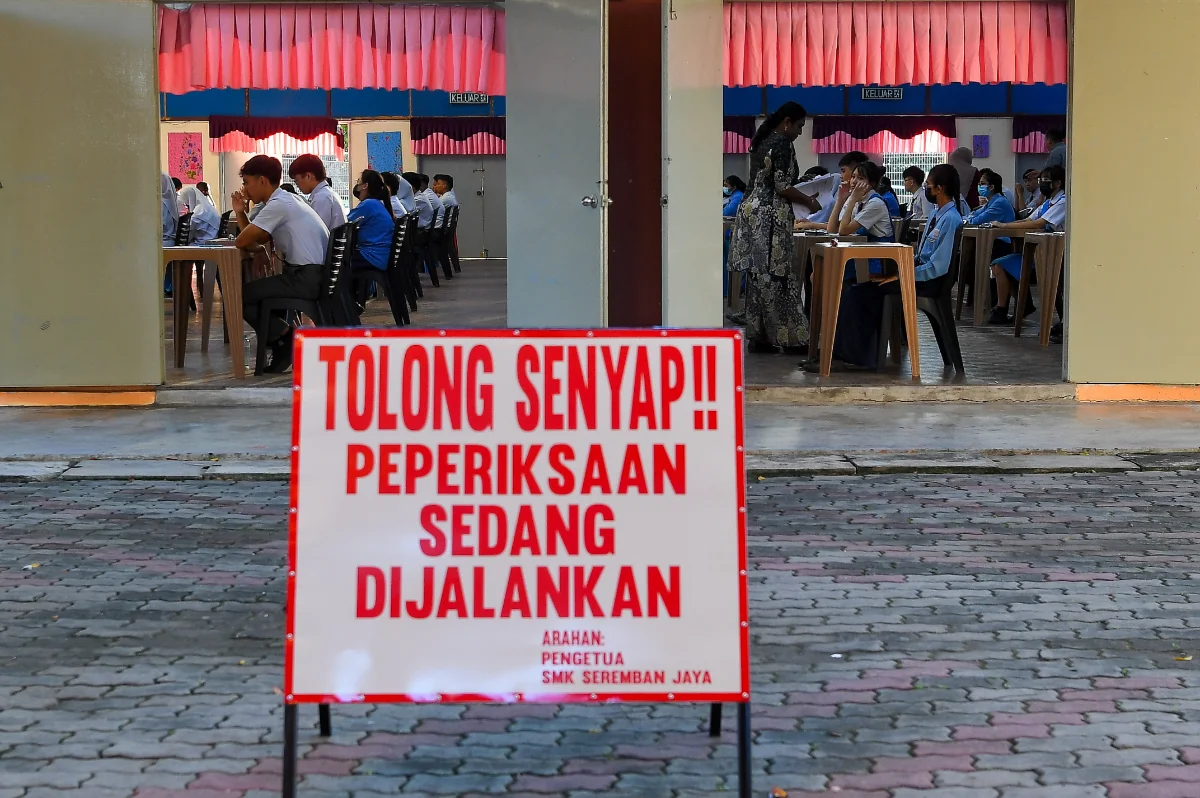
Many parents expressed support for a return to national exams, saying they could provide a clearer measure of their child’s academic abilities
PETALING JAYA: National examinations could be back in Malaysian schools and parents are speaking out on what it would mean for their children.
UPSR was abolished in 2021 and PT3 in 2022, replaced by school-based assessments to reduce exam stress and foster continuous learning, but many parents say the new system does not always reflect true student performance.
Many parents expressed support for a return to national exams, saying they could provide a clearer measure of their child’s academic abilities. Adlina, whose child is in secondary school, said the current school-based assessment system has not always reflected her son’s progress.
“I’ve even noticed some teachers just copy and paste comments, which don’t show whether my son is excelling or barely scraping by.”
She believes national exams could offer a more accurate picture of a student’s performance.
On the debate over whether national exams added pressure, Adlina sided with those who see them as providing structure and accountability.
“At least students know what it takes to do well in their studies. Right now, my son has the ‘no worries’ attitude when preparing for school exams. My fear is that it will be too late for him to take SPM seriously if this continues.”
She added that any revival of UPSR and PT3 should focus on assessing student performance, not penalising schools or teachers.
“These exams must be a tool for the Education Ministry to provide guidance and support, rather than just ranking or punishing students and educators.”
Another parent, Nanthini shared a similarly positive outlook, highlighting the benefit of national exams as a benchmark.
“They give a standard measure so you can see how your child is doing compared with other students in schools across the country. Right now, with school-based assessments, it can be hard to tell whether good grades are due to a child excelling or because of more lenient marking.”
She added, however, that exams are not the only measure of learning.
“Some kids don’t do well under pressure but shine in projects, presentations or continuous classwork. If exams come back, they should complement the current system and be part of how we measure learning.”
Nanthini also acknowledged that exams can be stressful but stressed the importance of balance.
“Exams do create pressure, but a little structure and accountability isn’t bad. They should guide and motivate learning, not make children feel like their whole future depends on a single test.”
She suggested improvements if the exams are reintroduced, including reducing rote memorisation, combining exams with projects and continuous assessment, supporting students’ mental health and keeping parents informed.
“At the end of the day, the goal should be to help kids grow and enjoy learning, not just stress about marks.”
Another parent, Darren Lew echoed these views, saying national exams provide a clear academic benchmark.
“While school-based assessments are helpful, national exams show where my child stands. They highlight strengths and areas for improvement.”
He also saw the structure provided by exams as a positive form of pressure.
“They teach discipline, time management and focus. With proper guidance, national exams can be motivating rather than overwhelming.”
Lew added that any revival should focus on making the exams more balanced and holistic, emphasising critical thinking and problem-solving over rote memorisation.
“Clear guidance from teachers before exams would also help students prepare confidently without stress.”
The Education Ministry has activated the National Education Advisory Council to study the need to revive UPSR and PT3. Minister Fadhlina Sidek said the review responds to parental demand for national exams. The matter will be discussed thoroughly, she said.



