



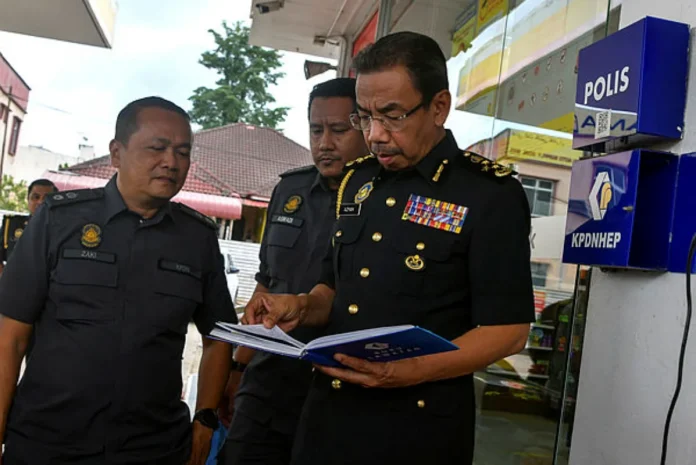
Authorities investigate unusual petrol station sales near the Malaysia-Thailand border, citing possible subsidised fuel misappropriation.
PASIR MAS: Unusual fuel sales patterns at several petrol stations near the Malaysia-Thailand border have raised concerns over possible misappropriation of subsidised petrol and diesel.
Domestic Trade and Cost of Living Ministry (KPDN) director-general (Enforcement) Datuk Azman Adam said nine petrol stations had been identified with sales significantly higher than those in other areas.
Sales dropped sharply after enforcement officers were stationed at the premises, pointing to early signs of abnormal activity.
The monitoring was conducted in four border districts: Pasir Mas, Tumpat, Tanah Merah and Jeli.
Azman said the sharp change in sales volumes provided an early indication that required closer scrutiny.
KPDN is currently assessing whether the sales figures reflect genuine local consumption or are influenced by other factors.
“Further investigations would include examining population profiles, local economic activities and vehicle movement patterns,” he said.
Azman added that KPDN has yet to consider restricting fuel supplies at the stations involved.
The ministry is prioritising continuous monitoring and intelligence gathering instead.
“A phased approach will be adopted to ensure enforcement is carried out prudently,” he said.
Meanwhile, KPDN will install 17 import and export prohibition signs at all ICQS complexes in states bordering Thailand.
The warning signs will clearly display the ban on RON95 petrol purchases by foreigners.
Restrictions on taking out packaged cooking oil and other controlled items will also be shown.
In a related development, the ministry will install CCTV at all petrol stations in the border areas starting this year.
Azman said the technology-based approach aims to curb leakages and misappropriation of RON95 petrol and diesel.
This is particularly targeted at high-risk locations suspected of being targeted by syndicates.
“Without tight control, a single individual could siphon or fill up to 40 jerry cans of petrol,” he added.
The installation of CCTV and use of data will form a crucial basis to support investigations and enforcement action.



