




‘Symptoms include fever and nausea, could rapidly progress to neurological complications’
PETALING JAYA: Malaysia’s healthcare system is better equipped today to detect and manage potential Nipah virus infections compared with the 1998 outbreak.
However, experts say recognising the illness early remains a challenge as its initial symptoms closely mimic common viral infections.
KPJ Ampang Puteri Specialist Hospital medical director Datuk Dr Azhar Md Noh said the difficulty lies at the clinical front line, where patients rarely present distinctive warning signs.
“Initial symptoms are not specific and overlap with many common infections. A high index of suspicion combined with epidemiological risk factors, such as travel to countries with active outbreaks or exposure to pigs or bats, helps in detecting potential cases and triggering appropriate diagnostic tests.
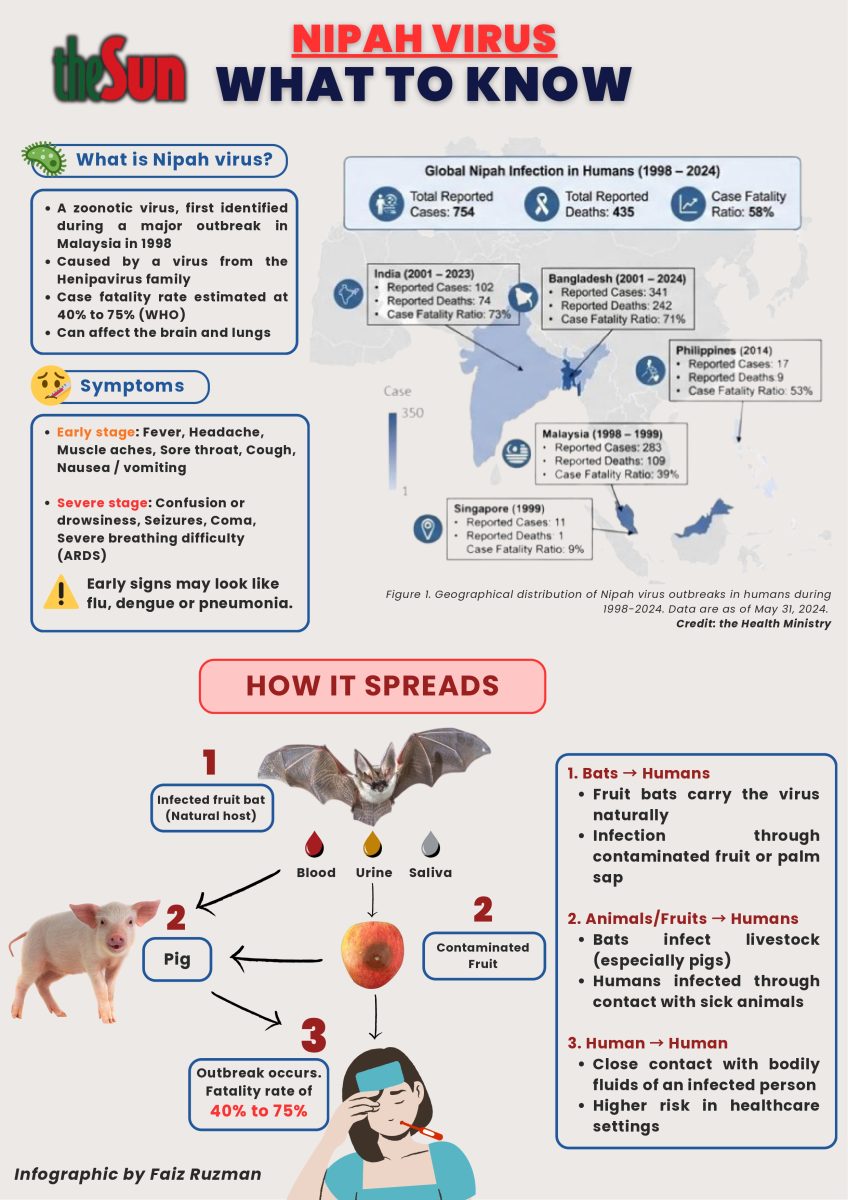
“Common symptoms include fever, headache, myalgia (muscle aches), nausea, vomiting, sore throat, cough and breathing difficulties.
“These could rapidly progress to neurological complications, such as confusion, headaches, seizures and coma, as well as severe respiratory involvement, such as acute respiratory distress syndrome.”
Universiti Kebangsaan Malaysia Medical Centre infectious disease specialist Assoc Prof Dr Petrick @ Ramesh K. Periyasamy said the challenge lies less in hospital capacity and more in identifying risk early.
“From a Malaysian healthcare perspective, preparedness is far superior to the 1990s. Surveillance systems now adopt a ‘One Health’ approach, coordinating monitoring between the Health Minstry, the Veterinary Services Department and wildlife authorities to track the virus in fruit bats.
“Laboratory capacity has also improved. The Institute for Medical Research can detect Nipah virus using RT-PCR and serological testing.
“Following Covid-19, hospitals have strengthened infection control practices and expanded knowledge and availability of personal protective equipment,” he said.
He added that exposure history often provides the crucial clue.
“It is difficult to differentiate early signs and symptoms. Doctors should ask about any exposure, including contact with bats, raw date palm sap or travel to active outbreak zones.
“What may start as a viral-like illness could quickly progress to drowsiness, disorientation and mental confusion. Rapid progression from fever to altered consciousness or seizures within 24 to 48 hours should raise alarm.
“While there is still no cure, supportive care has advanced considerably. Modern intensive care, including mechanical ventilation for respiratory failure and advanced anti-convulsants for seizures, can reduce mortality.”
On national surveillance and response, Universiti Kebangsaan Malaysia medical and health sciences lecturer Prof Dr Sharifa Ezat Wan Puteh said systems are in place.
“The national health system is prepared to handle Nipah virus infections. Surveillance mechanisms are operational and anyone showing early symptoms with a history of exposure will trigger a response.
“Nipah virus has been a notifiable disease since 1999. Animal surveillance is ongoing among veterinarians and pig farmers to detect early signs.
“Clinics, doctors and veterinary staff have received advisories to identify symptoms in humans and animals,” she said.
Nipah virus was first identified during an outbreak among pig farmers in Malaysia in 1998.
According to a World Health Organisation article published on Jan 29, the fatality rate ranges from between 40% and 75%, depending on the outbreak.
The virus is naturally carried by fruit bats and can spread to humans through infected animals, contaminated food or close contact with infected individuals.
It could cause severe disease affecting the lungs and brain, with some patients developing encephalitis or brain inflammation.
There is no approved vaccine or specific treatment, although early intensive supportive care, including respiratory support and management of complications, could improve survival.



