




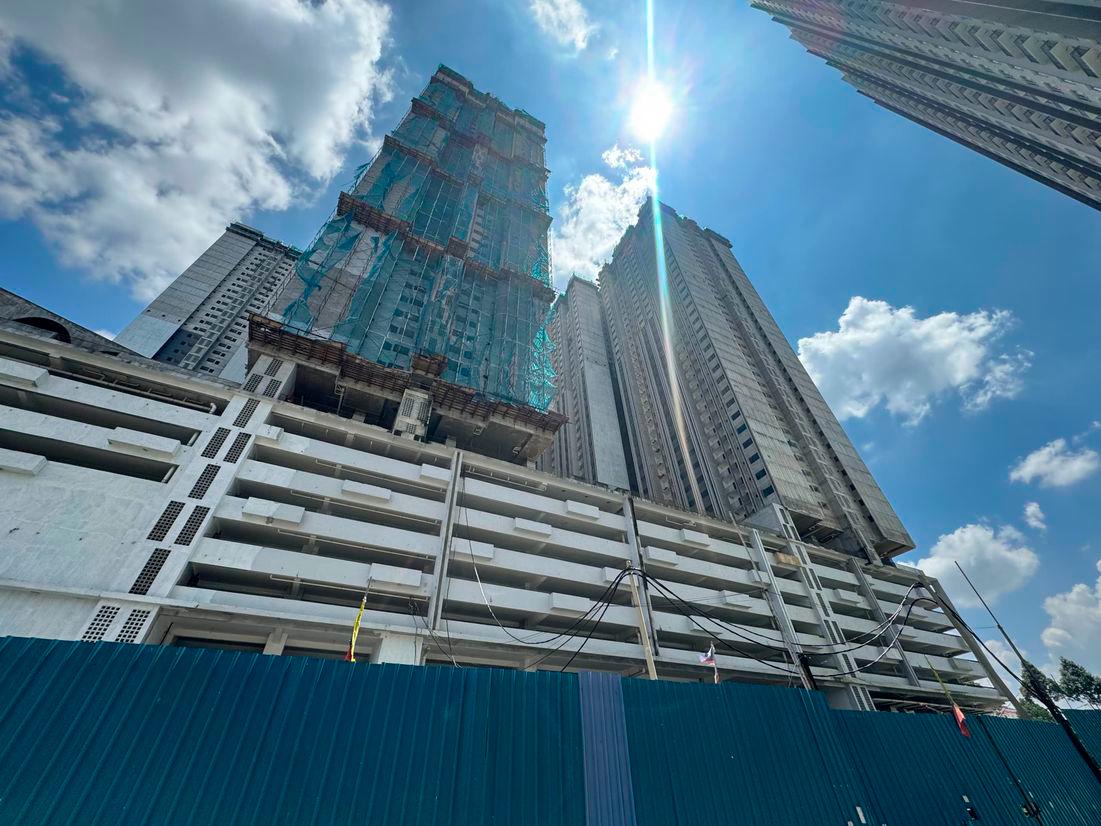
PETALING JAYA: The government’s plan to require schools and public amenities in large-scale housing projects under the 13th Malaysia Plan has sparked debate over whether affordability, especially for first-time buyers, can be sustained.
While many welcome the integration of schools, healthcare and community facilities into housing developments, property experts caution that the extra costs may ultimately filter down to buyers if not carefully managed.
Malaysian Institute of Property and Facility Managers president Ishak Ismail said mandatory facilities would inevitably push up developers’ capital expenditure, posing a particular challenge for affordable housing projects already operating on slim margins.
“High-end projects may absorb or redistribute costs, but affordable schemes lack that flexibility. Beyond schools, requirements for healthcare facilities, lifts in vertical schools and other public amenities could raise costs further, hitting the B40 and M40 hardest. Even small price increases risk putting homeownership out of reach,” said Ishak, who is also the managing director of IM Global Property Consultants.
He suggested public-private partnerships, density bonuses, tax incentives and phased construction to balance the impact.
“Allowing higher plot ratios or density in exchange for facilities could help developers offset costs through increased revenue.”
But without support, Ishak warned, developers may shrink unit sizes, cut non-essential features or delay launches. Long-term maintenance also poses questions: “Lifts in schools or community clinics require regular upkeep. If borne by joint management bodies, service charges and sinking funds could climb,” he said, calling for clarity on who would shoulder such costs.
Universiti Teknologi Malaysia associate professor in Property Economics and Finance Dr Muhammad Najib Razali said the proposal is timely, bringing Malaysia closer to global practice of compact, liveable communities.
“Embedding essential facilities reduces reliance on cars while improving access to education, healthcare and places of worship,” he said, but warned of significant price impacts.
“Conventional schools cost about RM1,025 to RM1,135 per sq metre in 2020. Vertical schools need more complex structures and fire-safety systems, pushing costs higher. Developers are unlikely to absorb this. Home prices could rise 5% to 14%, meaning a RM600,000 unit might increase by RM41,000 to RM81,000, adding between RM180 and RM360 monthly to a 35-year mortgage.”
Najib stressed that feasibility depends on clear government policy defining operational and maintenance responsibility.
“If developers must maintain schools or clinics, obligations increase and residents’ service charges may rise.”
He noted that in other countries, governments often share costs through subsidies or direct operation.
“Malaysia could adopt similar models. For example, developers build only the shell, while government funds the fit-out and runs the facilities.
“Subsidising schools and clinics would prevent cost inflating service charges,” he said.



