




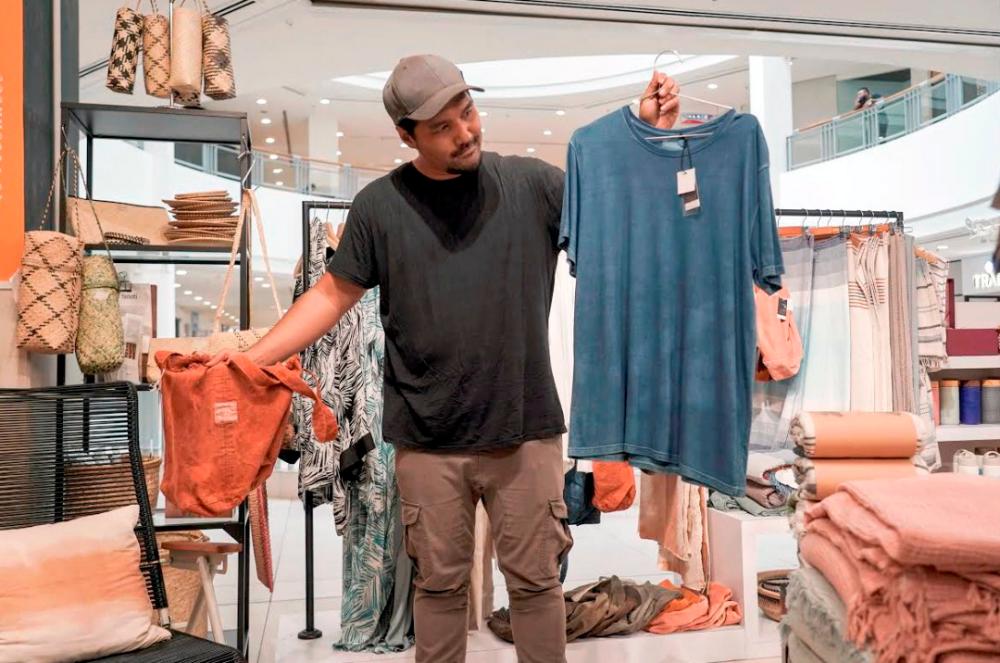
A CHANCE encounter with Indonesian textiles coloured with natural dyes set designer Munir Osman (pix) on an artistic and environmentally friendly mission.
This eventually led to a thriving fabric business in Kuala Lumpurâs upmarket enclave, Bangsar.
Munir, who was an architect, was in Bali six years ago to oversee the reconstruction of a traditional wooden house for a client.
On a visit to Ubud on the resort island, he was shown textiles that had been dyed with extracts from leaves and wood.
âI fell in love with the grey muted coloured fabrics,â Munir told theSun.
He decided he wanted to learn more about the art, and went to Yogjakarta to learn how natural dyes were used in batik designs.
After consultation with several masters of the technique, Munir decided it was time to introduce his own brand of natural dyed fabrics.
In December 2017, the Malaysian fashion industry had its first introduction to the âMuniâ fashion brand.
The first item on Munirâs list of merchandise was a knot bag priced at RM89.
He favours dyes made from extracts of sappanwood or Indian red wood, a flowering tree of the legume family, as well as the Indian almond leaves, that he uses for T-shirts and fabric bags.
He even uses the skin of mangosteen to get the desired red hue, and guava leaves for a light tinge.
Munirâs transition from architecture to fashion was more than just a business decision.
He is on a quest to promote sustainable living with his products.
Apart from using only natural products, he also ensures that nothing in his production process goes to waste.
He sources ingredients for dyes locally from Perlis, and from countries like Indonesia and India. Production is time consuming. For instance, it takes up to nine days to extract enough dye for 50 T-shirts.
Each process can take up to three days. The impurities and starch have to be removed from the fabric to improve colour absorption and to ensure consistency.
Munir has also developed a different technique to extract dye from each of the raw materials he uses.
Once dyed, the fabrics will have to be soaked in salt water to ensure the colour does not fade over time.
âWe use alum salt, chalk or iron salt,â he said.
Once he has extracted all he can from the raw materials, the waste is not thrown away but converted into compost.
Moving his workshop to Cyberjaya is testament to the increasing interest in his merchandise.
âWe started with just two pots but now I have âgraduatedâ to using several cauldrons to prepare the dyes,â he said.
He also has two employees to help him.
Munir noted that over the years, there has been an increasing desire among the people for a lifestyle that also promotes sustainability. âThis includes the clothes they wear. They are now able to make better choices.â
âThey want to be environmentally friendly. For instance, instead of nylon, I use a blend of bamboo and cotton material for T-shirts and cotton canvas from India for the bags.â
Munir conceded that fixing a price for each item is a challenge.
âI donât want to price it beyond the affordability of most people,â he added.



