




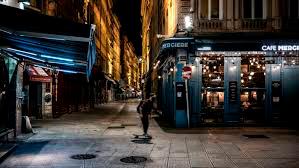
BRUSSELS: Belgium imposed a nationwide overnight curfew on Monday as Switzerland made wearing face masks compulsory in indoor public spaces, the latest desperate measures by European governments to fight a powerful second coronavirus wave.
More than 250,000 people have died of the virus in Europe but the deepening crisis there stands in contrast to Australia, where the nation’s second-biggest city began easing a lockdown that kept millions of people largely confined to their homes for months.
Cafes and restaurants across Belgium were shuttered for four weeks as the country tackled its own infection spike, part of a continent-wide surge that has seen a 44 percent increase in cases across Europe in the past week.
But the move has prompted a backlash from businesses despite authorities warning the country of 11.5 million people was in the middle of an exponential increase in cases.
“We don’t feel considered, and it hurts my heart,” said Angelo Bussi, a restaurant manager in Brussels. “Everyone is in pain. It’s horrible.”
Switzerland was among the few countries largely spared since the coronavirus emerged late last year and swept the world, infecting nearly 40 million people so far.
But infections have doubled in the wealthy Alpine nation in the last seven days, prompting new restrictions that also include a ban on public gatherings of more than 15 people.
“The sharp increase in the number of contaminations in recent days is worrying. Indeed, it concerns all age groups,” a government statement said.
France on the weekend imposed its own overnight curfew in nine cities including Paris, affecting 20 million people, as it announced a record 32,400 new infections on Saturday.
And Italy was the latest country to announce fresh curbs on Sunday night in response to its own snowballing second wave of contagion, after enduring Europe’s first major outbreak earlier this year.
“We cannot waste time,” said Prime Minister Guiseppe Conte, flagging bans on amateur team sports and earlier closures for bars and restaurants.
He said that the new measures were intended to avoid harsher measures that could “seriously endanger” continental Europe’s third-largest economy, already reeling from a two-month nationwide lockdown that was lifted in May.
‘We have to try to live normally’
An even longer lockdown began coming to an end in Australia on Monday, where the five million inhabitants of Melbourne were allowed to leave their homes for more than two hours a day for the first time since July.
Residents dashed back to reopened salons and golf courses that had been closed for more than 100 days, though authorities have ordered restaurants and most other retail businesses to remain shut until November at the earliest as they monitor case numbers.
“I’m not doing what is popular, I am doing what is safe, because we don’t want to be back here again,” said Daniel Andrews, the premier of Victoria state which encompasses Melbourne.
Israel has also lifted restrictions that banned people from travelling more than a kilometre from their homes as well as closing kindergartens, beaches and national parks.
Israeli mother Talia Zinkin said she was initially unsure whether to send her son back to daycare.
“But I felt he would enjoy being with other children,” she told AFP. “We have to try to live normally.”
Saudi Arabia eased more of its own virus restrictions a day earlier when it allowed worshippers to reenter Islam’s holiest site for prayers on Sunday for the first time since March.
The Grand Mosque in Mecca is the site of the annual hajj pilgrimage that draws Muslims from around the world but only 10,000 people were allowed to take part this year, a far cry from the 2.5 million who participated last year.
The structure will be sterilised before and after each group of worshippers, and thermal sensors have been installed to measure the body temperature of pilgrims. â AFP



