




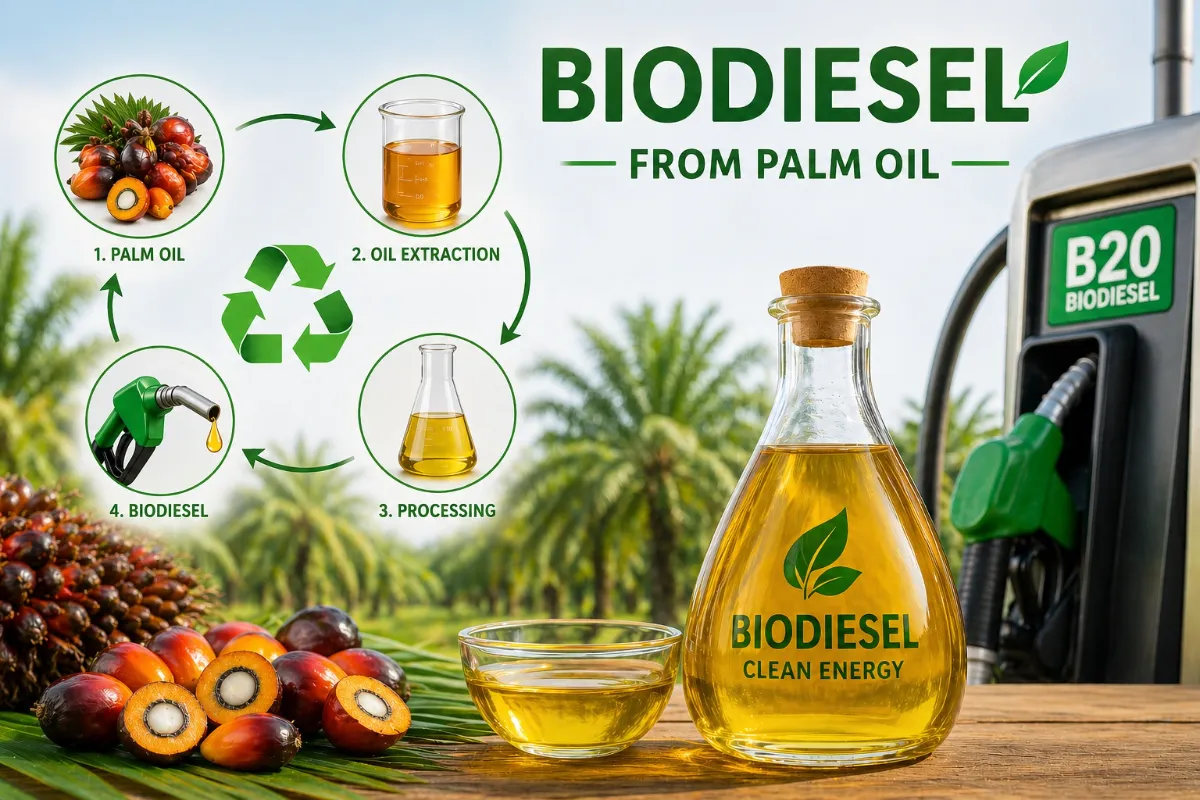
KUALA LUMPUR: Biodiesel should be viewed as a supplementary energy security buffer, rather than a permanent or complete hedge against imported diesel risk, said CIMB Securities.
In its Malaysia ESG Monitor: April 2026 report today, CIMB Securities said biodiesel helps reduce reliance on imported diesel by leveraging Malaysia’s domestic palm oil supply, strengthening energy security, particularly during disruptions to key routes such as the Strait of Hormuz.
“The government believes that an increase in biodiesel usage will help extend the availability of national diesel supply, supported by biofuel mitigation plans, phased upgrades of 20% biodiesel (B20) and B30 depots under the 13th Malaysia Plan, and preparations for a B30 mandate for the commercial and public transport sectors,” it said.
CIMB Securities opined that wider adoption of higher blends (B20/B30) requires significant upgrades to storage, logistics, and distribution infrastructure, while compatibility across all diesel engines remains uneven.
“In addition, biodiesel costs are linked to crude palm oil prices, which can be volatile,” it said.
CIMB Securities added that infrastructure would be a critical factor in scaling up biodiesel in Malaysia, as higher blending mandates require more than just sufficient supply.
“Malaysia’s B20 rollout remains limited to Langkawi, Labuan and Sarawak, and the government has previously indicated that about RM643 million is needed to expand B20 infrastructure nationwide,” it said.
On April 14, 2026, the Malaysian government announced that it agreed to raise the current 10% biodiesel B10 mandate for the transport sector to B15, beginning with an initial rollout of B12, as it seeks alternative fuel sources to support energy security amid the ongoing West Asia conflict.
Meanwhile, CIMB Securities said the plastic industry faced an immediate impact due to the ongoing conflict in West Asia, as Asia’s petrochemical system is structurally dependent on Middle Eastern feedstocks, with around 60–70% of naphtha supply exposed to disruptions in the Strait of Hormuz.
It noted any disruption in the strait would also affect about 16% of global oil products trade, with particularly severe implications for liquefied petroleum gas and naphtha.
On April 17, the Malaysian Plastics Manufacturer Association said it expects the plastic manufacturing industry to remain volatile in the near-to-medium term due to oil price spikes driven by the West Asia conflict and supply disruptions.
“This tightens petrochemical feedstock availability, leading to production delays, margin compression, and potential shortages and inflation across key downstream sectors, as resin prices have surged by over 100% to above US$1,500-2,000 (RM3.95-7,900) per tonne with additional surcharges,” CIMB Securities added.



