




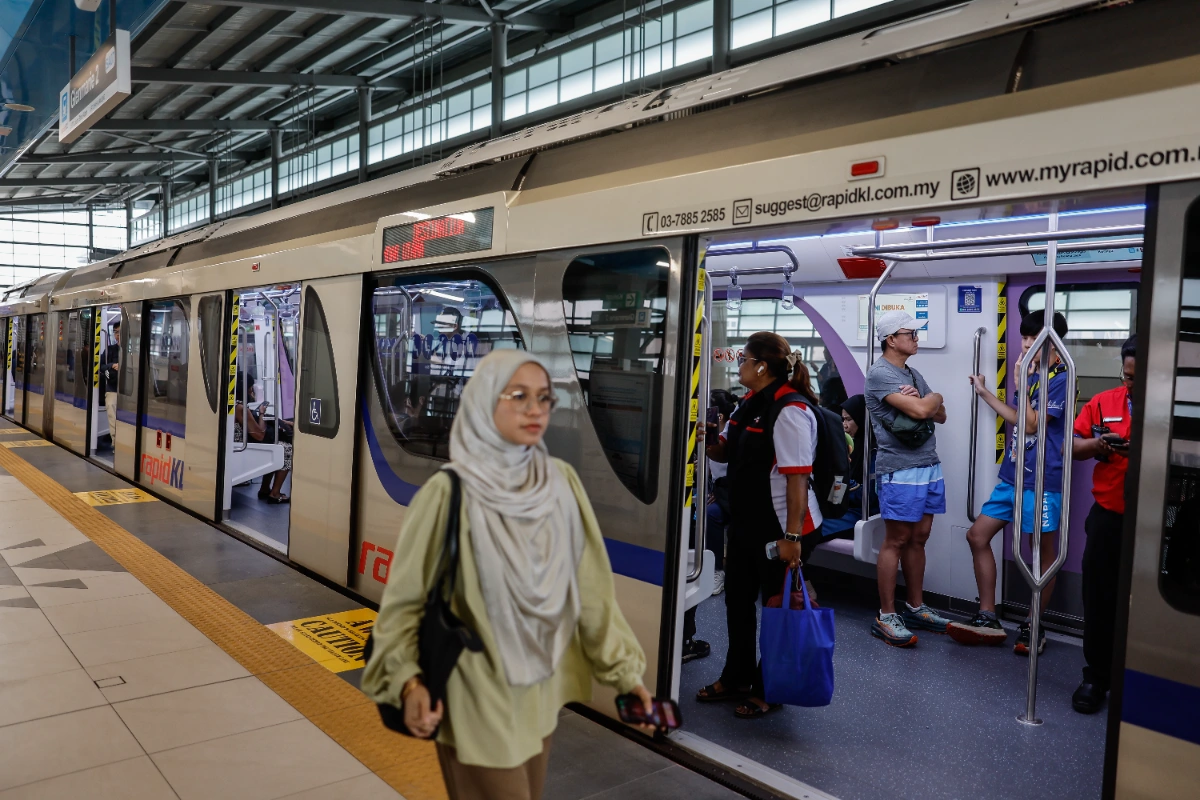
LRT3 must go beyond tracks to succeed in Klang Valley
PETALING JAYA: The launch of the LRT3 Shah Alam line marks a major milestone for the western corridor of the Klang Valley but an expert said its long-term success will depend less on the rail system itself and more on the strength of the wider transport ecosystem.
Universiti Putra Malaysia Road Safety Research Centre head Prof Dr Law Teik Hua said achieving projected ridership will hinge on resolving persistent first and last-mile connectivity gaps around stations.
READ MORE: Bristol law student finally wins ESU public speaking crown after four-year journey
He said many potential passengers live too far from LRT3 stations to walk comfortably, while weak feeder bus coverage, limited pedestrian links and underdeveloped cycling networks could restrict accessibility.
“The problem is not the train itself, but whether people can realistically reach the stations safely and efficiently.”
Law said the system’s success would also depend on how well it integrates with other public transport modes, including MRT, KTM Komuter, Rapid bus services, demand responsive transit (DRT) and park-and-ride facilities.
He said seamless integration of tickets, schedules and passenger information systems is essential to ensure smooth end-to-end journeys, rather than disconnected rail segments.
Drawing on past MRT and LRT rollouts in the Klang Valley, he said ridership typically grows gradually as surrounding developments mature and feeder services improve, rather than surging immediately after operations begin.
“For previous lines, patronage increased over time. Success should not be judged only in the early operational phase.”
Law cautioned that transit-oriented development (TOD) alone would not resolve congestion unless supported by coordinated transport and land-use planning.
He said station areas should go beyond highdensity housing to include commercial, educational and recreational components to build self-contained communities.
“People should be able to live, work and access daily services without depending heavily on private vehicles.”
He added that transport planning must prioritise frequent feeder buses, DRT services, as well as safe pedestrian and cycling infrastructure, alongside carefully balanced parking policies.
Excess parking, he warned, could encourage continued car use, while insufficient parking could discourage commuters from using rail services.
Law also stressed that housing affordability is critical to successful TOD implementation, warning that without it, station-area developments risk catering only to higherincome groups, undermining inclusivity and potentially fuelling gentrification.
He said behavioural change among commuters would take time, particularly in car-dependent areas such as Shah Alam, where private vehicle use remains deeply entrenched.
“Travel behaviour does not change overnight. Convenience, cost, reliability and time – all these influence decisions.”
In the long term, Law said the success of LRT3 would depend on creating conditions where public transport becomes the most convenient and attractive option.
This includes maintaining reliable and affordable services, strengthening first and lastmile connectivity, improving pedestrian and cyclist safety, and steering urban growth towards transit corridors through well-planned TOD, rather than continued urban sprawl.
“LRT3 should be viewed as the backbone of a much broader transport ecosystem rather than a standalone infrastructure project.
“With proper planning, efficient feeder systems, affordable housing and integrated urban development, it has the potential to significantly reduce car dependency over the next decade, rather than within just its first few years of operation.”



