




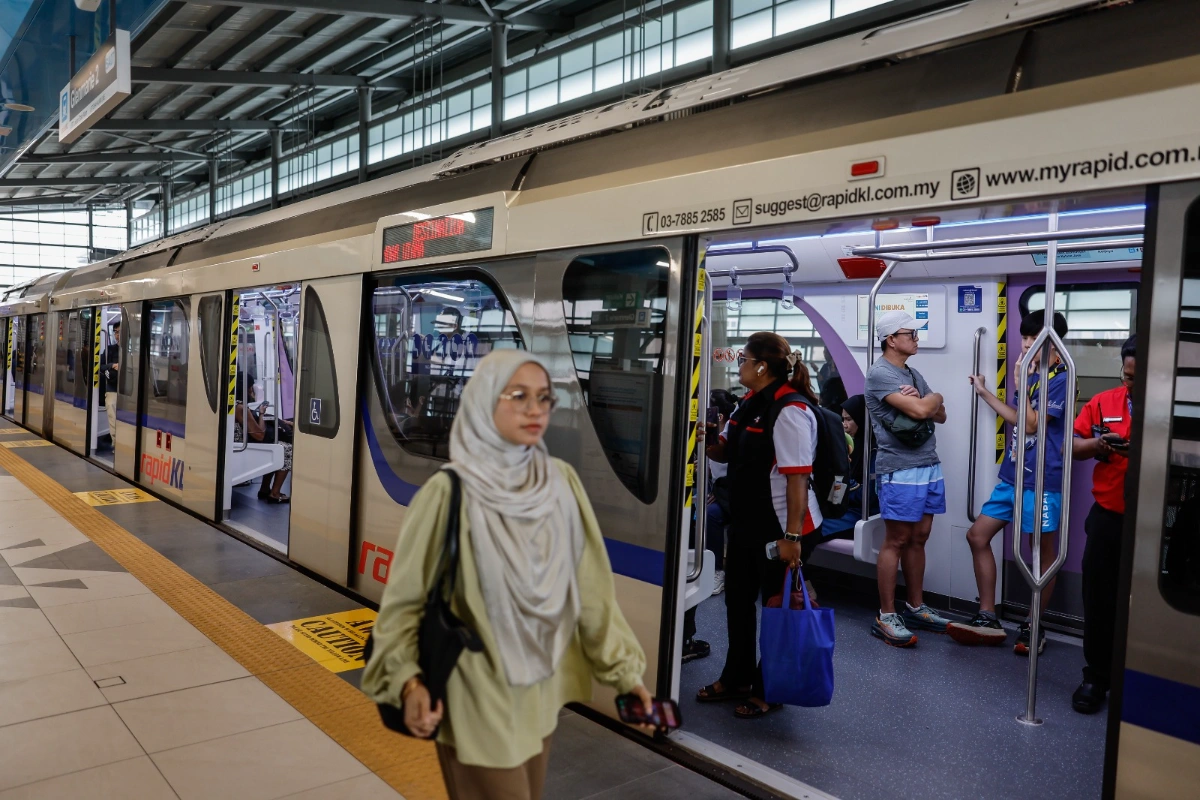
Dr Nurul Shakila Khalid said the greatest challenge facing transit-oriented development (TOD) is not the lack of affordable housing policies, but how transit-driven land economics steadily push property prices beyond the reach of B40 and M40 households.
PETALING JAYA: Affordable housing along Malaysia’s transit corridors risks becoming little more than a promise unless strict safeguards are put in place, with rising land values around rail stations threatening to price out the very communities public transport is meant to serve, a town planning expert has warned.
Universiti Teknologi Mara Centre of Studies for Town and Regional Planning lecturer Dr Nurul Shakila Khalid said the greatest challenge facing transit-oriented development (TOD) is not the lack of affordable housing policies, but how transit-driven land economics steadily push property prices beyond the reach of B40 and M40 households.
She said rail investments often trigger transitinduced gentrification, where land surrounding stations rapidly becomes the target of speculation and increasingly unaffordable. “Once a station is announced, land prices escalate due to speculation.
Developers then argue they cannot justify building low-margin affordable housing near transit nodes and instead prioritise high-end developments.
“This creates a structural contradiction where public infrastructure funded by taxpayers ends up benefiting higher-income groups, while lower-income communities are pushed further away from transit access.”
Nurul Shakila said genuine affordability must extend beyond price tags and be backed by enforceable mechanisms such as inclusionary housing quotas, income-based eligibility criteria and legally binding requirements for affordable units within station catchment areas.
She said early signs of transit-driven market pressure are already emerging along the LRT3 (Bandar Utama-Klang Line) corridor, particularly in Shah Alam and Klang, where proximity to stations is increasingly commanding a premium.
“Areas such as Seksyen 7 and Bukit Tinggi are experiencing sharp land value appreciation. What were once affordable residential zones are being repositioned for higher-income, highdensity developments.”
She said the impact extends beyond home ownership, affecting renters, small businesses and long-term residents.
Rental increases of between 20% and 40%, she said, are already forcing industrial workers, students and longterm tenants further away from transit access.
Rising property values also translate into higher assessment rates, placing additional financial pressure on fixed-income homeowners.
“Even long-time residents are facing higher holding costs simply because of transit-driven revaluation,” she said, adding that commercial gentrification is also reshaping neighbourhoods as traditional businesses are replaced by higherend tenants.
Nurul Shakila said Malaysia’s TOD implementation is further weakened by fragmented coordination between local councils, transport agencies and developers.
She said inconsistent planning rules across jurisdictions along the same rail corridor create loopholes that encourage speculative development.
“When coordination is weak, each local authority applies different plot ratios, parking requirements and development rules.
“This allows speculative development to override transport planning goals.”
She warned that without a unified TOD framework, station areas risk becoming clusters of disconnected high-rise developments with poor pedestrian integration and weak links to surrounding neighbourhoods.
Beyond housing supply, Nurul Shakila said TOD success should be measured by liveability, accessibility and safety rather than rising land values alone.
She said this requires safe, shaded and continuous pedestrian networks, dedicated cycling infrastructure and active street-level design that encourages community interaction.
“A successful TOD must ensure seamless first and last-mile connectivity and avoid cardominated podium developments that disconnect people from the street,” she said.
She also stressed the importance of humanscaled urban design, where active frontages such as shops, cafes and public spaces replace blank walls and inactive building edges, improving safety through natural surveillance and street activity.
Nurul Shakila said Shah Alam already demonstrates strong commuter demand, as reflected in persistent congestion along the Federal Highway, NKVE and Kesas during peak hours, signalling significant latent demand for mass transit.
She called for tighter density controls along the LRT3 corridor, coupled with inclusionary zoning policies requiring developers to allocate a fixed proportion of affordable housing within station areas.
“This ensures that public investment benefits the groups who depend on it most,” she said.



