




Samsung said the ecosystem is designed to ensure seamless connectivity across devices, allowing teachers and students to interact more effectively while supporting long-term usability through up to six years of operating system and security updates.
NILAI: Samsung Malaysia Electronics is strengthening its role in Malaysia’s digital education transformation with the introduction of its AI-Powered Classroom programme, developed in collaboration with the Ministry of Education to enhance teaching and learning through integrated technology.
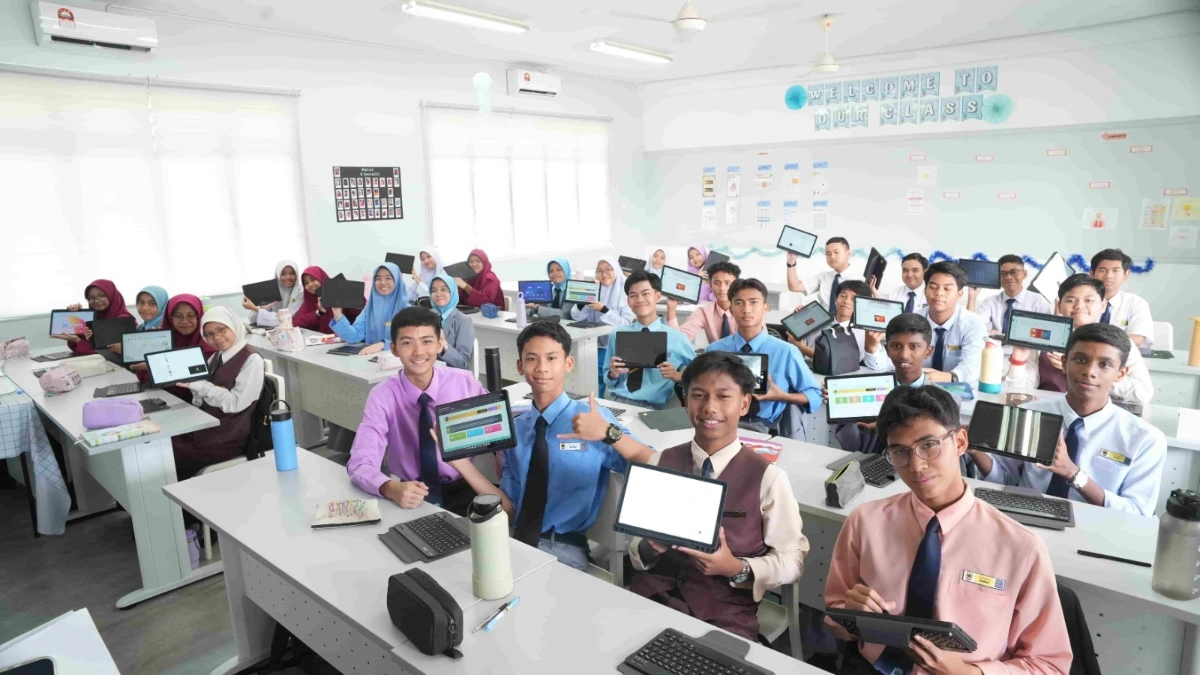
The initiative, which has been piloted at SMK Nilai Impian in Negeri Sembilan and SMKA Naim Lil Banat in Kelantan with support from SNS Network (M) Sdn Bhd, aims to transform traditional classrooms into fully connected digital learning environments powered by artificial intelligence.
Rather than functioning as a standalone technology deployment, the programme forms part of Samsung’s broader effort to democratising access to AI and digital tools in education, with a focus on improving engagement, collaboration and digital literacy among students.
The AI-powered classrooms are equipped with Samsung Galaxy Tab A9+ devices for students, smartboards for teachers, charging stations and supporting infrastructure designed to create a seamless digital learning ecosystem.
To complement the hardware, Sasbadi Holdings Berhad has been appointed as strategic content partner by the Ministry of Education, providing its AI-powered learning platform Ace-it, which offers curriculum-aligned materials, interactive tools and an AI assistant designed to reduce teachers’ workload while improving classroom engagement.
Samsung said the ecosystem is designed to ensure seamless connectivity across devices, allowing teachers and students to interact more effectively while supporting long-term usability through up to six years of operating system and security updates.
The initiative builds on Samsung’s earlier contribution to Malaysia’s education digitalisation efforts, including the supply of Galaxy Tab A8 LTE devices to students from the B40 income group in 2022, benefiting an estimated 350,000 to 400,000 students nationwide.
Teachers involved in the pilot programme said the technology has significantly improved lesson delivery and student engagement.
“As an educator with more than 20 years of teaching experience, I have always believed that science should be hands-on, minds-on and hearts-on,” said Farah Faizura Ahmad Rostam, a teacher at SMK Nilai Impian.
“The AI-Powered Classroom has made learning more interactive and enjoyable, allowing students to better visualise complex concepts that textbooks alone cannot always explain.”
Another teacher, S. Selvina, said the integration of digital tools has improved classroom interaction and teaching efficiency.
“The Galaxy Tab has helped create more engaging lessons and improved two-way communication in class. The ecosystem, especially with the digital whiteboard, makes teaching smoother and more effective,” she said.
Students also reported a more engaging and accessible learning experience.
Form Three student Nurhani Sumayyah Azmal said AI tools helped simplify complex topics and made learning more interactive.
“It makes science easier to understand and reduces the need to carry heavy textbooks. We can also explore answers on our own with personalised explanations,” she said.
Another student, R. Avinesh, said the devices made lessons more visual and easier to follow.
“The interactive features help us understand Mathematics and Science better by allowing us to visualise difficult concepts,” he said.
Samsung Malaysia Electronics president Charles Kim said the initiative reflects the company’s long-term commitment to supporting Malaysia’s digital transformation in education.
“Empowering students with access to technology is essential in building a resilient and competitive nation. Through initiatives like the AI-Powered Classroom, we aim to inspire the next generation to learn, create and innovate with confidence,” he said.
Samsung said the programme forms part of its ongoing efforts to support Malaysia’s education ecosystem through infrastructure investment, device accessibility and digital learning innovation, contributing to the development of a more future-ready workforce.



