




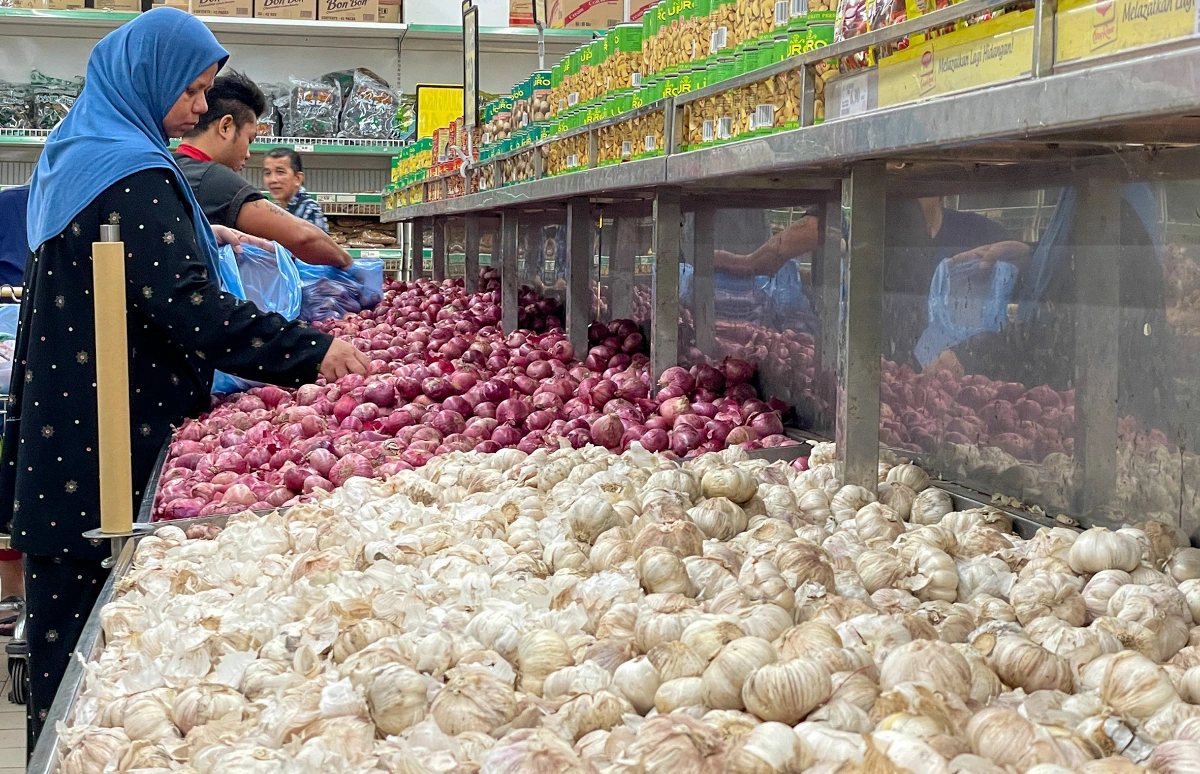
Malaysia’s local onion seed initiative targets a 30% self-sufficiency rate, reducing import dependency by RM300 million annually
KUALA LUMPUR: Efforts to strengthen local onion seed production by the Malaysian Agricultural Research and Development Institute (MARDI) are expected to reduce the country’s dependence on onion imports by about RM300 million and help achieve a Self-Sufficiency Rate (SSR) of 30 per cent by 2030.
Deputy Minister of Agriculture and Food Security Datuk Chan Foong Hin said the development of local onion varieties, such as BAW1, BAW2 and BAW3, would create opportunities to expand the domestic onion industry while strengthening national food security.
So far, Malaysia imports 100 per cent of its onions from India, and efforts to develop local onion seeds are currently being implemented by MARDI in Perak, Sabah and Kelantan,” he told reporters after opening the Agro-Food Seminar organised by MARDI at the Parliament Building today.
Earlier in his opening remarks, Chan said MARDI had produced 59 padi varieties to date, including MR297, which was introduced in 2016 and is now cultivated across more than 60 per cent of the country’s padi granary areas.
According to him, the variety has had a significant economic impact on the padi industry with an estimated value of RM1.66 billion.
He added that efforts to enhance productivity in the padi sector are continuing through the introduction of the MR333 (Menora) variety, launched last year to boost production capacity and strengthen industry competitiveness.
In the livestock sector, Chan said Saga chickens developed through MARDI’s breeding technology are expected to support efforts to increase the population of “ayam kampung” from four per cent to 10 per cent by 2040.
He added that MARDI is also developing local hybrid corn seeds with the potential to reduce Malaysia’s reliance on imported corn seeds, currently valued at more than RM3 billion annually, to meet the demand of about 2.5 million metric tonnes.
“The development of this local hybrid variety has the potential to significantly reduce import dependence, stabilise production costs and strengthen the supply chain of the country’s livestock industry,” he said.
Meanwhile, commenting on the Malaysian Pineapple Industry Board’s (LPNM) proposal to designate pineapple as the national fruit, Chan said the ministry is still studying the proposal.



