




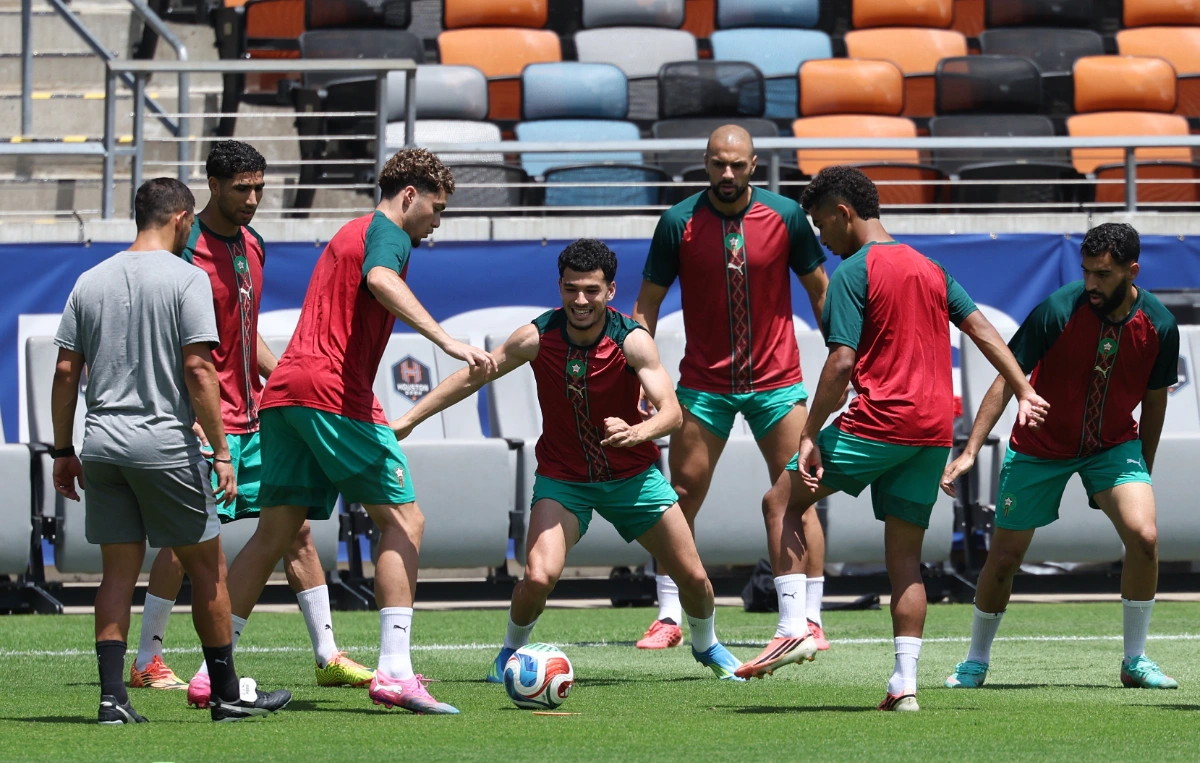
Morocco’s rise in global football is being powered by an unlikely source of funding: the country’s vast phosphate reserves, with the state fertiliser giant bankrolling the national team’s development.
MOROCCO’S rise in global football is being powered by an unlikely source of funding: the country’s vast phosphate reserves, with the state fertiliser giant bankrolling the national team’s development.
OCP Group, the world’s largest phosphate fertiliser producer and exporter, has thrown its weight behind Moroccan football through a National Football Training Fund launched in 2024, joining forces with the Royal Moroccan Football Federation and private funders to elevate the sport to new heights.
“We have this commitment to the development of the country,” said Hicham El Habti, president of the OCP-funded University of Mohammed VI Polytechnic and part of OCP’s strategic committee for innovation and learning, explaining why a fertiliser producer would invest in football under a “royal directive” for state-owned institutions.
“There’s a huge investment from OCP in the training fields. There is a partnership with FIFA,” said El Habti as Morocco prepare for their World Cup round-of-16 clash against co-hosts Canada in Houston on Saturday.
OCP’s recent contributions are not the start of the efforts Morocco has made to become more of a power in African and world football.
In 2009, King Mohammed VI directed the nation’s government to invest in the country’s football infrastructure, including pitches, training academies for youth, stadiums and professional coaches.
OCP joined the project in 2024 to take Moroccan football to another level.
It funds training academies, “equipping them with modern infrastructure, efficient facility management and advanced technical expertise,” said OCP when the fund was launched.
FOOTBALLING PROWESS
Morocco’s increasing footballing prowess is now broadly acknowledged, with the team reaching the semi-finals of the 2022 World Cup and being awarded the 2025 Africa Cup of Nations title after a controversial final earlier this year.
Phosphate is a finite resource critical to agriculture that cannot be synthesised using basic ingredients, unlike nitrogen fertilisers, which are generally made from natural gas.
Morocco is blessed with an abundance of this rare and essential fertiliser, upon which the Earth’s farmers depend, according to global fertiliser market analyst Josh Linville of analytical and trading firm StoneX.
“Morocco is the bright spot in an otherwise dismal phosphate marketplace,” said Linville. China restricts exports, Russia is geopolitically unreliable, U.S. production has a questionable future, and Saudi Arabia is dealing with the newly arisen critical problem of the vulnerability of the Strait of Hormuz passage.
Morocco is also free from most challenges facing its competitors. Recently the U.S. Trump administration lifted some of its restrictions on Moroccan phosphate imports to ease shortages and high prices created by the Iran war.
For El Habti, investing Moroccan state money in football is bringing results he can see whenever he’s around fellow citizens. The 2022 World Cup, in which Morocco came fourth and knocked out Spain and Portugal, and beat Belgium, raised millions of spirits and today is similar.
“You will see every face smiling,” he said. “It reminds us of 2022… Morocco was a very happy country for two months after the end of (the World Cup). I’m feeling exactly the same energy, the same vibes now.”



