




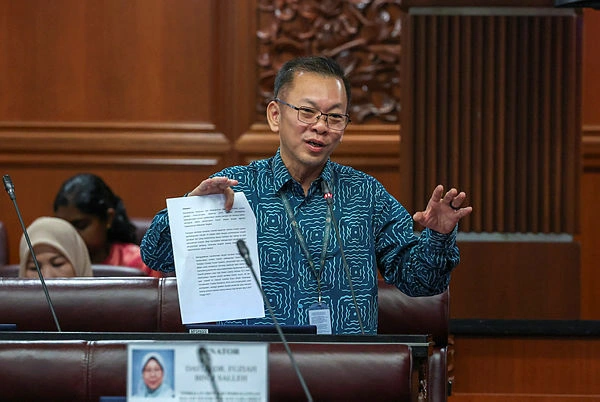
Deputy minister says incentive-based programmes raised beef SSR to 18.4% and milk output to 81.8% in 2025, ensuring stable food supply
KUALA LUMPUR: The implementation of initiatives to strengthen the agri-food sector’s production capacity through an incentive-based approach has successfully increased the self-sufficiency ratio (SSR), particularly in the livestock subsector, the Dewan Rakyat was told today.
Deputy Agriculture and Food Security Minister Datuk Chan Foong Hin said the initiatives include the Pengganda30 programme, which adopts a 90:10 matching grant concept to enhance the capacity of local livestock breeders, as well as the National Dairy Production Enhancement programme.
He said the approach had helped ensure the country’s food supply remains stable and sustainable, demonstrating that there has been no disruption to national food security.
“Preliminary data showed the SSR for beef and buffalo meat rose to 18.4 per cent in 2025, compared with 16.8 per cent in 2024 and 15.9 per cent in 2023.
“For milk production, preliminary data for 2025 recorded 66.0 million litres, with the SSR increasing from 66.7 per cent in 2024 to 81.8 per cent in 2025,” he said during Question Time in the Dewan Rakyat today.
He was responding to a question from Shaharizukirnain Abd Kadir (PN-Setiu) on the effectiveness of incentives provided to agricultural-producing states in boosting the domestic SSR amid the continued rise in global agricultural input costs following the West Asia crisis.
Chan said the government had also restructured the National Agri-Food Empowerment Programme (PPAN 2026), giving priority to the implementation of high-impact projects over supporting projects.
He said that as of June 30, a total of 20 high-impact projects worth RM17.381 million had been approved for Terengganu under PPAN, covering the crops, livestock and fisheries subsectors.
On the government’s comprehensive contingency plan to address the projected food supply crisis, he said 13.61 million households had benefited from the MADANI Agro Sales (JAM) programme, which links agricultural producers directly with consumers.
“A total of 1,833 JAM programmes have been implemented, generating total sales of RM46.72 million and estimated consumer savings of RM14.02 million,” he said.
In his reply to a supplementary question from Shaharizukirnain on water supply problems in the Muda Agricultural Development Authority (MADA) area that have affected padi cultivation, Chan said the Ministry of Agriculture and Food Security (MAFS) would undertake dam construction projects and improve water distribution channels in the affected areas.
He said MAFS would also explore ways to increase padi yields following the reduction in the size of Kedah’s rice bowl areas due to land-use competition between agriculture and housing development.



