





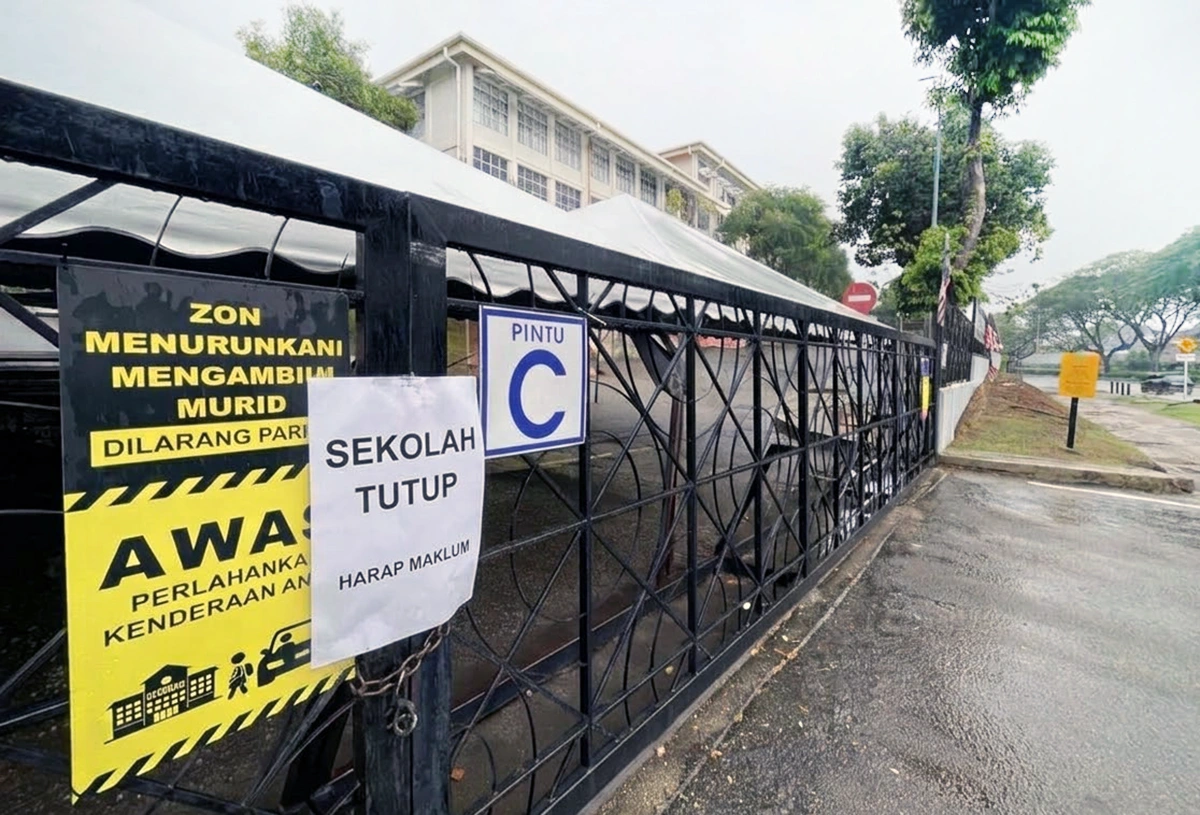
Education Minister Fadhlina Sidek confirms MOE has reverted to PTJK guidelines, mandating school closures when the API reaches 200.
KUALA LUMPUR: The Ministry of Education (MOE) has reverted to the National Haze Action Plan (PTJK) guidelines, which mandate the immediate closure of schools when the Air Pollutant Index (API) reaches 200, following input from various relevant agencies.
Education Minister Fadhlina Sidek said that under the PTJK, all outdoor classroom activities must also be halted when the API exceeds 100.
She added that parents are also permitted not to send their children to school if they are concerned that the haze condition could affect their health, provided they notify the school administration.
“In managing the haze, specific actions must be taken for each API reading level. We cannot assume that all risk levels require the same course of action,” she said in a Facebook post today.
She noted that the decision to return to the PTJK guidelines was made after discussions with related agencies, including taking into account views from the National Disaster Management Agency (NADMA) that haze management must be guided by the said plan.
Fadhlina stated that the previous decision to take a more cautious approach was made by taking seriously the concerns expressed by His Majesty Sultan Ibrahim, King of Malaysia regarding the haze situation, while prioritising the safety and health of students.
According to her, the MOE also received various feedback from parents, including requests for schools to be closed for a week, concerns about learning gaps, and the difficulty of managing childcare while working.
Therefore, she said the ministry called upon all relevant agencies such as the Ministry of Health, the Department of Environment (DOE), and the National Disaster Management Agency (NADMA) for discussions, as the issue involves health, air quality, and disaster management that require their expertise.
“I understand that logic. After all, an API reading of 150 is indeed within the unhealthy category. Parents’ concerns at that level are certainly well-founded,” she said.
Fadhlina stated that the flexibility given for students to be absent from school takes into account differing health conditions among students, including those suffering from asthma, respiratory issues, or those more easily affected by the haze.
She said the MOE is also responsible for ensuring that students do not continuously lose learning time, drawing from the experience during the Movement Control Order (MCO) which highlighted the difficulty of recovering missed learning, while emphasising that every concern will continue to be heard and decisions made in consultation with expert authorities.