




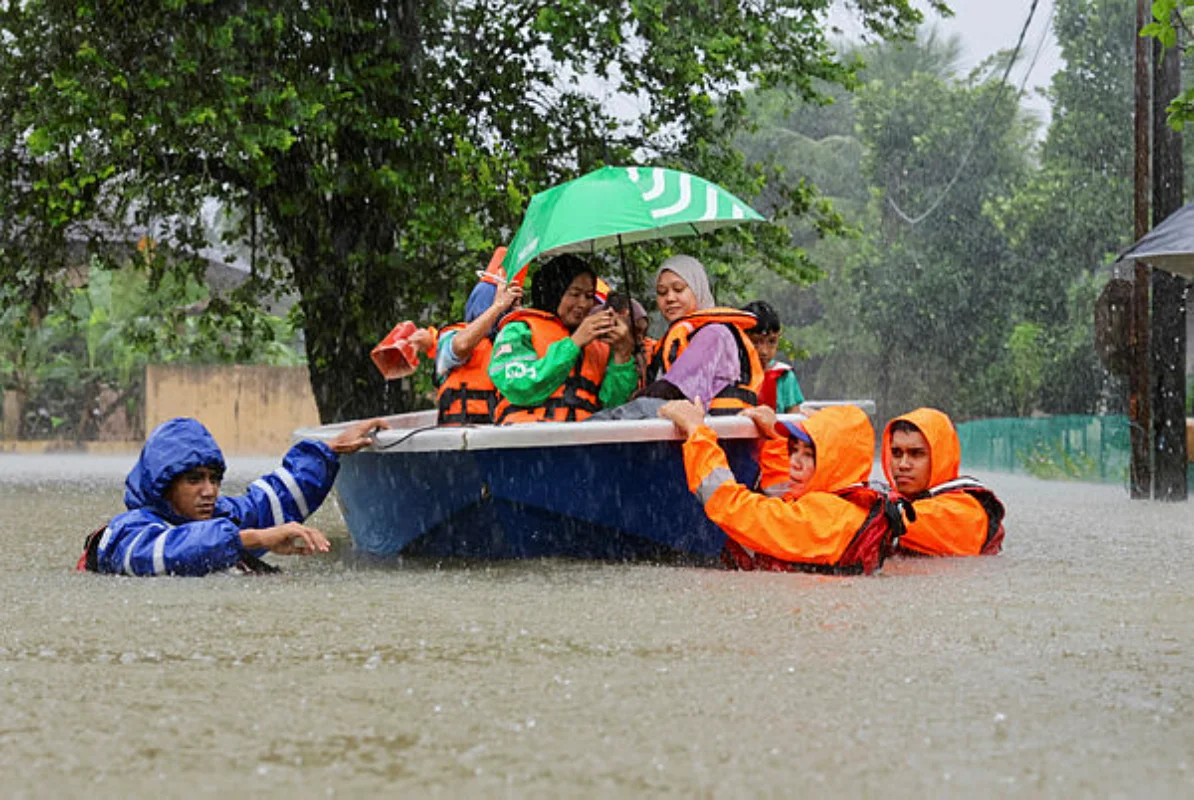
Compound disasters are becoming more frequent in Asia, with millions at risk from floods that threaten key infrastructure and food security, says BMI
KUALA LUMPUR: A series of deadly floods across South and Southeast Asia in late November has highlighted the growing risk of compound disasters.
According to financial firm BMI’s latest Environmental, Social, and Governance Country Weekly Digest, these events will occur more frequently and inflict greater damage in the coming years.
BMI’s proprietary climate risk data shows populations in Southeast Asia have some of the largest shares of people living in flood-prone areas.
This includes around 20% each in Indonesia and Malaysia, and around 15% in Singapore, Vietnam, the Philippines, and Sri Lanka.
The proportion is rising, driven by global warming and population growth in vulnerable zones.
Between 2020 and 2024, the share of the population at risk increased by nearly four percentage points in Singapore.
It also rose by about one percentage point in Malaysia, the Philippines and Sri Lanka compared to the previous decade.
An estimated additional 1.2 million people in Indonesia are at risk of flooding in the 2020s compared with the 2010s.
BMI said key economic assets are also increasingly at risk.
Many airports, roads and railways in the region are located in or near frequently flooded areas, causing recurrent disruptions.
“This includes many tourist hubs, such as Indonesia’s international airport in Denpasar (Bali), and the Soekarno-Hatta International Airport, which serves Jakarta,” it added.
Croplands are likewise facing greater inundation, with the impact of heavy rains compounded by deforestation.
This accelerates soil erosion, landslides and runoff, raising the risk of food supply shocks.
A sequence of powerful cyclones and abnormally heavy monsoon rains in late November triggered large-scale floods and landslides across the region.
These events killed over 1,300 people.
The damage was particularly severe in Indonesia, Sri Lanka, and Thailand, forcing all three governments to deploy the military to assist with relief efforts.
The extreme weather was amplified by La Niña conditions and the negative phase of the Indian Ocean Dipole.
Both are associated with above-average rainfall in Southeast Asia.
“Local factors such as large-scale deforestation in Indonesia and the slow operation of some flood barriers in Thailand also exacerbated the impacts of the floods,” it added. – Bernama



