




Macross creator Shoji Kawamori seeks identity beyond devices in new film, Labyrinth
Table of Contents
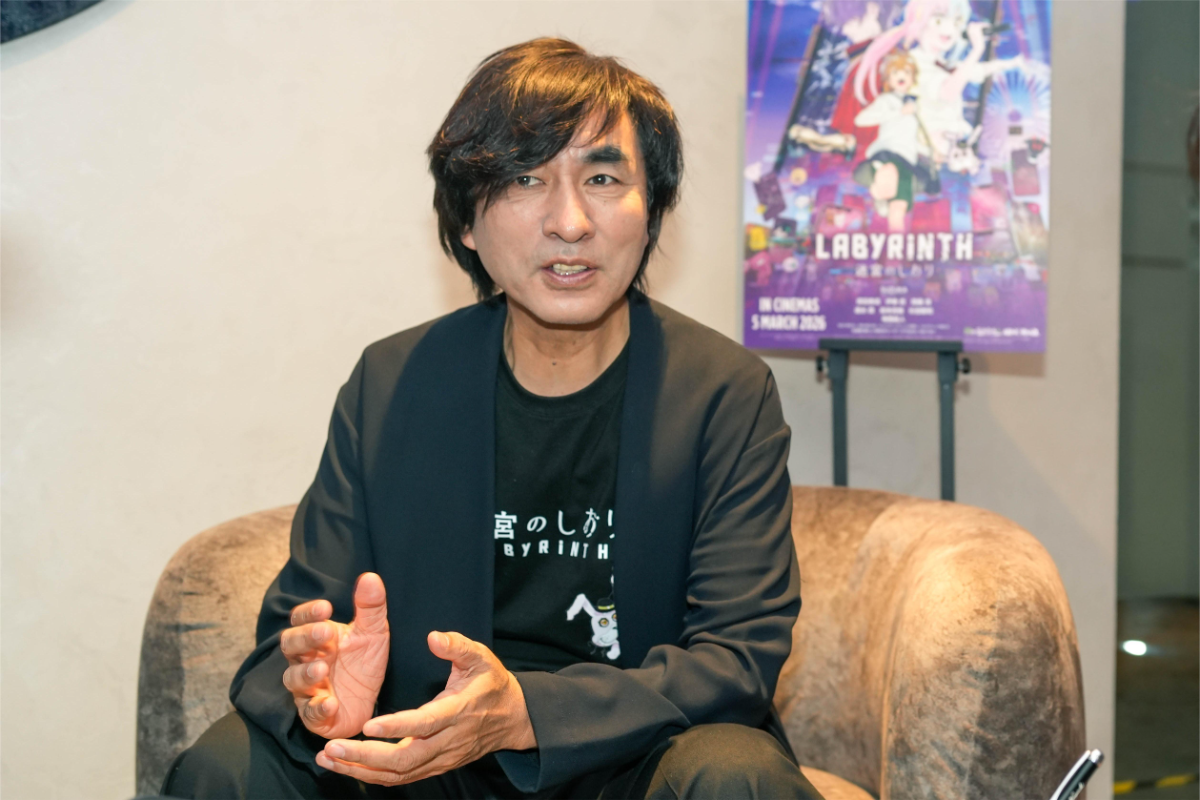
FOR decades, Shoji Kawamori has imagined worlds shaped by machines, music and emotion. From transforming mecha that helped define Macross to virtual idols that long predated today’s influencer culture, his work has consistently explored how technology amplifies human feeling.
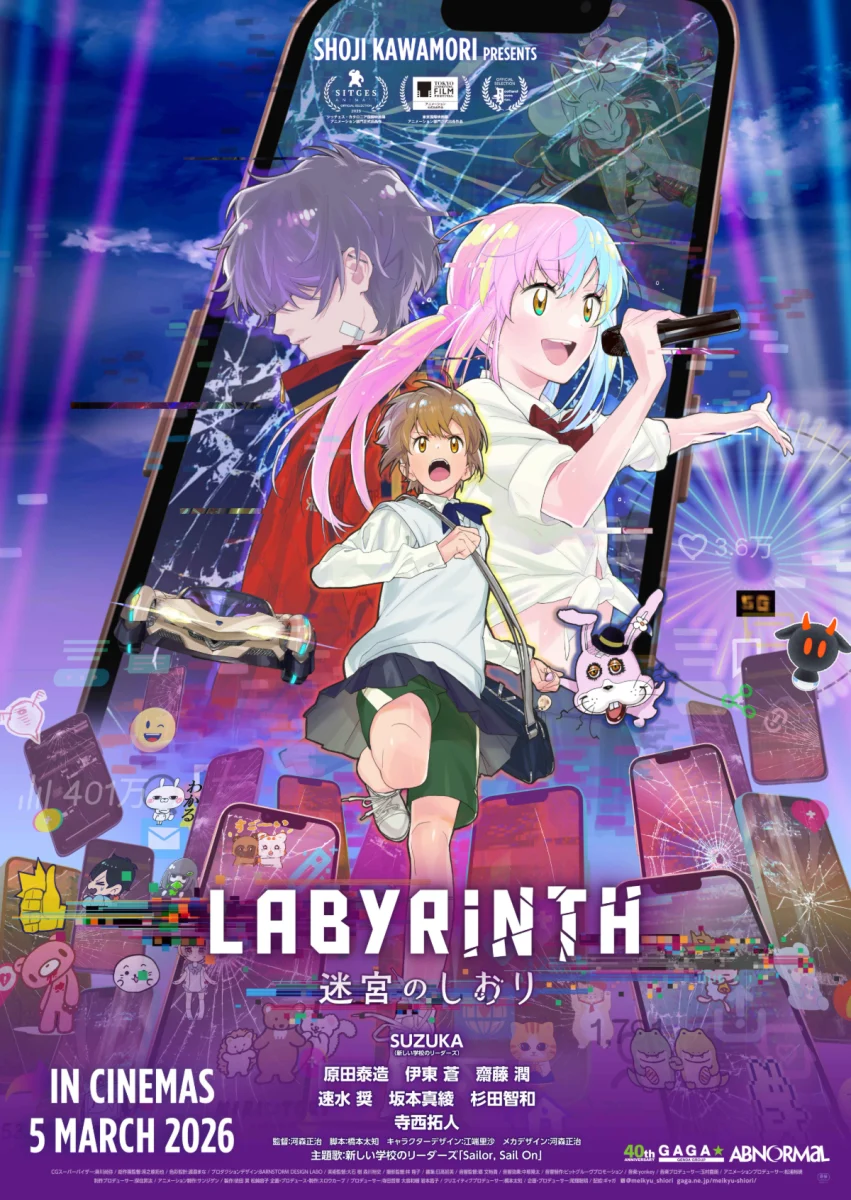
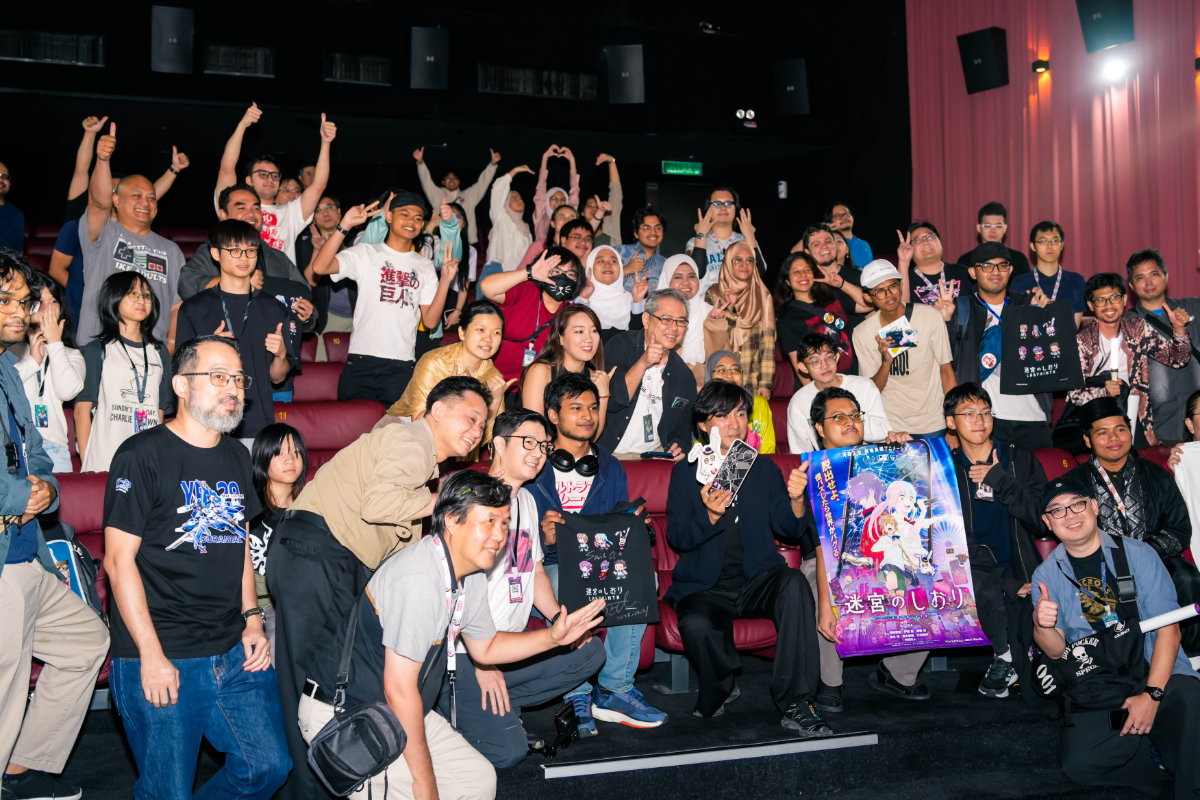
With Labyrinth, Kawamori turns that lens inward. The original animated feature is his first standalone film not built on an existing franchise, and it arrives in Malaysia ahead of its Japan release with a fan premiere and Q&A in Kuala Lumpur.
“I have wanted to make an original film since I was in my 20s. With TV series, there are many characters and the story becomes complicated. I wanted to make a compact story with a small number of characters,” Kawamori told theSun during his Kuala Lumpur visit.
Cracked screen and fractured self
Labyrinth follows Shiori Maezawa, a high school girl who longs for online recognition. After her smartphone screen cracks, she finds herself trapped inside a digital world while an alternate version of herself rises to fame as an influencer. The idea sounds fantastical, but the emotional trigger is painfully familiar.
“About 10 years ago, I often forgot where I put my smartphone. These devices have so much information about you inside them. If you leave it behind, it feels like you’ve lost something important. When the screen cracks, it feels like a personal injury,” Kawamori added.
That uneasy attachment became the foundation for a story about identity in an age where a single device holds memories, relationships and self-worth.
Smartphone as super robot
Technology has always functioned as an extension of human capability in Kawamori’s work. In Labyrinth, the smartphone becomes his most powerful machine yet
“I think of smartphones as devices that go beyond time and space. You can reach one person or a million people or even a billion. At the same time, you can also be attacked by a million people,” he explained.
He likens the phone’s amplifying power to the super robots of his earlier projects, but with far greater reach and precision.
“Even machines like the Valkyrie cannot compete with a force of a million people. This tiny device has capabilities far beyond that,” he said.
That idea fuels some of the film’s most striking moments, including sequences that openly reference Kawamori’s own legacy.
“If I’m going to make references, I might as well reference my own work,” he said.

Tears within labyrinth
Visually, Labyrinth avoids sleek futurism. The smartphone world feels warped, reflective and emotionally heavy rather than clean or high-tech.
“The other world is not only the network of phones. It is also a psychological expression,” Kawamori said.
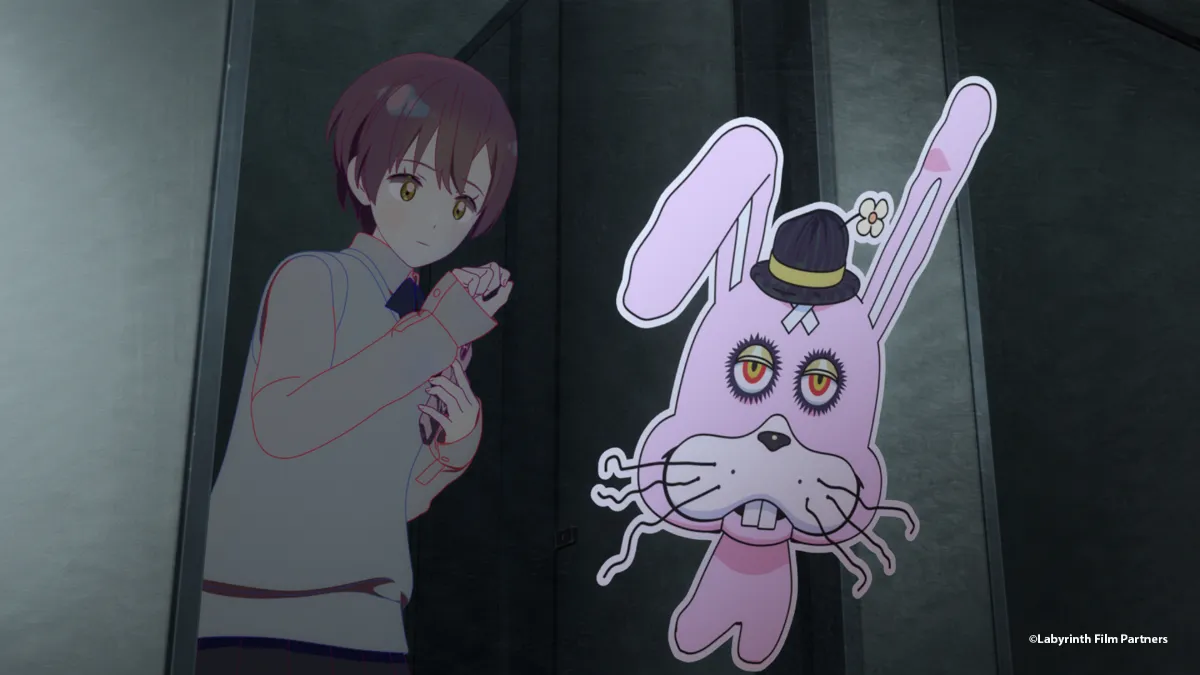
He noted that the puddles and pools of water scattered throughout the digital space are tied to Komori, the rabbit-like guide who accompanies Shiori.
“Those puddles exist because Komori is crying. These are emotions that should have flowed freely in the real world but were contained. They end up flooding the labyrinth.”
The imagery reinforces the film’s core idea. Suppressed emotion does not disappear. It accumulates.
One voice, two selves
Casting was crucial to grounding that emotional split. Suzuka of Atarashii Gakko! voices both Shiori and her digital alter ego, and also performs the theme song Sailor, Sail On.
“There is a contrast between the Shiori trapped in the labyrinth and the other Shiori collecting likes. That contrast is something Suzuka herself embodies. She has a powerful presence and she is active not just in Japan but overseas as well,” Kawamori said.
It is a continuation of Kawamori’s long-standing interest in pop music as narrative force, a thread that runs from Lynn Minmay to Sharon Apple in the Macross series and now into the influencer age.
Creating without algorithms
Despite its themes of digital identity and technological anxiety, Labyrinth was created largely without the use of artificial intelligence (AI). When asked directly whether AI played a role in the film’s production, Kawamori was blunt.
“This time, hardly any,” he said.
Designing with people, not blueprints
Kawamori describes his directing approach as organic rather than rigid. Instead of treating storyboards as fixed mechanical blueprints, he prefers to think of them as DNA.
“Even with the same DNA, how something turns out depends on where and with whom it grows,” he said.
Each studio, each team and each moment in time changes the outcome. His role as director, he explained, is to guide the process back within its framework when it begins to drift too far, rather than controlling every detail.
For him, a film is only complete once it meets its audience.
“Each person takes away something different. That is when the work is finished,” he said.
Message without instructions
When asked what he hopes viewers take away from Labyrinth, Kawamori resisted offering a single answer.
“We live in a society where we are too afraid of being criticised and too focused on collecting likes.
“You don’t show your true self, and that is when you get hurt. The question is what does it mean to be you?”
There is no single escape route from the smartphone labyrinth, he added. Each person must find their own way forward. For Malaysian audiences, among the first in Southeast Asia to see the film, that question lands close to home.
Labyrinth opened in Japan last Thursday and will arrive in Malaysian cinemas on March 5, 2026.
READ MORE:
Pure nostalgia night at Strength Japanese Anime Concert 2026
One Punch Man Season 3 Review – Anime industry low point
Adventure Time: Fionna and Cake stops pulling punches
Malaysian actors on shared international breakthrough in 120 Bahadur
Director Sun-J Perumal expands Jagat Multiverse



