





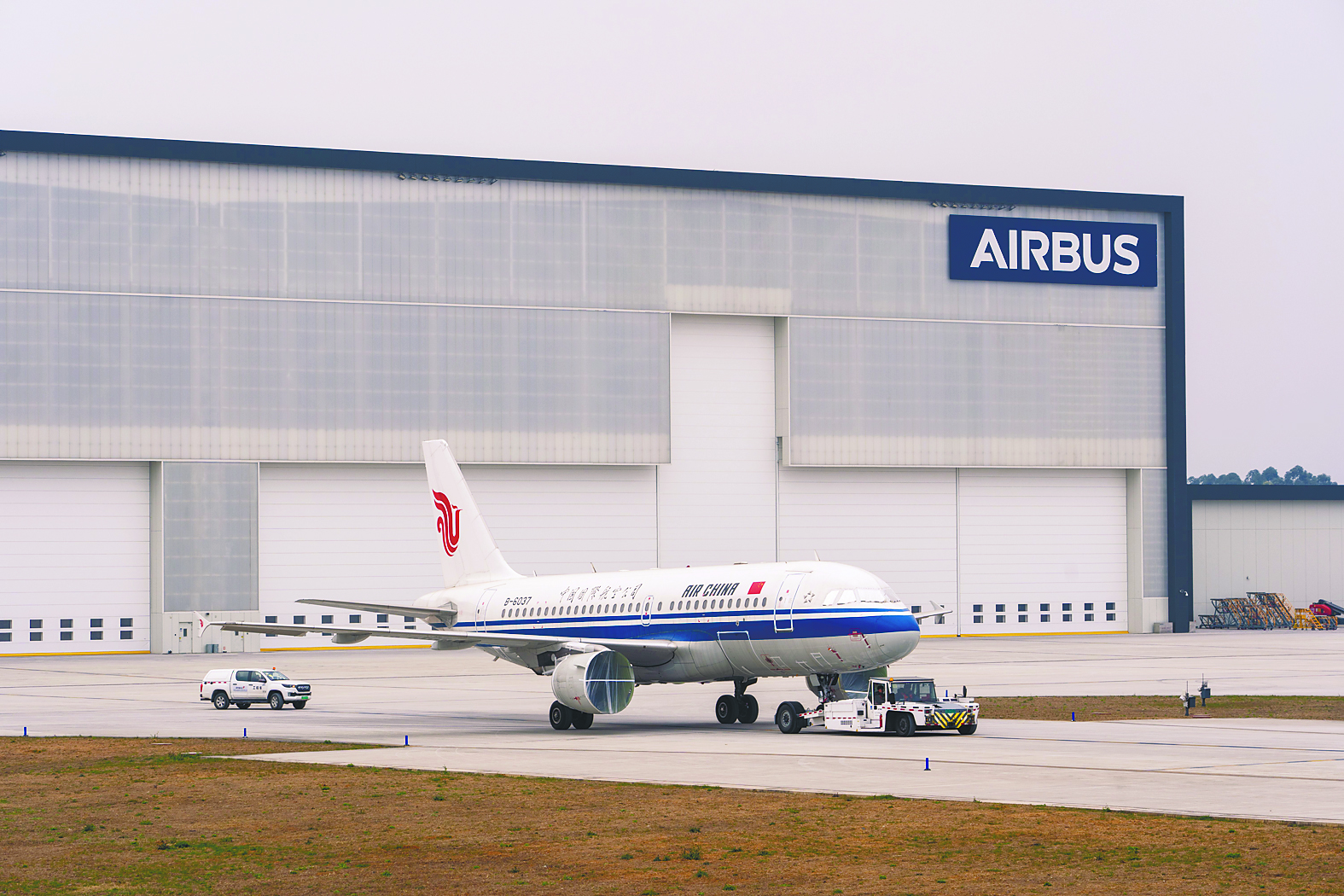
HONG KONG: Airbus has not seen any softening in aircraft demand or deliveries due to geopolitical or supply chain headwinds, its Asia-Pacific president said yesterday.
“We continue to see strong demand,“ Airbus Asia-Pacific president Anand Stanley said during a briefing in Hong Kong on its 2026-2045 market forecast focused on the Asia-Pacific region.
“Not only that, we continue to see a strong readiness to take deliveries and a strong uptick in deliveries across the board, and this is not just in Asia-Pacific, but we also see that we are continuing to do our deliveries in the Middle East,“ he said.
Airbus deliveries have increased 9% so far this year compared with the same period in 2025, he said.
The European planemaker forecast that about 42,000 new aircraft will be required globally over the next 20 years, and about 45% of those will be delivered to the fast-growing Asia-Pacific region.
Francois Cabaret, Airbus’ head of global market forecast, said at the event that Chinese airlines face a huge catch-up in renewing their fleets.
Before the Covid pandemic, Chinese airlines were taking about 400 deliveries a year, but the collective number from Airbus, Boeing and Chinese planemaker Comac had since fallen to less than half of that, Cabaret said.
Airbus data shows China, its single largest market for commercial jets, will need 8,830 new passenger aircraft over the next 20 years, India will need 3,480, and the rest of Asia-Pacific will require 6,880.
The forecast highlighted diverging growth within Asia, where overall traffic was expected to grow by 5.1% annually over the next 20 years. India remains the world’s fastest-growing air travel market, with Airbus raising its domestic traffic growth forecast to 9.3% from 8.9%, while cutting China’s to 4.7% from 5.4%.
Cabaret said the China revision reflected macroeconomic factors rather than structural overcapacity.
He said urbanisation globally was increasingly shifting towards smaller and secondary cities, with some 600 new small and medium-sized cities expected to emerge over the next 20 years, each generating new airport infrastructure and route demand.
Stanley said Airbus’ smaller A220 narrow-body model had already enabled more than 400 new routes globally and could unlock a further 800 city pairs in Asia-Pacific, while the A321XLR could open more than 2,200 new potential routes in the region by offering wide-body range in a single-aisle aircraft. – Reuters



