




PETALING JAYA: Malaysia’s data centre sector is on track to consume as much as 7.7 gigawatts (GW) of electricity by 2030, according to projections from the Energy Transition and Water Transformation Ministry.
Yet, actual consumption today sits at just 1,102 megawatts (MW), only 54% of the 2,050MW already approved, Minister Datuk Seri Fadillah Yusof has confirmed.
For EFS Group, this is not a sign of overbuilding but a timing gap, and one that the businesses securing reliable power now stand to close first, well ahead of the moment full demand arrives.
This emerging power gap is exactly where projects such as the Baram DeepTech Energy Programme become strategically important.
Last year, EFS Group signed a heads of agreement with Planet QEOS Sdn Bhd, alongside China Construction Sixth Engineering Bureau, ES Sunlogy Bhd, NuEnergy Holdings Bhd and Shenzhen Hopewind Electric Corp Ltd, to co-develop Malaysia’s first firm solar power plant under the RM2.32 billion programme.
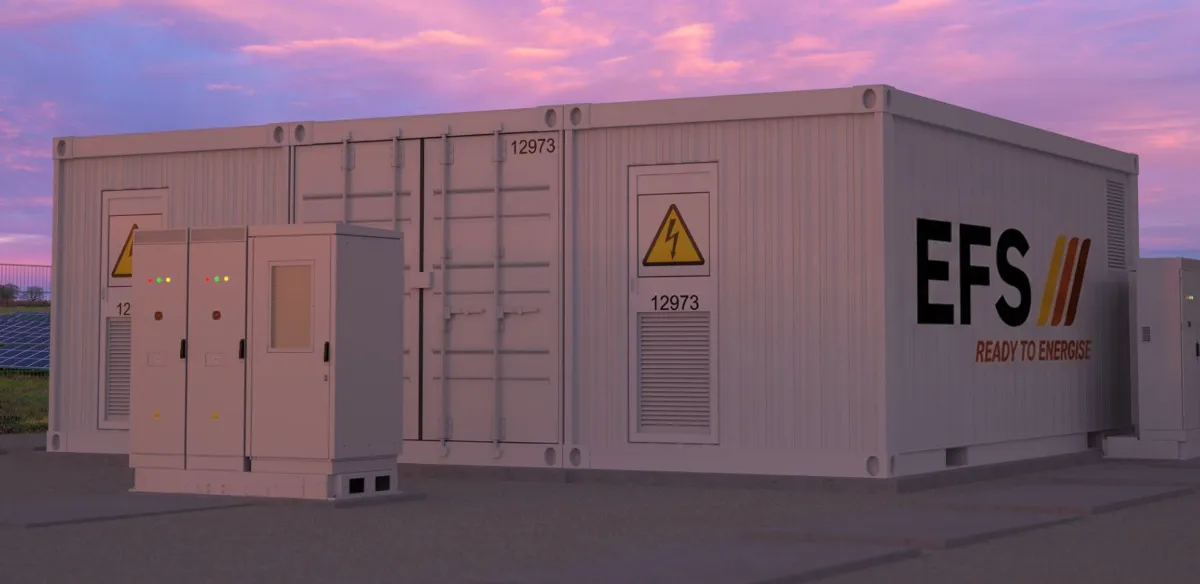
As Planet QEOS’ Agrovoltaic and Food Security Partner, EFS is co-developing a 310MWp solar power plant paired with a 900MWh battery energy storage system (BESS), alongside a 650-hectare agrovoltaic farm that integrates solar infrastructure with agriculture in the Baram highlands of northern Sarawak.
“We are proud to partner with Planet QEOS on a project that reflects the future of sustainable infrastructure development in Malaysia. What sets the Baram DeepTech Energy Programme apart is its ability to deliver benefits beyond clean energy generation by integrating renewable energy, food production and community development into a single ecosystem,” said EFS Group CEO Darren Tan.
“The same solar-plus-BESS capability underpinning that work is exactly what Malaysia’s data centre sector will need as demand catches up to committed capacity, because pairing solar with battery storage transforms renewable energy from a daytime resource into dependable infrastructure capable of supporting continuous operations.
That pairing of solar generation with battery storage is, in EFS Group’s view, part of the equation Malaysia’s data centre buildout cannot afford to treat as optional. That pairing of solar generation with BESS is, EFS Group says, becoming a business imperative as Malaysia’s data centre industry expands.
Solar without BESS is half a solution; it is the combination of the two that turns an intermittent resource into a dependable, round-the-clock supply, and that combination is increasingly becoming a practical consideration for operators seeking greater energy resilience, and not an upgrade layered on later.
The scale of what the national grid is already absorbing makes the case sharper still: Tenaga Nasional Bhd’s capital expenditure is set to nearly double, from RM21 billion between 2022 and 2024 to RM43 billion between 2025 and 2027, with the country needing up to 12GW of new generation capacity by 2031.
Well-designed solar-plus-BESS can reduce peak demand on the grid, improve load management and lessen dependence on grid-supplied electricity during critical periods, making projects like Baram a direct, measurable contribution to national energy security rather than simply a private cost-saving exercise.
That resilience is also becoming a condition of investment, not just a talking point.
The government has confirmed that RM280 billion in data centre investment has been pledged to Malaysia, but only RM131 billion of that has been realised so far, with authorities now tightening scrutiny on the remaining gap to identify operators genuinely committed to building here.
Global hyperscalers face the same scrutiny from their own boards over the sustainability of their AI infrastructure. Companies and policymakers who treat solar-plus-BESS as core infrastructure today, rather than a sustainability add-on, are the ones positioning themselves, and Malaysia, as the credible choice when that pledged capital is finally deployed.
Looking ahead, EFS Group sees projects such as Baram as an early template for how Malaysia closes both gaps at once, the power gap and the investment gap, rather than waiting for one to force the other.
“The next few years will decide whether Malaysia’s data centre ambitions are backed by power that is actually there when it’s needed, or whether the country ends up playing catch-up. Our participation in the Baram project reinforces the viability of integrating renewable generation, energy storage and land use into a scalable energy solution,” said Tan.
“We believe the next phase of Malaysia’s industrial growth will increasingly depend on integrated energy solutions rather than standalone power generation. Solar-plus-BESS will become a fundamental part of how data centres, manufacturers and industrial parks plan for long-term resilience.”



