



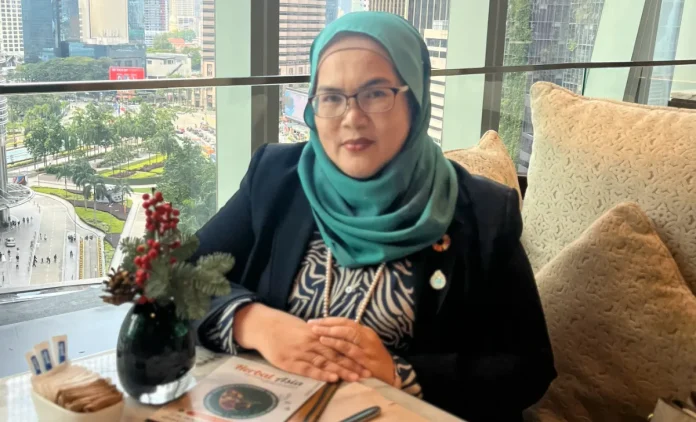
KUALA LUMPUR: Malaysia should use Visit Malaysia 2026 as a market-access lever to commercially position its herbal economy towards international visitors as global demand shifts to experiential and wellness-focused offerings.
Herbal Asia Trade Show and Conference & Future Forest International Sdn Bhd CEO Safina Yaakob said there is a lack of visibility of traditional food and wellness practices within Malaysia’s tourism narrative.
“This includes stronger representation of Malay food culture and traditional health practices, which are closely linked to the herbal economy,“ she told SunBiz.
Safina said Malaysia has a strong foundation in traditional food, wellness and herbal practices, but these strengths need to be made more visible and accessible to international audiences.
“For Visit Malaysia 2026, we could highlight its strengths through food, beverages and beauty products that are linked to local culture and place and position them within the broader experiential and wellness tourism segment.”
Herbal tourism could include farm visits, harvesting experiences and traditional spa treatments, Safina said.
She pointed out that many modern spas do not reflect authentic Malay practices, such as the use of sintok or bedak sejuk.
Safina said that positioning the herbal economy more prominently could help Malaysia extend the economic benefits of Visit Malaysia 2026 beyond tourism operators by creating demand for local farmers, rural communities and downstream food, beauty and wellness manufacturers.
“This allows tourism spending to flow back into domestic supply chains, supporting small and medium enterprises, including villagers and orang asli and reducing reliance on imported ingredients.
“Over time, it can create more sustainable value by linking local production, processing and branding with international demand for wellness-focused experiences.”
Furthermore, Safina said, healthy living is closely linked to food security, particularly in developing countries, where communities need reliable access to nutritious foods and affordable ingredients.
She cited nasi ulam as an example, noting that the traditional dish incorporates herbs such as lemuni, kaduk, serai, kesum and selum, all of which are high in antioxidants.
In addition, Safina said investor interest in Malaysia’s herbal sector is rising, driven by demand for sustainable, wellness-focused products aligned with global development goals.
“Wellness-linked segments such as natural medicine and spa offerings are attracting the strongest attention, with demand coming from both regional and international markets, including Saudi Arabia, Dubai and the United States.”
She added that Malaysia is well-positioned to develop as a hub for research, data and skills in the herbal space, but stronger branding and a wider range of local products are needed to capture global demand.
Safina cited examples of US wellness operators sourcing young jackfruit from Malaysia for vegan food and supplement products that reflect broader global trends towards natural ingredients, home cooking and traditional healing.
“While Indonesia has successfully positioned jamu as a cultural reference point, Malaysia has its own heritage, including ubat periuk and Tongkat Ali, that can be developed further.”
Safina highlighted the Herbal Asia Trade Show & Conference 2026, scheduled to be held in August, aims to bring together more than 1,000 participants from across the herbal industry supply chain, including agriculture, forestry, biotechnology research, cosmetics, beauty, food and beverage, wellness, policymakers, academicians, students, NGOs, international partners and members of the Herbal Asia Exporter Clubs.
“In 2026, we will present three days of conferences, business dialogues and roundtable discussions designed to strengthen best practices across the herbal industry,“ she said.
The programme will focus on commercialising untapped markets, highlighting innovation, showcasing new products and addressing market demand.
Safina said this will be supported through business-to-business meetings, business-matching sessions, investor and innovation talks,research and development competitions and a showcase featuring more than 600 booths displaying new and emerging products from around the world.
The 19th edition of the event will also feature concurrent programmes, including market sourcing and investor exchange sessions, alongside plenary discussions, keynote addresses and targeted breakout sessions.
“I encourage industry players to participate in this event, which offers insights into current market trends and opportunities,“ Safina said. “Through collaboration, we can strengthen our networks and support sustainable supply for the wellness and healthcare sector, both in Malaysia and internationally.”



