




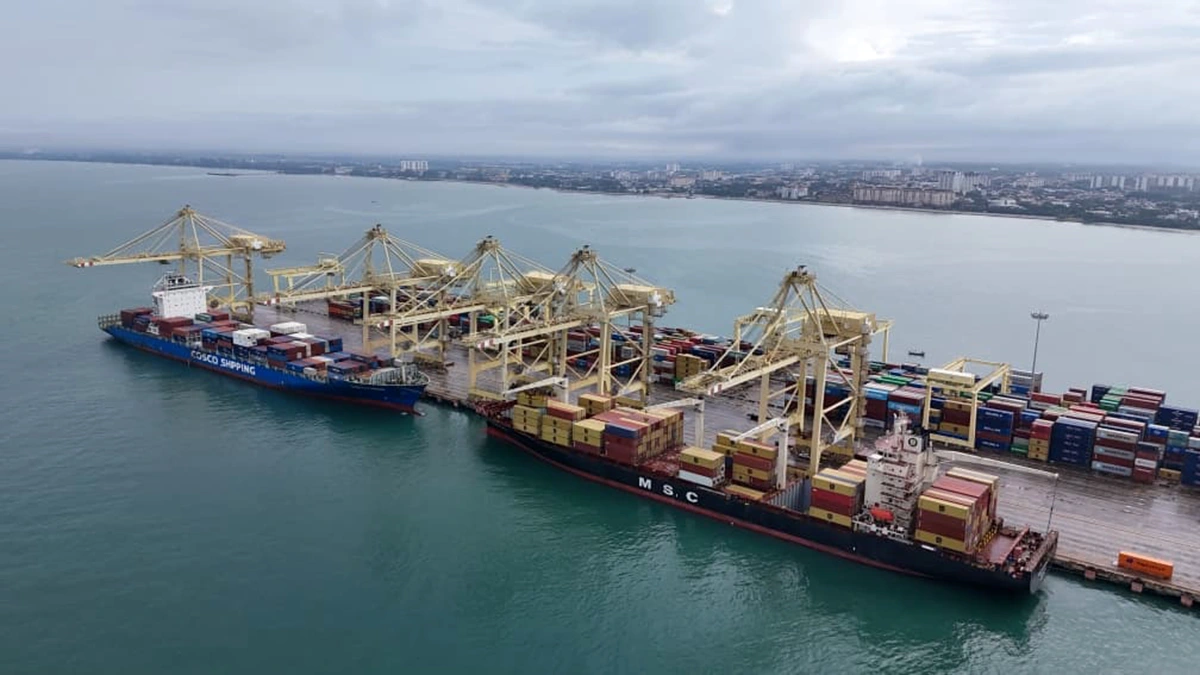
The Penang Port Commission (PPC) has introduced a new licence category for the handling of used cooking oil (UCO) from ships.
GEORGE TOWN: The Penang Port Commission (PPC) has introduced a new licence category for the handling of used cooking oil (UCO) from ships under a revised ship-generated waste management framework.
PPC chairman Datuk Yeoh Soon Hin said the revision, introduced under Port Circular No. 7/2026 dated July 1, reflects the commission’s commitment to its Green Port Policy and efforts to support the port’s low-carbon transition.
“Previously, there was no dedicated licence category for the handling of used cooking oil from ships.
“Category D has been introduced specifically for this purpose, and qualified companies are encouraged to apply for the licence,” he told theSun.
He said the revised framework provides greater clarity for operators while strengthening the management of ship-generated waste at Penang Port.
“The port has formulated and fully implemented a new set of Standard Operating Procedures (SOPs) for ship-generated waste management, ensuring that the handling of all such waste at Penang Port terminals is conducted in a standardised, safe and legally compliant manner.”
Yeoh explained that the commission had revised the licensing framework into four categories:
- Category A covers ship scheduled waste and is currently held by three licensed operators.
- Category B covers ship domestic waste, including dunnage but excluding used cooking oil, and is held by eight operators.
- Category C covers ship sewage and is held by two operators.
- Category D covers used cooking oil from ships and currently has no licence holders.
He said that in Penang, licensed companies are responsible only for the collection of ship-generated waste within the port limits, with the collected waste subsequently transported to and disposed of at approved facilities outside the port area.
“As existing disposal activities are carried out at designated off-site facilities in accordance with requirements set by the relevant authorities, existing operators are generally not required to invest in significant new equipment or facilities to comply with the SOP.
“The latest port circular was issued to ensure uniformity, compliance with relevant laws and the smooth handling of ship-generated waste operations at Penang Port,” said Yeoh.
All waste management companies intending to operate within the port must obtain a valid PPC licence and approvals from the Department of Environment, the National Water Services Commission (SPAN), the Royal Malaysian Customs Department and the relevant local authorities before commencing operations.
Licensed operators are responsible for ensuring waste-handling activities are carried out safely, systematically and in accordance with the conditions stipulated by PPC.
They are also required to verify the quantity of waste with vessels and submit disposal or discharge documents to Penang Port Sdn Bhd and the relevant authorities after every operation.
Yeoh said the measures support Transport Minister Anthony Loke’s Green Port aspirations by strengthening controls over waste disposal, reducing the risk of marine pollution, and promoting recycling and responsible disposal practices.
“By mandating licensing, waste quantity verification, post-operation reporting and the use of approved disposal facilities, PPC reinforces mechanisms for pollution prevention and continuous environmental monitoring.”
He said compliance with PPC regulations is enforced at port entry points by the port operator, with PPC also working closely with relevant government agencies, including the Royal Malaysian Customs Department, to monitor and ensure continuous compliance.
He said PPC hopes all stakeholders, including waste management companies, shipping firms and enforcement agencies, will fully comply with the SOP. It will also continue monitoring implementation through inspections and audits while encouraging the adoption of technology and best practices that support waste reduction and increased recycling.
“PPC also welcomes constructive feedback from the port community for continuous improvement,” he said.
To date, there have been no recorded cases of the improper handling or disposal of ship-generated waste within Penang Port.
The revised framework, which replaces Port Circular No. 4/2025, took effect immediately upon its issuance on July 1.



